Top2 min readNRB to Bring Lending Rates to Single Digits Within a Year; Focus on Fixed-Rate Loans for Productive and Export SectorsNRB to Bring Lending Rates to Single Digits Within a Year; Focus on Fixed-Rate Loans for Productive and Export Sectors Nepal Rastra Bank (NRB) is set to regulate both deposit and lending interest rates within a defined range over the next year, as part of the government's newly introduced Economic Reform Implementation Plan. According to the plan, the central bank will ensure positive real interest rates on deposits and lending rates confined to high single digits or low double digits.Dipesh Ghimire·27 May, 2025
Top3 min readNepal’s Rising Public Debt: Challenges of Internal vs External Loans and the Path to Sustainable Fiscal ManagementNepal’s public debt has surged to over 41.9% of GDP, split almost equally between internal and external loans. This in-depth analysis explores how poor coordination, overreliance on treasury bills, weak foreign aid utilization, and lack of strategic debt planning are undermining Nepal's fiscal sustainability. Discover key statistics, institutional challenges, and policy reforms proposed in FY 2081/82 to balance economic growth with responsible borrowing. A must-read for economists, policymakers, and investors monitoring Nepal’s financial stability. Dipesh Ghimire·27 May, 2025
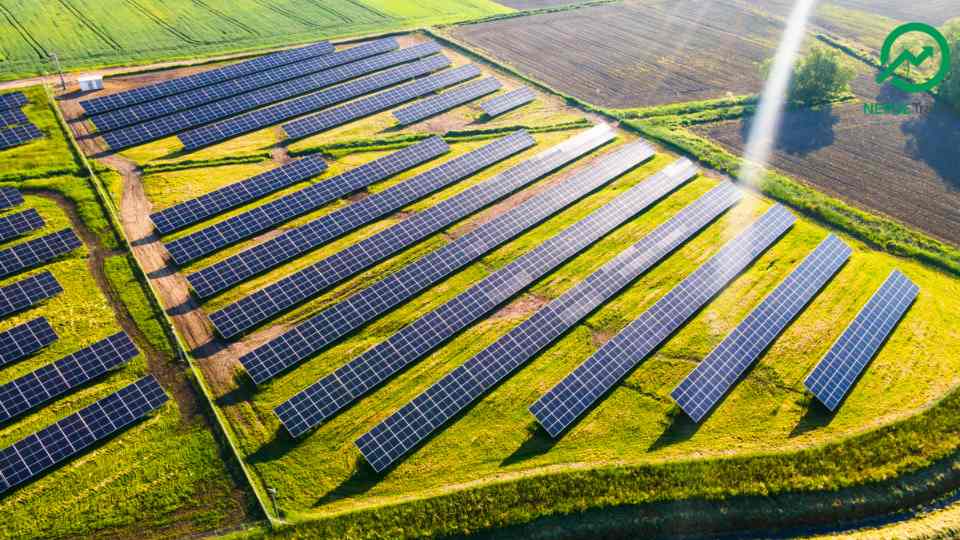
Top4 min readSolar Energy in Nepal: Status, Potential, and Actionable Steps "Nepal Budget 2082/83: Why Solar Energy Deserves a Bigger Push" "Solar Power in Nepal: Missed Opportunity and What the Budget Must Fix" "2082/83 Budget Priority: Solar Energy Policy Reforms & Investment Potential" "Nepal’s Untapped Solar Power: Budget Solutions for a Green Future" "Why Solar Energy Should Be a Budget Focus in Nepal 2082/83" "How Nepal’s Budget Can Unlock 400,000 MW Solar Potential" "Solar vs Hydro: Why the 2082/83 Budget Needs a Solar Boost" Solar Energy in Nepal: Missed Potential, Challenges & Way Forward Nepal holds immense potential for solar energy, receiving sunlight nearly 300 days a year, yet its utilization remains very low, with only 3.08% of total installed capacity coming from solar sources as of 2080. Though Nepal can generate over 400,000 MW using just 0.5% of its land, solar energy development is hindered by policy limitations, land use restrictions, equipment import dependence, and comparatively high Power Purchase Agreement (PPA) rates. 🔍 Key Highlights: Solar potential: Up to 429,000 MW using minimal land; 47 units/km²/day possible solar generation. World Bank estimate: 30,000 MW solar generation capacity in Nepal. Current share: Only 94.4 MW out of 3,060 MW total capacity is from solar (3.08%). Cost: Around NPR 6–7 crore per MW, with ROI in 7–8 years. Technology now allows grid connection without batteries. Land challenge: 1 MW needs about 20–25 ropanis; irrigation land banned for solar use. India’s benchmark: 1 MW solar plant costs only INR 5 crore, and PPA is INR 2/unit compared to Nepal’s NPR 5.94/unit. Legislation gap: Nepal’s new bill offers only 25 years for solar license, while hydro gets longer terms. Global context: India grew from 2,630 MW in 2014 to 84,277 MW in 2024. Targets 800,000 MW by 2030. Environmental impact: India saved 13.2 million tons of oil and reduced 61.3 million tons of CO₂ via solar energy growth. 🛠️ Suggested Actions: View solar as complementary to hydro, not a competitor. Utilize non-arable slopes and rooftops for installations. Offer rooftop solar grants and subsidies to households. Accelerate competitive PPAs, simplify land use laws, and extend license periods. Include solar expansion in the national budget strategy as a key area for green recovery, energy security, and rural access.Dipesh Ghimire·26 May, 2025
Top6 min readNepal Budget 2082/83: Hopes for Economic Recovery Amid Crisis"Nepal Budget 2082/83: Hopes for Economic Recovery Amid Crisis" "Full Analysis of Nepal Budget 2082/83: Debt, Deficit & Reform Expectations" "2082/83 Budget Explained: What to Expect from Nepal’s Economic Plan?" "Nepal Budget 2082/83: Challenges, Opportunities & Reform Roadmap" "What’s in Nepal’s FY 2082/83 Budget? Inflation, Trade Deficit & Growth Goals" "Nepal’s 2082/83 Budget Preview: Economic Stability or More Struggles?" "Breaking Down Nepal Budget 2082/83: Revenue, Spending & Structural Reform" Expectations from Nepal’s Fiscal Year 2082/83 Budget Nepal's economy is currently in a transitional crisis, and the upcoming Fiscal Year 2082/83 Budget is expected to play a critical role in economic recovery. With sluggish growth, declining private investment, underutilized capital expenditure, a rising trade deficit, and mounting public debt, the upcoming budget must go beyond numbers and become a reform-driven, actionable roadmap. 🔍 Key Highlights: Revenue collection has only reached 67% of the target so far; capital expenditure is at a poor 36%. The budget deficit has reached NPR 214 billion, and total public debt now exceeds NPR 2.622 trillion. Inflation is at 5.69%, while GDP growth remains stuck around 3%. The trade deficit hit NPR 1.256 trillion, nearly 7% higher than the same period last year. The government has released an Economic Reform Action Plan 2082 aimed at long-term structural reforms. Key goals include reducing interest rate spreads, repealing outdated laws, making government spending transparent, and stimulating investment in production, jobs, and infrastructure. Priority sectors include agriculture, MSMEs, tourism, energy, education, health, and digital economy. A results-oriented, transparent, and inclusive budget is a must to ensure sustainable growth and economic discipline.Dipesh Ghimire·26 May, 2025
Top3 min readNepal's Gold Imports Plunge Even After Duty Reduction as Buying Power FallsGold Imports Crash in Nepal as Prices Soar Nepal’s Gold Market Hit by Smuggling and High Duties Gold Demand Falls in Nepal Despite Record Prices Nepal’s Gold Crisis: Imports Down 50% Why Nepal’s Gold Imports Are Plummeting Gold Smuggling Surges as Nepal Hikes Duties Nepal Faces Gold Shortage Amid Soaring Prices High Prices, Low Imports: Nepal’s Gold Dilemma Gold Trade Declines in Nepal Due to Tax and Smuggling Nepal’s Gold Market Sinks Under Pressur\\\\\\\\\\\\\\\\\\\\\\\\\\\\\\\\\ Dipesh Ghimire·26 May, 2025
Top3 min readNepal’s Cash Incentive Export Program Under Fire: Auditor General Flags Legal, Structural, and Transparency FlawsDespite Nepal’s long-standing efforts to promote exports through financial incentives, the nation’s export contribution to total foreign trade remains minimal. A major government initiative to address this imbalance—the Cash Incentive Program for Exporters—is once again under scrutiny for its legal ambiguity, lack of transparency, and questionable effectiveness. The recently published 62nd Report by the Office of the Auditor General (OAG) has highlighted multiple flaws in the implementation of this program, which has been operational since Fiscal Year 2068/69 (2011/12).Dipesh Ghimire·25 May, 2025
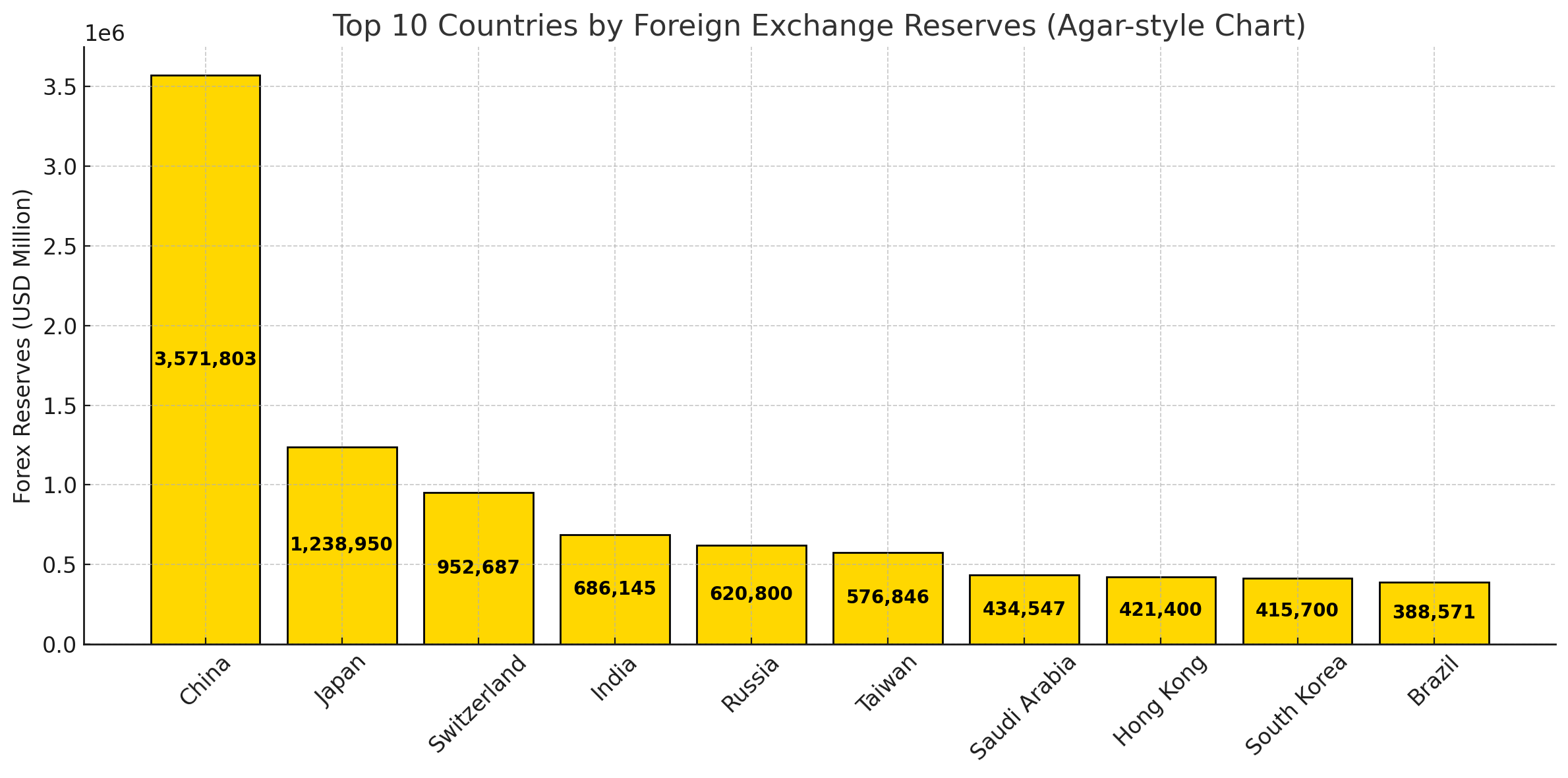
Top2 min readTop 10 Countries with Highest Foreign Exchange Reserves in 2025: A Deep DiveTop 10 Countries with Highest Foreign Exchange Reserves in 2025: A Deep Dive According to recent data by currentaffairs.adda247, China continues to dominate the global stage with the highest foreign exchange reserves, followed by Japan and Switzerland. Foreign exchange reserves, which include foreign currencies, gold reserves, SDRs (Special Drawing Rights), and IMF reserve positions, serve as vital financial buffers for countries, helping stabilize currencies, manage inflation, and respond to economic crises.Dipesh Ghimire·25 May, 2025
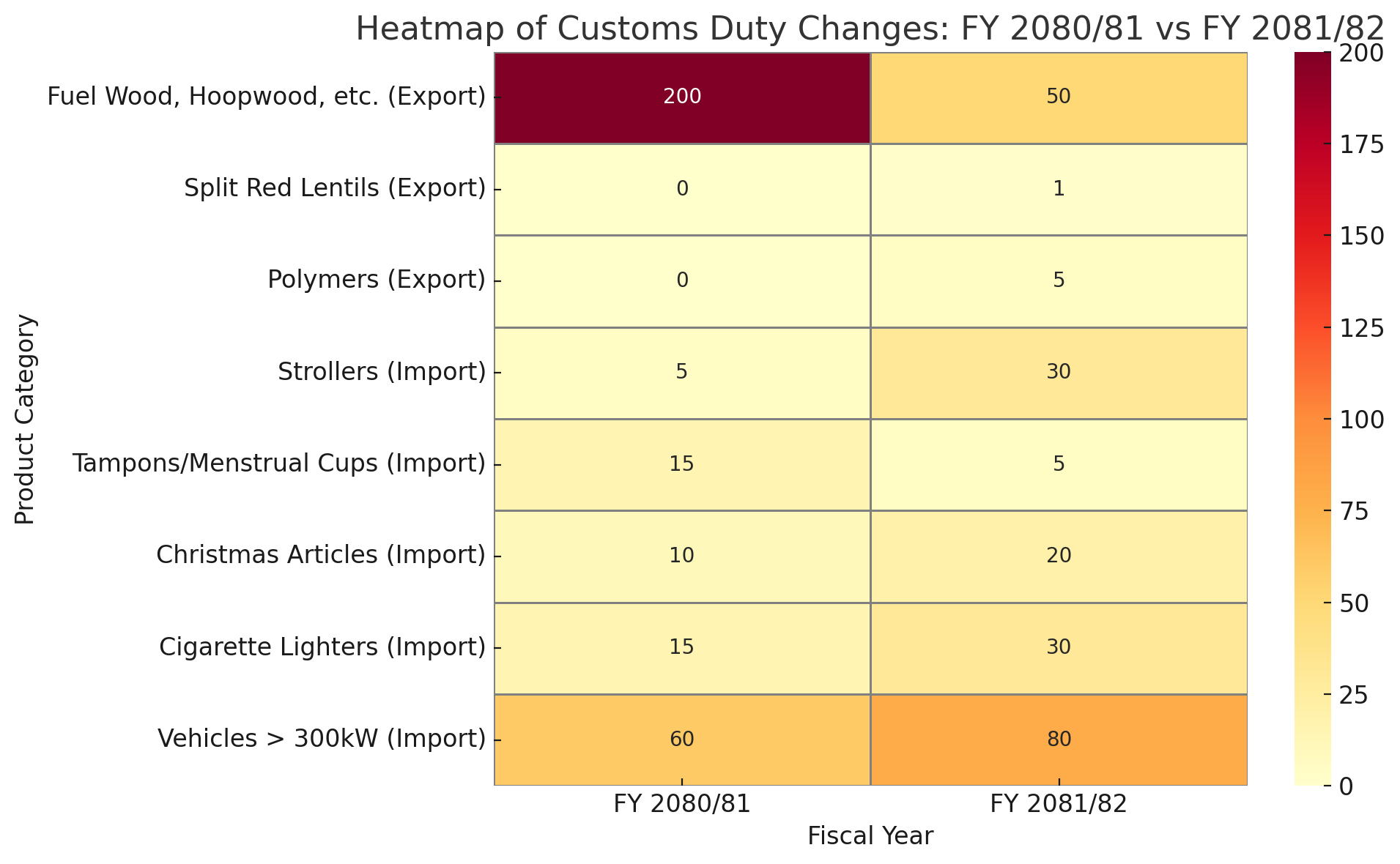
Finance Bill 20813 min readFinance Bill 2081 Brings Sweeping Changes to Export and Import TariffsThe Finance Bill 2081 has introduced major changes to Nepal’s customs duty structure, aiming to protect domestic industries, discourage the export of raw materials, and control luxury imports. Export duties have been significantly increased on wood and forest products, with some items now facing up to 200% duty, while new charges have been imposed on red lentils. On the import side, duties have risen sharply on strollers, festive items, lighters, vehicles, and household goods, while menstrual hygiene products like tampons and menstrual cups now enjoy reduced import tax, reflecting a public welfare focus. Import tariffs on vehicles are now linked to engine power, with high-powered vehicles facing up to 80% duty. These changes indicate a strategic policy shift towards economic self-reliance, trade deficit control, and industrial promotion.Trading view·24 May, 2025
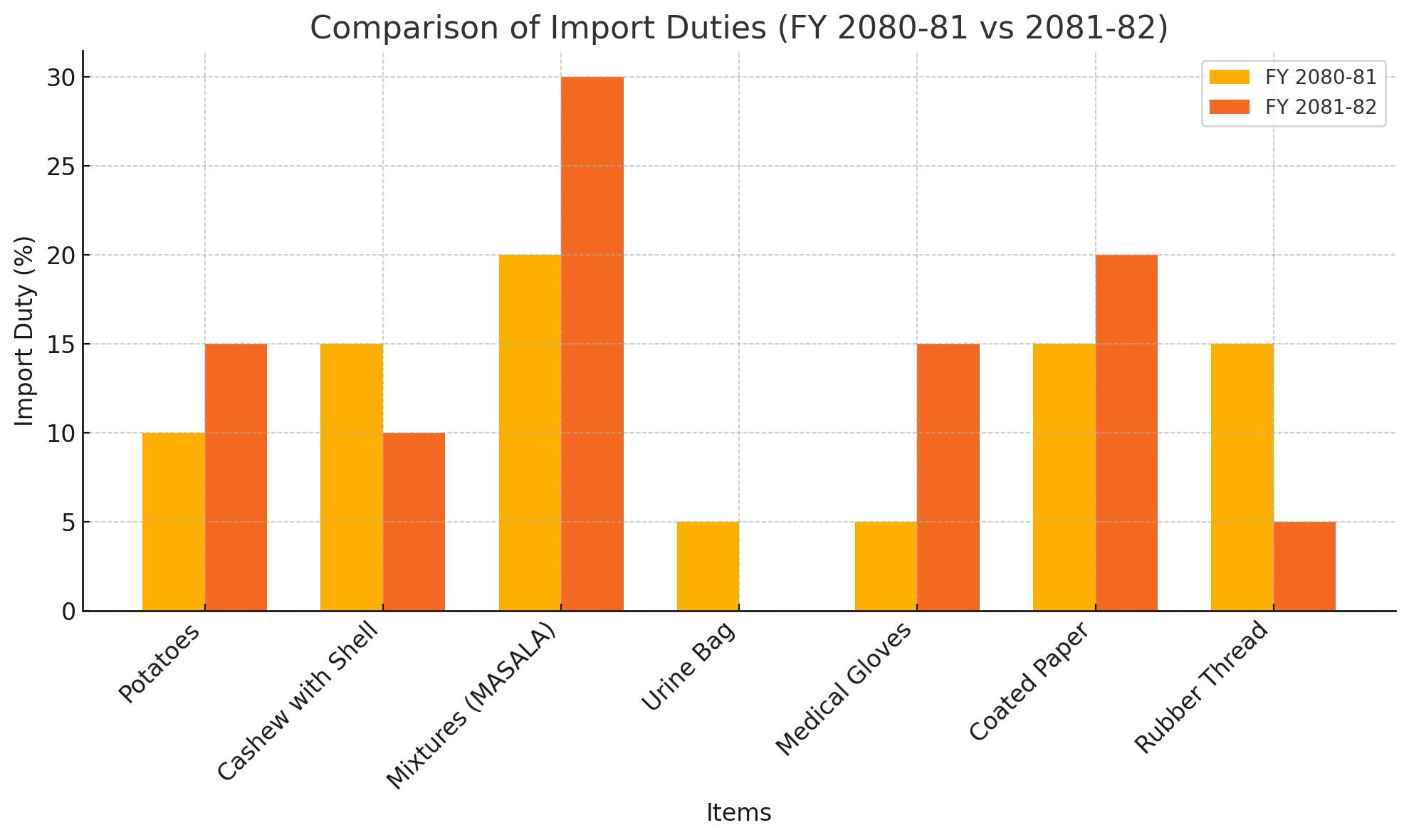
import duty2 min readMajor Changes in Import Duties Announced in Nepal’s Finance Bill 2081The Finance Bill 2081 has introduced a series of changes to Nepal's import duty structure, significantly altering the cost dynamics of various goods. Duties on essential food items like potatoes have been increased from 10% to 15%, signaling a push to encourage domestic agricultural production. In contrast, the duty on cashew nuts with shells has been reduced from 15% to 10%, potentially to benefit food processors and importers. A sharp increase is seen in the import duty for spice mixtures (MASALA), which jumped from 20% to 30%, likely to promote locally blended spices. In the medical sector, import duty on urine bags has been removed entirely (previously 5%), while medical gloves saw a jump from 5% to 15%. Meanwhile, paper products used in packaging and printing have become more expensive, with duty raised from 15% to 20%. On the flip side, rubber thread and cord now face reduced duty, dropping from 15% to 5%, suggesting a boost to the textile or elastic product manufacturing sector. Overall, the revised duties reflect a strategic policy shift toward import substitution and domestic industry promotion.Trading view·24 May, 2025
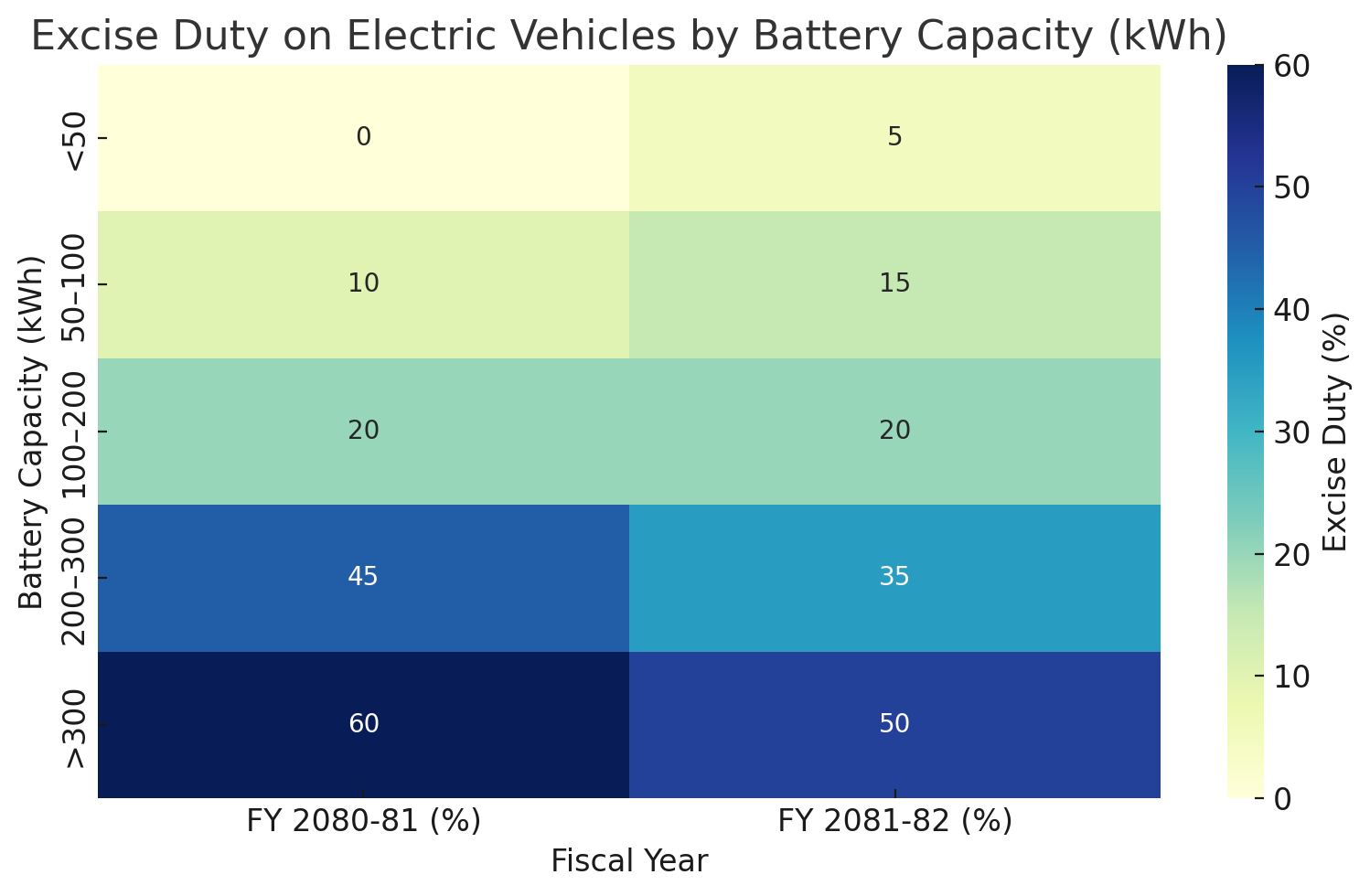
Excise Duty2 min readMajor Adjustments on Electric Vehicles, Tobacco, and Consumer GoodsThe Government of Nepal has revised excise duties for Fiscal Year 2081/82, impacting electric vehicles, tobacco, alcoholic drinks, and several consumer goods. EVs now face updated duty rates based on battery capacity, with new 5% duty on transport EVs and four-wheelers. Excise duty on e-cigarettes is fixed at 40% or Rs. 475/kg, while higher rates apply to alcohol and tobacco-based products. New excise duties are imposed on laptops, hydraulic brake fluids, cement supplements, and eco-friendly utensils. Ice cream excise is raised from 20% to 30%. Excise duty has been removed from tempered and laminated safety glass used in vehicles and aircraft. These reforms aim to boost revenue, promote clean energy, and enhance public health.Trading view·24 May, 2025