Popular News
Latest
Popular
NEPSE Trading
Stock
Dipesh Ghimire
Hidden Crisis? Rising Non-Performing Loans Threaten Nepal’s Financial Stability
Hidden Crisis? Rising Non-Performing Loans Threaten Nepal’s Financial Stability As Nepal grapples with slowing economic activity, a silent storm is brewing in the heart of its financial system—non-performing loans (NPLs), or bad loans, are increasing at an alarming yet publicly understated rate. Before stepping down, former Governor Maha Prasad Adhikari had already sensed the ticking time bomb within the financial sector. As he presented the monetary policy for the fiscal year 2081/82, he was acutely aware of the surging NPL levels. When NPLs rose from 3.02% in Ashad 2080 to 3.98% in Ashad 2081, he included a provision in point 89 of the monetary policy—calling for the drafting of an Asset Management Act to handle bad loans and non-banking assets. But that promise appears to have evaporated without action or follow-up. There is no official record or update indicating that the draft law was ever submitted to the government before his retirement.
Dipesh Ghimire
3 min read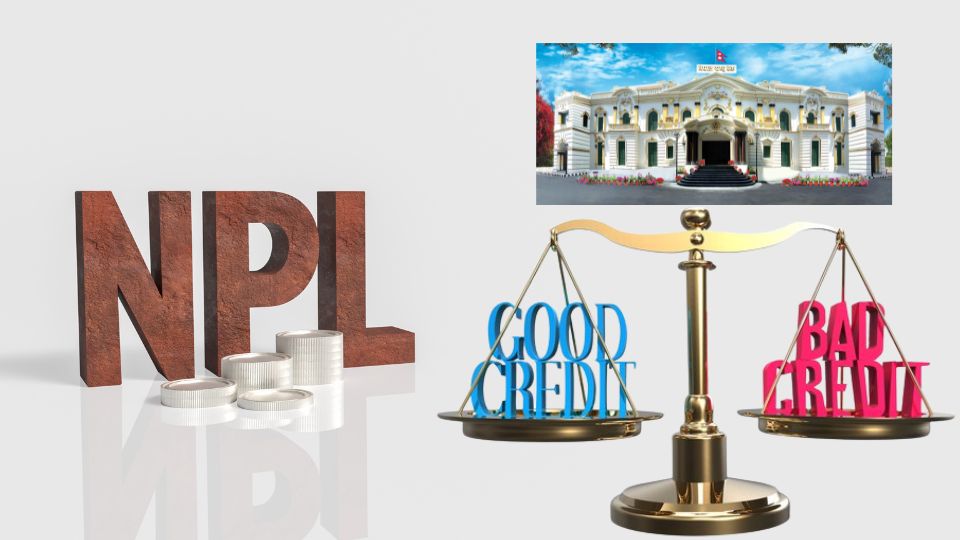
As Nepal grapples with slowing economic activity, a silent storm is brewing in the heart of its financial system—non-performing loans (NPLs), or bad loans, are increasing at an alarming yet publicly understated rate.
Before stepping down, former Governor Maha Prasad Adhikari had already sensed the ticking time bomb within the financial sector. As he presented the monetary policy for the fiscal year 2081/82, he was acutely aware of the surging NPL levels. When NPLs rose from 3.02% in Ashad 2080 to 3.98% in Ashad 2081, he included a provision in point 89 of the monetary policy—calling for the drafting of an Asset Management Act to handle bad loans and non-banking assets.
But that promise appears to have evaporated without action or follow-up. There is no official record or update indicating that the draft law was ever submitted to the government before his retirement.
The Numbers Paint a Deceptive Picture
At the surface, the data published by Nepal Rastra Bank (NRB) shows NPLs reaching 5.24% by the end of Chaitra 2081. While that number is concerning, it hardly sounds alarming. But insiders, private discussions with bankers, and regulatory supervision hint at something more serious—estimates suggest real NPL levels could be 15–20%, more than triple the official figure.
This discrepancy raises questions: Why is there such a gap between the ground reality and the numbers published by NRB? The answer, it seems, lies in a systemic attempt to suppress panic. Banks fear reputational loss, deposit withdrawal threats, and negative publicity if they disclose the true extent of defaults. The central bank, to prevent instability, appears to be turning a blind eye.
What’s Holding Back Recovery and Reforms?
Economic Slowdown: Even after interest rates dropped to single digits, credit demand hasn’t picked up. Businesses are hesitant, and consumers are cautious. Naturally, loan recovery has been weak, pushing more accounts into default.
Lack of Legal Infrastructure: The delay in passing an Asset Management Act, despite repeated mentions in monetary policy, has paralyzed progress. Additionally, there is no strong legal provision for outsourcing loan recovery or transferring asset ownership in case of default.
Cosmetic Fixes Over Structural Reform: Instead of bold steps like revealing the true extent of NPLs or empowering banks to act aggressively, there’s a tendency to announce "Asset Management Companies" without the required regulatory and legal backbone. This seems more like a public relations strategy than a real solution.
Regional Comparison and Complacency
Compared to regional peers:
Bangladesh’s NPL is at 20.2%
Maldives at 11.8%
Pakistan at 7.5%
Against this backdrop, Nepal’s "official" 5.24% seems acceptable—until one realizes that it's likely artificially suppressed. This false sense of control has lulled both the government and NRB into inaction.
Policy Disconnect: From Promise to Paper
The 2081 monetary policy called for an NPL management law draft.
But in 2082, the government’s annual program and budget skipped the law entirely and directly proposed creating an Asset Management Company.
Without a law or regulatory guidelines, how can such a company function? It's a cart-before-the-horse scenario.
This suggests the announcement was possibly made just to appease banks, without a concrete plan.
Bankers’ Role: Complicity and Denial
Not all blame lies with regulators. Bank management teams have their own motives for hiding actual NPL levels:
Many directors—lacking commercial acumen—push for dividends despite mounting bad loans.
Managers fear being blamed for poor recovery, so they opt for loan restructuring tricks, or personal refinancing deals, to make loans appear "regular."
This profit illusion delays real reform and keeps the bad debt problem under wraps.
Systemic Issues Beyond Banks
The financial mess is not just the banks' fault:
Cooperative sector scandals, microfinance disruptions, and political instability have all added fuel to the fire.
Meanwhile, NRB’s tight, sometimes impractical policies during economic contraction have further strangled recovery.
Nepal’s financial system is caught in a paradox: Everyone wants a solution, but no one wants to admit the real problem. The only way out is transparency. The banks must gather the courage to disclose the real NPL figure out of the NPR 5.5 trillion loan portfolio.
Until that happens, all talk of reform, asset management companies, and financial revival will remain wishful thinking. As the article warns, Nepal’s financial crisis reflects the age-old proverb:
“Wants the cream, but hides the gourd”—demanding rescue while hiding the rot.
Nepal is dancing dangerously close to a financial cliff, and the rope it clings to is false data. Unless the NRB, government, and banking sector embrace radical transparency and legislative reform, the storm will eventually hit—louder and harsher.
Advertisement
Written by
Dipesh Ghimire