Popular News4 min readBooks and Resources for Learning About the Stock MarketBooks and Resources for Learning About the Stock Market Investing in the stock market requires both fundamental and technical knowledge. Whether you are a novice investor or an experienced trader, continuous learning and staying updated with the right resources are essential for long-term success in the stock market. In this blog, we will discuss some of the best books and online resources that can make your investment journey more effective.Dipesh Ghimire·4 Oct, 2024
Popular News1 min readJack Ma: The Billionaire Who Rose from Struggles to SuccessJack Ma: The Billionaire Who Rose from Struggles to Success Jack Ma, a Chinese entrepreneur and billionaire, has climbed to the pinnacle of success despite facing numerous failures. Born in 1964 in China, Jack Ma experienced many hardships in the early stages of his life. However, with determination and hard work, he became the successful entrepreneur he is today.Dipesh Ghimire·3 Oct, 2024
Popular News1 min readCurrency : History and Current Situation Currency is a medium of exchange that plays a vital role in the trading of goods and services. Initially, the barter system was used for exchanges, but to make life more convenient, coin and paper money were developed. Today, digital currency and cryptocurrencies are increasingly taking their place.Dipesh Ghimire·7 Sep, 2024
Popular News2 min readCapitalist Economy: Characteristics, Strengths, and Weaknesses A capitalist economy is an economic system where the means of production, such as land, factories, and labor, are privately owned. In this system, government intervention is minimal, and economic activities are primarily driven by private ownership. In a capitalist economy, the following activities are carried out autonomously: Determination of sectors and timing for investment. Selection of goods and services to be produced. Determination of the market for sale.Dipesh Ghimire·4 Sep, 2024
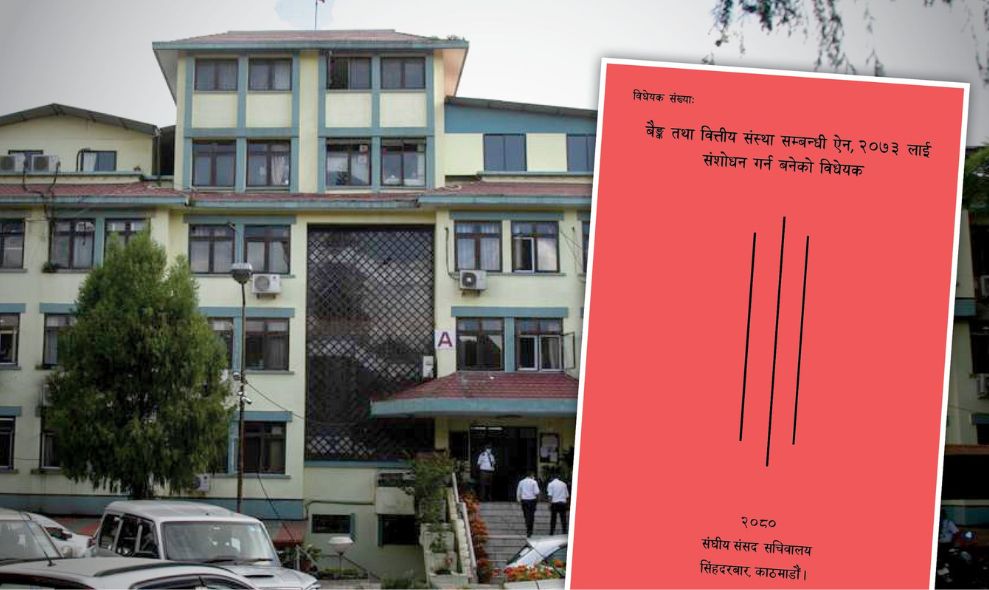
Popular News4 min readAmendment to the Banks and Financial Institutions Act (BAFIA) 2073: Reforms and New Provisions in the Banking Sector To further strengthen and organize Nepal's banking sector, a proposal to amend the Banks and Financial Institutions Act (BAFIA) 2073 is currently under consideration in the House of Representatives. The Ministry of Finance has pushed the BAFIA amendment bill forward to implement the latest practices developed in national and international financial systems, enhance financial security, and adapt to technological changes. This bill seeks to bring four major changes to the banking sector. 1. Proposal to Separate Bankers and Entrepreneurs One of the main challenges in Nepal's banking sector is the relationship between bank investors and entrepreneurs, and the associated risks. The bill proposes that any individual holding more than 1% of the paid-up capital of any bank should not be allowed to borrow from other banks or financial institutions. The current limit is 2%. This provision aims to tighten controls on investors in the banking sector and reduce the possibility of uncontrolled investments. Under Section 52 of the BAFIA bill, it is proposed that banks and financial institutions should not provide any loans or facilities to affiliated persons or those with significant ownership in any bank. This provision is expected to help minimize financial risks in the banking sector. However, stakeholders have expressed concerns that this provision might negatively impact the investment climate due to investments made by businesses in the banks.Dipesh Ghimire·2 Sep, 2024
Popular News3 min readIPO Pipeline Status: A Closer Look at the Upcoming Public Offerings Nepal's capital market is set to witness a wave of Initial Public Offerings (IPOs) as several companies across diverse sectors prepare to go public. According to the latest data from SEBON, a total of 26 companies are in the IPO pipeline, collectively seeking to raise NPR 26.81 billion by issuing approximately 160.61 million shares. This influx of IPOs is a reflection of the growing interest among businesses to tap into public capital, and it provides a diverse range of investment opportunities for investors.Dipesh Ghimire·28 Aug, 2024
Popular News3 min readWhat is a Bull Market ? A bull market is a financial market in which the prices of securities are rising or are expected to rise. It is characterized by a sustained increase in market prices, which encourages investors to buy more. A market is considered a bull market when it rises by 20% or more from recent lows. Bull markets boost investor confidence and motivate them to buy more securities.Dipesh Ghimire·23 Jul, 2024
Economy2 min readImpact and Strategies When Interest Rates on Savings and Term Deposits Decrease With the start of the fiscal year 2081/82, all banks and financial institutions have reduced the interest rates on savings and term deposit accounts. Commercial banks have announced an average interest rate of 3% on regular savings accounts and 6% on term deposit accounts. According to recent data published by Nepal Rastra Bank, consumer inflation is averaging at 5%. This means that something which cost NPR 100 yesterday now costs NPR 105. In this situation, a 3% interest on savings cannot keep up with inflation. Such a move by the banks discourages savers. Observing the decisions made by banks to reduce interest rates over the past 5-6 months, there is a possibility that interest rates may drop even further. Dipesh Ghimire·20 Jul, 2024
Economy3 min readKey Terms in the Stock Market Entering the securities market can be daunting without understanding some important terminology. Many people feel left behind when they enter the stock market without grasping the basics. Here, we provide explanations of some key terms related to the securities market, which will be useful for anyone looking to enter or enhance their knowledge of the stock market.Dipesh Ghimire·16 Jul, 2024
Economy1 min readNepal Rastra Bank: Regulator of the Country's Monetary SystemNepal Rastra Bank (NRB) is the central bank of Nepal, established on April 27, 1956 (Vaishak 14, 2013 BS). Its primary mandate is to regulate and operate the monetary system of the country. The bank manages and oversees the issuance and management of Nepalese currency notes and coins.Dipesh Ghimire·16 Jul, 2024