Top3 min readOnly Seven Foreign Reinsurance Brokers Establish Offices in Nepal Despite Regulatory DeadlineOnly Seven Foreign Reinsurance Brokers Establish Offices in Nepal Despite Regulatory Deadline Out of 44 foreign reinsurance broker companies registered with the Nepal Insurance Authority, only seven have established contact offices in Nepal so far, even after the expiry of the second regulatory deadline. The move highlights slow compliance with domestic regulations aimed at strengthening oversight and transparency in the reinsurance market. Under the Reinsurance Directive 2080, foreign brokers seeking to operate with Nepali insurers are required to register with the Authority and open a local office. Companies from India, Malaysia, the United Arab Emirates (UAE), and Singapore have so far complied with this requirement. The latest deadline, which ended in Poush, marked the second extension granted by the regulator.Dipesh Ghimire·16 Feb, 2026
Top3 min readReal Estate Transactions Continue to Rise in Magh, Signaling Gradual Market RecoveryReal Estate Transactions Continue to Rise in Magh, Signaling Gradual Market Recovery Nepal’s real estate sector maintained its upward momentum in Magh of the current fiscal year 2082/83, extending the recovery that began in Mangsir. After months of slowdown earlier in the year, property transactions, land fragmentation, and related revenue collection have shown consistent improvement, indicating renewed activity in the housing and land market. According to data from the Department of Land Management and Archives, a total of 193,920 property transactions were recorded in Magh this year. In comparison, only 132,031 transactions had been registered in the same month of the previous fiscal year. This reflects a year-on-year growth of 16.57 percent, highlighting a noticeable revival in market participation. Land subdivision activities have also increased during the period. In Magh 2082, around 54,132 land parcels were divided into 120,426 individual plots. This compares with 51,027 parcels and 114,206 plots in the same month last year. The rise suggests that both developers and individual landowners are becoming more active, preparing properties for sale and development.Dipesh Ghimire·16 Feb, 2026
Top4 min readGovernment Proposes Major Overhaul of Central Bank Law to Strengthen Independence and GovernanceGovernment Proposes Major Overhaul of Central Bank Law to Strengthen Independence and Governance The government has proposed sweeping amendments to the law governing the country’s central bank, aiming to restructure its board, tighten the appointment and removal process of the governor, and reinforce institutional autonomy. The draft amendment to the Nepal Rastra Bank Act seeks to align the central bank’s framework with internationally accepted standards and reduce political influence over monetary authorities. Under the proposed revision, the board of Nepal Rastra Bank will be expanded from seven to nine members. The new structure will include five independent non-executive directors, giving them a majority position. Officials say this change is intended to limit direct government intervention and strengthen professional oversight in policy-making.Dipesh Ghimire·16 Feb, 2026
NEPSE3 min readNEPSE Revises IPO Opening Price Rules, Shifting Focus to Face ValueNEPSE Revises IPO Opening Price Rules, Shifting Focus to Face Value The Nepal Stock Exchange (NEPSE) has revised its mechanism for determining the opening trading range of companies listed after issuing initial public offerings (IPOs). Under the new provision, companies with positive net worth will no longer have their opening prices linked to per-share net worth. Instead, the exchange will set the first trading range based on the face value of shares, allowing prices to fluctuate up to three times the nominal value. Previously, NEPSE determined the opening range by taking up to three times the net worth per share stated in a company’s prospectus. This method was considered closer to a firm’s financial position. However, the revised rule removes this provision, marking a significant shift in how newly listed stocks enter secondary trading. According to NEPSE spokesperson Murahari Parajuli, companies with positive net worth will now have an opening range capped at three times their face value. In contrast, firms with negative net worth will still have their opening range calculated based on three times their net worth. Officials say the change aims to simplify pricing and reduce disputes during the listing process.Dipesh Ghimire·15 Feb, 2026
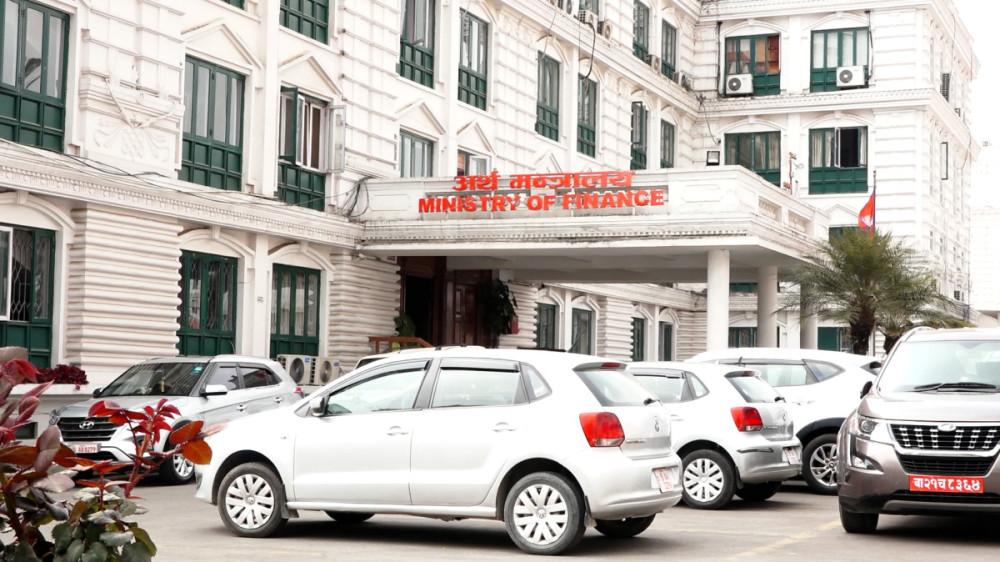
Top4 min readNepal Moves to Formally Prosecute Insurance Crimes Under New Legal FrameworkNepal Moves to Formally Prosecute Insurance Crimes Under New Legal Framework The government has begun formal preparations to implement provisions of the Insurance Act 2079 that allow insurance-related crimes to be registered and prosecuted as separate legal offences. With this move, irregularities, fraud, and financial misconduct in the insurance sector will no longer be treated only as general “fraud” cases but will be addressed under a dedicated legal category of “insurance crimes.” The initiative follows proposals submitted by the Nepal Insurance Authority to the Ministry of Finance Nepal, seeking procedural and institutional arrangements to enforce the new law. Officials say the aim is to strengthen regulatory oversight and bring greater accountability to a sector that handles large volumes of public funds. For the first time, Section 140 of the Insurance Act has clearly defined various forms of insurance-related offences. To operationalize these provisions, the Ministry of Finance sought legal consultation from the Judicial Council Nepal. The Council has recommended that insurance crime cases be handled by district courts. Once the government issues a formal decision, the state will file cases as the plaintiff under Section 146 of the Act.Dipesh Ghimire·15 Feb, 2026
Top3 min readLife Insurance Sector Sees Profit Decline in Second Quarter of FY 2082/83Life Insurance Sector Sees Profit Decline in Second Quarter of FY 2082/83 Nepal’s life insurance sector recorded a decline in overall profitability in the second quarter of the current fiscal year 2082/83, reflecting the growing impact of falling interest rates and investment returns. According to financial data up to the end of Poush, total net profit of life insurance companies dropped by 4.72 percent compared to the same period last year, raising concerns about earnings sustainability in the sector. During the review period, 14 life insurance companies collectively earned a net profit of Rs 3.32 billion. In contrast, the same companies had reported Rs 3.48 billion in profits in the corresponding period of the previous fiscal year. Although nine companies posted profit growth, declines in several major firms outweighed the gains, resulting in an overall contraction in sector earnings.Dipesh Ghimire·15 Feb, 2026
Top3 min readSeparate Bank Accounts Introduced to Enhance Transparency in Election SpendingSeparate Bank Accounts Introduced to Enhance Transparency in Election Spending Political parties and candidates contesting the upcoming election scheduled for Falgun 21 have begun opening separate bank accounts to disclose their campaign finances to the Election Commission of Nepal. The move marks a significant step toward strengthening transparency and accountability in election-related spending, as authorities intensify efforts to regulate campaign financing. According to the Commission, candidates and parties are now required to operate dedicated bank accounts exclusively for election-related income and expenditure. This system is intended to ensure that all financial transactions linked to campaigning are properly recorded and monitored. Officials say the initiative aims to discourage unregulated funding and promote fair competition among candidates. Assistant Spokesperson Yagya Prasad Bhattarai stated that so far, 454 candidates and four political parties have submitted details of their separate bank accounts. A total of 3,406 candidates, including party nominees and independents, are contesting the election. The Commission expects this number to rise in the coming days as more candidates complete the registration process.Dipesh Ghimire·15 Feb, 2026
Top2 min readGulfstream G700 Draws Spotlight at Singapore Airshow as Ultra-Wealth Fuels Luxury Jet DemandGulfstream G700 Draws Spotlight at Singapore Airshow as Ultra-Wealth Fuels Luxury Jet Demand The unveiling of the Gulfstream Aerospace G700 at the recent Singapore Airshow underscored a broader shift in global aviation—one driven not by mass travel demand, but by the rapid rise of the ultra-wealthy. Positioned among commercial and military aircraft, the G700 stood out for its advanced avionics, long-range performance, and meticulously crafted luxury interiors, quickly becoming one of the most talked-about aircraft at the exhibition. Inside, the aircraft resembles a flying luxury residence rather than a conventional jet. Configurations include spacious lounge areas with reclining sofas, high-definition entertainment systems, private sleeping suites, and even shower-equipped bathrooms. Such features reflect a growing expectation among high-net-worth travelers that air travel should offer not only speed but exclusivity, privacy, and comfort comparable to five-star hospitality.Dipesh Ghimire·15 Feb, 2026
Top3 min readKarnali Corridor Road Paving Project Brings New Hope to Bajura and Himalayan CommunitiesKarnali Corridor Road Paving Project Brings New Hope to Bajura and Himalayan Communities The long-awaited blacktopping of the road section from Pilichaur in Jagannath Rural Municipality to Kawadi in Himali Rural Municipality under the Karnali Corridor has raised new hopes among residents of Bajura and surrounding areas. Considered a key infrastructure project for improving living standards in Sudurpaschim and Karnali provinces, the initiative is expected to transform mobility, trade, and access to basic services in one of Nepal’s most remote regions. For decades, local residents have endured difficult travel conditions marked by dust in the dry season, mud during monsoon, and frequent risks of accidents. The absence of a reliable road network had isolated communities from markets, hospitals, and educational institutions. With the announcement of blacktopping, people now anticipate safer and faster transportation, reduced travel costs, and improved connectivity with regional and national centers.Dipesh Ghimire·15 Feb, 2026
Top3 min readRevenue Shortfall Forces Cut in Fiscal Equalization Grants to Provinces and Local LevelsRevenue Shortfall Forces Cut in Fiscal Equalization Grants to Provinces and Local Levels The federal government has reduced the fiscal equalization grants allocated to provincial and local governments after revenue collection fell significantly short of the annual target in the first half of the current fiscal year 2082/83. The decision follows a mid-year review that revealed slower-than-expected income generation, putting pressure on the federal treasury and compelling adjustments in intergovernmental fiscal transfers. In a circular issued on Magh 27, the Office of the Financial Comptroller General instructed all Treasury and Accounts Controller Offices to limit the disbursement of the third installment of fiscal equalization grants. According to the directive, revenue collection until the end of Poush stood at only 81.75 percent of the targeted amount for the review period. Based on this proportion, the Ministry of Finance directed that transfers to provinces and local bodies be adjusted accordingly.Dipesh Ghimire·15 Feb, 2026