Top2 min readLaxmi Sunrise Bank Slips into NPR 273 Million Loss as Bad Loan Provisions SurgeLaxmi Sunrise Bank Slips into NPR 273 Million Loss as Bad Loan Provisions Surge KATHMANDU – Laxmi Sunrise Bank Limited (LSL), formed through a high-profile merger to become one of Nepal’s largest private lenders, has reported a surprising net loss for the second quarter of the current fiscal year. The unaudited financial statement reveals a stark reversal of fortune, moving from a healthy profit last year to a deficit in the first six months of the current period. The bank recorded a net loss of NPR 273.6 million as of mid-January (Poush end). This stands in sharp contrast to the NPR 1.16 billion net profit the bank earned during the same period in the previous fiscal year.Dipesh Ghimire·29 Jan, 2026
Top2 min readAnalyzing Standard Chartered Nepal’s Q2: Strategic Caution or a Profitability Crisis?Analyzing Standard Chartered Nepal’s Q2: Strategic Caution or a Profitability Crisis? KATHMANDU – For years, Standard Chartered Bank Nepal (SCB) has been the gold standard for banking efficiency in Nepal. However, its second-quarter (Q2) financial results for the current fiscal year suggest that even the most seasoned international players are not immune to the domestic economic slowdown. The bank reported a 16.29% drop in net profit, falling to NPR 1.37 billion. While on the surface this looks like a setback, a deeper look at the data reveals a bank prioritizing "Safety over Scale." The Net Interest Income Squeeze The most telling figure in SCB’s report is the 9.13% decline in net interest income. Dipesh Ghimire·29 Jan, 2026
Top2 min readAnalyzing Global IME Bank’s Q2 Performance: A Balance of Stability and Growth ChallengesAnalyzing Global IME Bank’s Q2 Performance: A Balance of Stability and Growth Challenges KATHMANDU – Global IME Bank (GBIME), the heavy hitter of Nepal’s banking sector, has unveiled its second-quarter financial results for the current fiscal year. While the headline numbers show a steady ship, a deeper dive into the balance sheet reveals a bank navigating through a complex interest rate environment while leaning on its massive scale for stability. The Profitability Pivot The bank reported a net profit of NPR 3.25 billion, a 6.50% growth year-on-year. While a growth of six percent might seem modest compared to the high-flying years of the past, in the current sluggish economy, this represents a resilient performance. Interestingly, this profit growth did not come from its core lending business—net interest income actually fell by 3.33%. Instead, the bank compensated for this by boosting its non-interest income, particularly from fees and commissions, which jumped by nearly 10%.Dipesh Ghimire·29 Jan, 2026
NEPSE2 min readNEPSE Navigates Volatility: Market Holds Support at 2,731 Amidst Election OptimismNEPSE Navigates Volatility: Market Holds Support at 2,731 Amidst Election Optimism The Nepal Stock Exchange (NEPSE) witnessed a day of intense "tug-of-war" between buyers and sellers on Wednesday. Despite significant intraday fluctuations, the benchmark index managed to close in green, gaining 5.38 points (0.20%) to settle at 2,731.89 points. The market opened with uncertainty following Tuesday’s sharp decline of 42.58 points. However, positive sentiment surrounding the upcoming election announcement acted as a catalyst, preventing a further slide. While the index showed resilience, investor caution was evident as the total turnover dropped to NPR 11.49 billion, compared to NPR 14.16 billion in the previous session. Sectoral Performance and Top Gainers The day was marked by a mixed performance across sub-indices. Eight out of thirteen sectors closed in positive territory. The Finance sector led the gains with a 1.24% increase, followed by significant interest in Hydropower. Conversely, heavyweights like Commercial Banks, Life Insurance, and Microfinance faced selling pressure, dragging down their respective indices.Dipesh Ghimire·28 Jan, 2026
Top2 min readCourt Case Against CDSC, But Market Obstacles PersistCourt Case Against CDSC, But Market Obstacles Persist In the ongoing legal battle against the CDS and Clearing Limited (CDSC), the affected parties have been forced to seek legal recourse. The Patan High Court has taken the petition filed by Pure Energy seriously, issuing an order for an expedited hearing. The court's involvement in the case reflects the growing concerns surrounding the halt in the dematerialization process and its implications for the capital market. In the case involving the Golyam Group, although the court did not issue an interim order, it provided legal interpretation suggesting that the existing single ISIN system could proceed as per its current application. This directive appeared to align with the established legal framework. However, despite these legal instructions, the CDSC's ongoing obstruction of share dematerialization has led to further concerns that the issue is being deliberately prolonged. The actions taken so far have done little to resolve the core issue, instead deepening market uncertainty.Dipesh Ghimire·28 Jan, 2026
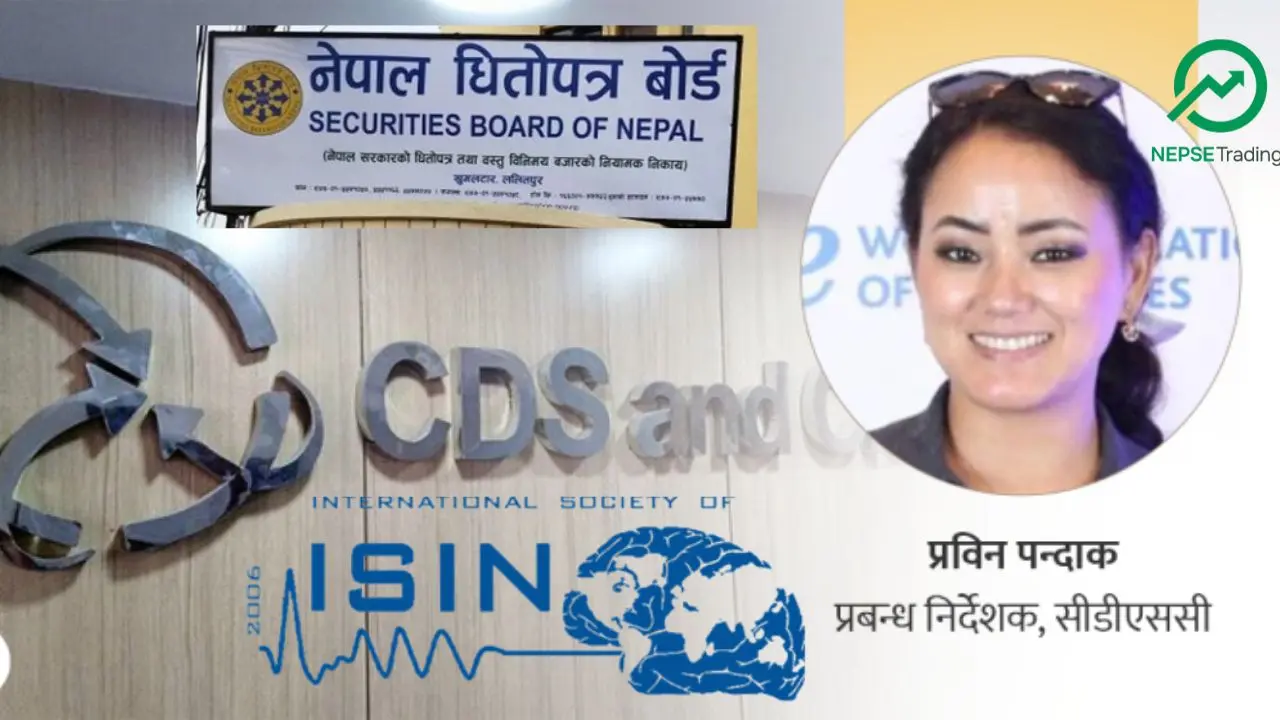
Top3 min readTense Sebon Meeting Ends Without Resolution Amidst Controversy Over Double ISINTense Sebon Meeting Ends Without Resolution Amidst Controversy Over Double ISIN The Securities Board of Nepal (Sebon) convened an urgent meeting on Monday under immense pressure from investors and stakeholders to address the ongoing controversy surrounding the implementation of the ‘double ISIN’ system. The meeting saw intense debates, particularly between the CEO of CDS and Clearing Limited (CDSC), Pravin Pandhak, and the members of Sebon’s board. Despite the lengthy discussions, the meeting concluded without any clear resolution, leaving the contentious issue unresolved. At the heart of the debate was Pandhak’s firm stance that there is no alternative to the double ISIN system. His statement, “There is no substitute for double ISIN,” sparked heated arguments among Sebon’s board members. While Pandhak remained steadfast in his position, most board members disagreed, asserting that CDSC should not be acting as a regulatory body but rather as a technical service provider. They emphasized that any decision made outside the legal framework would be unlawful, and that regulatory actions should be taken in accordance with existing laws.Dipesh Ghimire·28 Jan, 2026
Top2 min readLong-Term Risks Looming Over Nepal’s Capital Market Due to Regulatory ConflictLong-Term Risks Looming Over Nepal’s Capital Market Due to Regulatory Conflict The ongoing conflict between regulatory bodies and implementing agencies has led to growing concerns about the long-term risks in Nepal's capital market. The friction between these institutions has significantly affected market stability, and the financial sector is beginning to feel the impact. Banks and financial institutions that have provided loans against shares are now facing increased risk exposure, as the situation remains unresolved. At the same time, investments in productive sectors, such as hydropower, are gradually losing momentum due to the uncertainty caused by this conflict.Dipesh Ghimire·28 Jan, 2026
Top2 min readCEO Pravin Pandhak's Stubborn Stance Halts Dematerialization Process in NepalCEO Pravin Pandhak's Stubborn Stance Halts Dematerialization Process in Nepal The attempt to implement a ‘double ISIN’ system by Pravin Pandhak, the CEO of CDS and Clearing Limited (CDSC), has caused a significant disruption in Nepal’s dematerialization (demat) process for securities. Pandhak’s refusal to back down on this controversial stance, which lacks legal sanction, has led to a halt in the process of dematerializing founder shares in the country’s capital market. The core issue lies in the 'Securities Dematerialization Operational Directive-2082,' which CDSC introduced but has not yet received approval from the Securities Board of Nepal (Sebon). Despite the draft directive being unapproved, CDSC pushed ahead with it, halting the dematerialization of founder shares. This action has triggered confusion in the capital market, with concerns over the legal standing and implications of such an unapproved directive.Dipesh Ghimire·28 Jan, 2026
Top2 min readCDS and Clearing Limited CEO's Stance Causes Deadlock at Sebon MeetingCDS and Clearing Limited CEO's Stance Causes Deadlock at Sebon Meeting Pravin Pandhak, the Chief Executive Officer of CDS and Clearing Limited (CDSC), has been at the center of a controversy that has now extended the ongoing conflict regarding the International Securities Identification Number (ISIN) system in Nepal’s securities market. A recent meeting of the Securities Board of Nepal (Sebon) came to an unresolved conclusion after Pandhak’s firm stance on the ‘double ISIN’ system led to a standoff. The meeting, which lasted for four hours, brought together key stakeholders from the financial sector, including representatives from Nepal Rastra Bank, the Ministry of Law, and the Ministry of Finance. Despite clear support from most attendees in favor of a single ISIN system, the meeting failed to arrive at a conclusive decision. The issue at hand is the implementation of the ISIN system, with the majority advocating for the current single ISIN model. They argued that this system would resolve the ongoing issues in compliance with existing laws.Dipesh Ghimire·28 Jan, 2026
Top3 min readAnalysis of Nepal’s Life Insurance Sector Growth in the First Half of FY 2082/083Analysis of Nepal’s Life Insurance Sector Growth in the First Half of FY 2082/083 The first half of the fiscal year 2082/083 has proven to be an incredibly successful period for Nepal's life insurance sector. According to Nepal Insurance Authority, life insurance companies have recorded a substantial business turnover of over NPR 24 billion. By the end of the month of Poush, these companies collectively generated a total premium income of NPR 24.3 billion, marking a significant rise in the country’s insurance market.Dipesh Ghimire·28 Jan, 2026