Top2 min readSix Former Finance Ministers Back in the Electoral Race, but a Pattern of Budget Disruption PersistsSix Former Finance Ministers Back in the Electoral Race, but a Pattern of Budget Disruption Persists As Nepal heads toward the House of Representatives election scheduled for Falgun 21, a striking feature of the candidate list is the return of six former finance ministers and one former state finance minister to the direct electoral contest. Their re-entry into parliamentary politics comes amid renewed debate over one of Nepal’s chronic governance challenges: the inability of finance ministers to deliver and implement consecutive annual budgets. More than 3,400 candidates have filed nominations nationwide for 165 first-past-the-post seats, reflecting both political competition and fragmentation. Among them are senior leaders with long experience in economic management, yet their collective record highlights a structural weakness rather than individual failure.Dipesh Ghimire·21 Jan, 2026
Dipesh Ghimire3 min readElection Momentum Lifts Market Sentiment as NEPSE Breaks Above 2,700Election Momentum Lifts Market Sentiment as NEPSE Breaks Above 2,700 Kathmandu — Nepal’s stock market extended its upward momentum on Tuesday, buoyed by growing election activity and renewed investor confidence. As political uncertainty gradually eases and the country moves deeper into an election cycle, optimism has begun to reflect clearly in market performance. The benchmark index climbed above the key psychological level of 2,700, supported by strong turnover and broad-based buying interest. With nomination filings underway across the country for the House of Representatives election scheduled on Falgun 21, market participants appeared encouraged by expectations of political stability and policy continuity. The upbeat mood translated directly into trading, helping the long-sidelined market recover closer to levels seen before the decline triggered by the so-called “Gen-Z movement.”Dipesh Ghimire·20 Jan, 2026
Top3 min readImporters Call for Urgent Reform in Nepal’s Customs Valuation SystemImporters Call for Urgent Reform in Nepal’s Customs Valuation System Kathmandu — Businesses involved in Nepal’s import trade have called for immediate and practical reforms in the customs valuation and classification system, arguing that existing practices continue to create uncertainty, delays, and additional financial burden. While recent reform initiatives introduced by Finance Minister Rameshwor Khanal have been welcomed in principle, importers say the changes have yet to translate into relief at the operational level. In a set of recommendations submitted to the Department of Customs, importers praised the decision to abolish the long-criticized valuation reference book. However, they claim that the reform has exposed new gaps in implementation. According to business representatives, several customs officials remain unclear about the revised procedures due to a lack of proper training and continue to apply outdated valuation logic in practice.Dipesh Ghimire·20 Jan, 2026
Top3 min readYango’s Rapid Rise Redraws Nepal’s Ride-Sharing Market, Raises Questions on SustainabilityYango’s Rapid Rise Redraws Nepal’s Ride-Sharing Market, Raises Questions on Sustainability Kathmandu — A new ride-sharing app, Yango, has emerged as a strong disruptor in Nepal’s urban transport market, rapidly reshaping competition that was long dominated by Pathao and inDrive. Having entered the Nepali market only about eight months ago, Yango has already gained significant traction, largely due to aggressive pricing and incentive strategies aimed at students and low-income commuters. The app’s most striking feature is its low entry fare of NPR 40, a rate that undercuts existing competitors and appeals strongly to cost-conscious users. In cities where daily commuting costs have become a growing concern, this pricing has quickly turned Yango into a preferred option for short-distance travel, particularly among young riders.Dipesh Ghimire·20 Jan, 2026
Top3 min readDigital Campaigning Reshapes Nepal’s Election LandscapeDigital Campaigning Reshapes Nepal’s Election Landscape As information and communication technologies continue to advance, Nepal’s election campaigning style is undergoing a visible transformation. Political outreach that was once dominated by rallies, street speeches, and loud public gatherings is increasingly shifting toward digital platforms. Social media has emerged as a powerful tool to reach younger voters and a growing population of Nepalis living abroad, fundamentally altering how political messages are crafted and delivered. This shift became evident during the 2079 BS local elections, when newly formed political parties and independent candidates relied heavily on social media to communicate their agendas. Their success prompted traditional parties to rethink their approach in subsequent provincial and federal elections. Today, almost all political parties and candidates are refining their campaign strategies by using digital tools to present policies, visions, and appeals directly to voters.Dipesh Ghimire·20 Jan, 2026
Top3 min readChina’s Growth Holds at 5% in 2025, but Cracks Emerge Beneath the SurfaceChina’s Growth Holds at 5% in 2025, but Cracks Emerge Beneath the Surface China managed to keep its economy growing at an annual rate of 5 percent in 2025 despite sustained trade pressure from the United States, according to official data. The headline figure meets Beijing’s long-standing growth target, but a closer look at the numbers suggests that the momentum has become increasingly uneven, with exports carrying much of the burden while domestic demand continues to lag. Figures released by the National Bureau of Statistics of China show that economic growth slowed markedly toward the end of the year. In the October–December period, the economy expanded by just 1.2 percent quarter-on-quarter, the weakest performance since late 2022. Annual growth in the final quarter fell to 4.5 percent, down from 4.8 percent in the previous quarter, indicating that underlying pressures intensified as the year progressed.Dipesh Ghimire·20 Jan, 2026
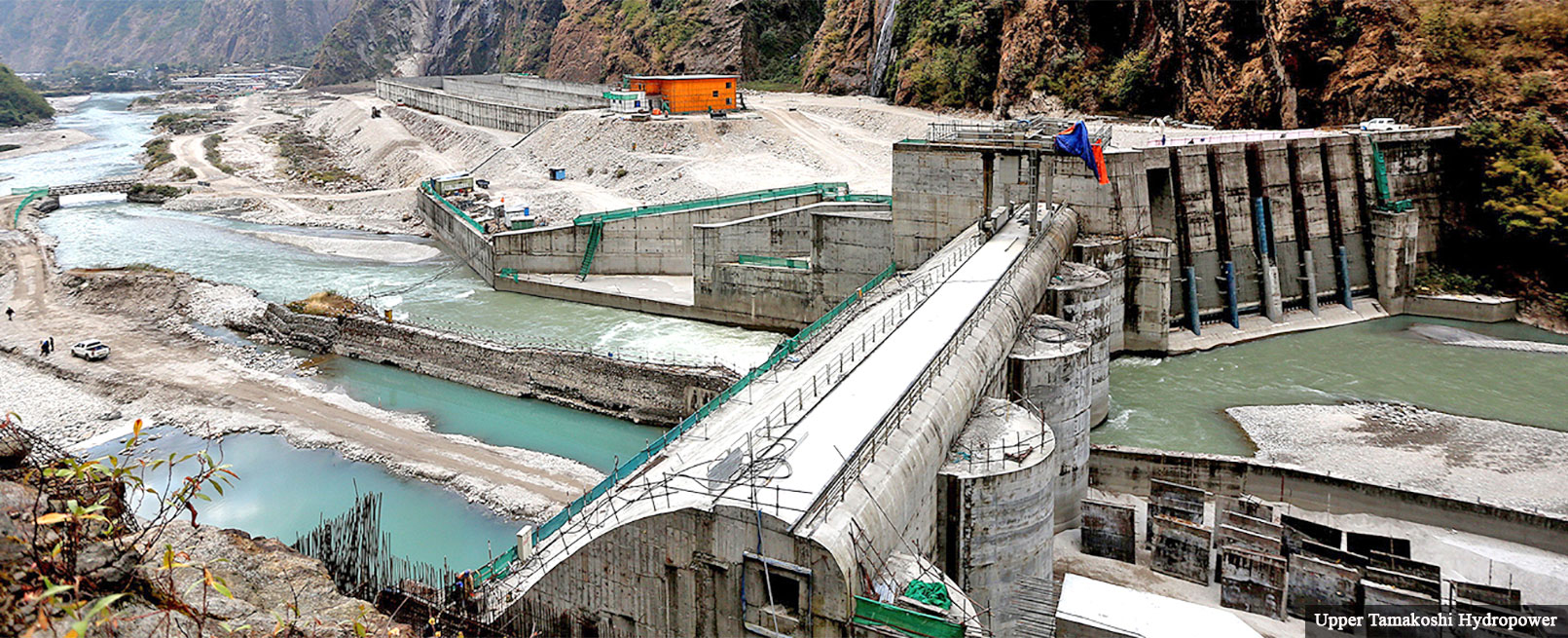
Top3 min readUpper Tamakoshi Faces Governance Test as AGM Delay Raises Investor AlarmUpper Tamakoshi Faces Governance Test as AGM Delay Raises Investor Alarm Kathmandu — Upper Tamakoshi Hydropower Limited is increasingly coming under pressure after repeated delays in holding its Annual General Meeting (AGM), a situation that has begun to erode investor confidence and raised questions about regulatory compliance. With three consecutive years passing without a regular AGM, concerns are growing that the company may be drifting toward a governance vacuum, exposing it to the risk of penalties and even delisting if corrective measures are not taken in time.Dipesh Ghimire·20 Jan, 2026
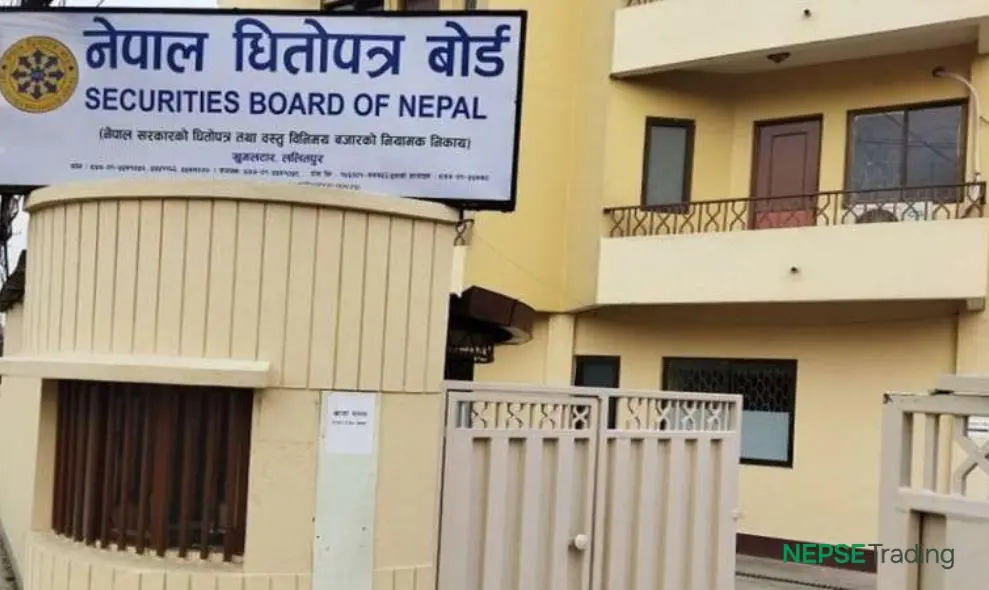
Top3 min readSEBON Eases Seed Capital Rules for Mutual Funds, Signals Shift Toward Performance-Based RegulationSEBON Eases Seed Capital Rules for Mutual Funds, Signals Shift Toward Performance-Based Regulation Kathmandu – Nepal Securities Board (SEBON) has taken a significant policy step by easing the seed capital requirement for mutual fund schemes, marking a clear shift toward performance-based regulation in Nepal’s capital market. The decision allows qualified and experienced fund managers to operate new schemes and issue additional units with lower seed capital, departing from the long-standing uniform requirement of 15 percent. Under the revised framework, fund managers with a proven track record can now operate schemes by investing either 10 percent or, in certain cases, as low as 5 percent seed capital. Previously, the same 15 percent threshold applied to all mutual funds, regardless of experience, scale, or past performance. By introducing differentiated requirements, SEBON has attempted to recognize operational maturity and reward consistent performance within the mutual fund industry.Dipesh Ghimire·20 Jan, 2026
Bangkok Visa2 min readIs Thailand Rejecting Nepali Visas? Bangkok Visa Truth RevealedYes — in 2026, Thailand has become noticeably stricter about tourist visa approvals for Nepali passport holders, especially for visits to Bangkok and other tourist destinations. However, it’s not that Thailand is randomly rejecting Nepali visas; rather, the visa rejection rate has increased because the Royal Thai Embassy Kathmandu is enforcing stronger authenticity checks on travel and financial documents. The truth is that visas are being refused when applications include unverifiable, fake, or incomplete supporting documents. If you understand what the embassy is looking for and prepare your application properly, you can still secure a Thailand visa successfully.Sandeep Chaudhary·20 Jan, 2026
Thailand visa2 min readThailand Tourist Visa Rejection for Nepal: What You Need to KnowIn 2026, Thailand tourist visa rejections for Nepali passport holders have increased noticeably due to tighter verification and enforcement of document authenticity. The Royal Thai Embassy Kathmandu has strengthened checks to ensure that every application reflects genuine travel intent and verifiable proof of stay and funds. Applications that once passed with provisional or loosely supported documents are now being refused if they fail to meet the updated standards.Sandeep Chaudhary·20 Jan, 2026