Top4 min readFinancial Crime: The Silent Killer of Economic Stability and DemocracyFinancial Crime: The Silent Killer of Economic Stability and Democracy In the 21st century, financial crime has evolved into a massive global challenge, extending beyond economic issues to become one of the biggest threats to national security and democratic stability. Unlike traditional crimes that relied on physical weapons, modern “financial terrorism” weaponizes stock market manipulation, money laundering, and policy corruption, often using these tools to destabilize entire nations. These crimes not only illegally capture the hard-earned wealth of citizens but also turn entire governments into puppets controlled by criminal interests.Dipesh Ghimire·22 Jan, 2026
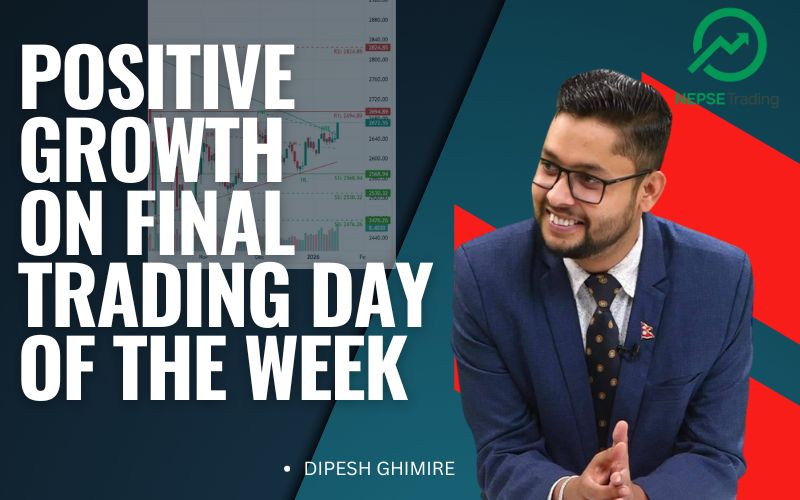
Top3 min readNEPSE Market Closes with Positive Growth on Final Trading Day of the WeekNEPSE Market Closes with Positive Growth on Final Trading Day of the Week On the final trading day of the week, the Nepal Stock Exchange (NEPSE) index closed with a positive gain. After a mild correction on Wednesday, NEPSE made a notable recovery on Thursday, rising by 9.23 points to close at 2,714.61. Along with the index increase, the overall trading volume saw an improvement, reflecting a boost in investor confidence. Trading Volume and Stock Movements: On Wednesday, the total trading volume was 8.92 billion NPR, with 332 stocks traded 94,174 times. However, on Thursday, trading increased significantly, reaching a value of 9.07 billion NPR, with 1.9 million shares being traded. Notably, four stocks saw their share prices hit positive circuit levels: SY Panel Nepal, Trishuli Hydroelectric Company, Srinagar Agri-tech Industry, and Corporate Development Bank. On the other hand, the share price of Kalika Power Company experienced the highest drop of 6.25%.Dipesh Ghimire·22 Jan, 2026
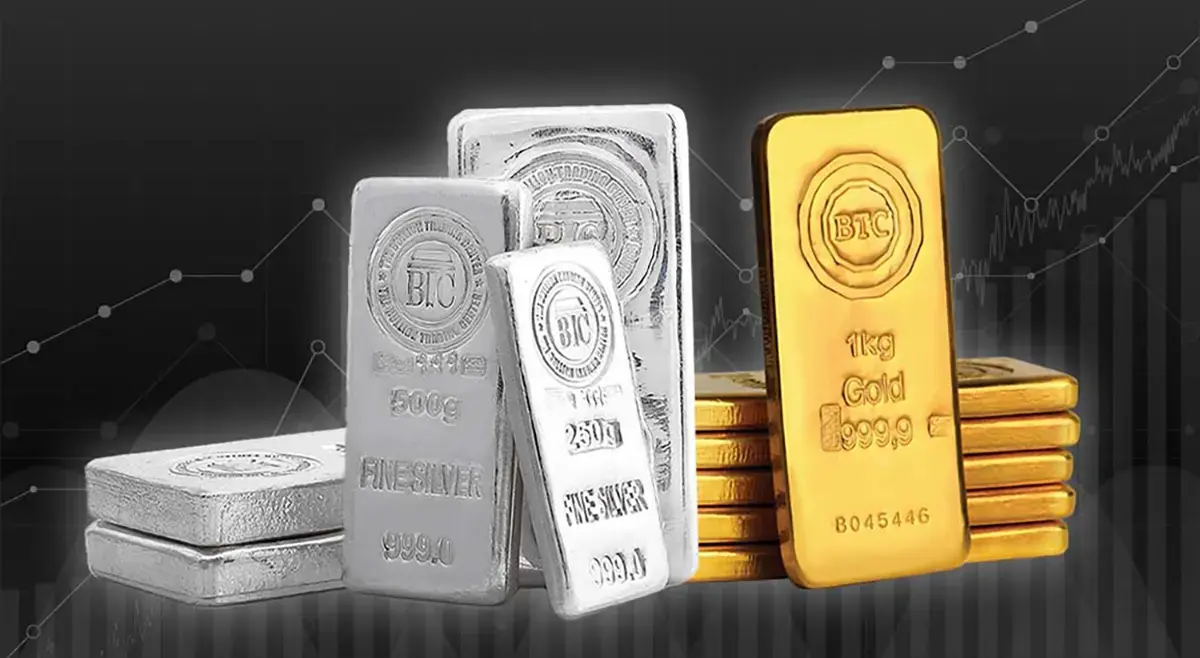
Top3 min readGeopolitical Tensions Push Precious Metal Prices to Historic Highs Amid European Stock Market DeclineGeopolitical Tensions Push Precious Metal Prices to Historic Highs Amid European Stock Market Decline Monday saw a surge in the prices of gold and silver to unprecedented levels, following threats by U.S. President Donald Trump to impose new tariffs on eight European countries in response to their opposition to his Greenland acquisition proposal. As investors grow wary of increasing geopolitical tensions, the stock markets have taken a downturn, while the safe-haven assets like gold and silver have attracted increased interest.Dipesh Ghimire·22 Jan, 2026
Top3 min readAsian Stock Markets Decline Amidst Rising Tensions over Greenland TariffsAsian Stock Markets Decline Amidst Rising Tensions over Greenland Tariffs Asian stock markets faced a general downturn on Wednesday following threats by U.S. President Donald Trump to increase tariffs related to Greenland. The warning has sparked investor concern, leading to a sense of uncertainty across the region.Dipesh Ghimire·22 Jan, 2026
Top2 min readNepal's Foreign Trade Sees Significant Growth in the First Half of the Fiscal Year 2082-83Nepal's Foreign Trade Sees Significant Growth in the First Half of the Fiscal Year 2082-83 In the first six months of the current fiscal year 2082-83 (mid-July to mid-January), Nepal's foreign trade has witnessed a significant increase, as compared to the same period in the previous fiscal year (2081-82). According to the data released by the Department of Customs, both imports and exports have increased substantially, reflecting a positive trend in Nepal's international trade.Dipesh Ghimire·22 Jan, 2026
Top3 min readRecord Real Estate Revenue Masks Structural Risks from Local-Level LapsesRecord Real Estate Revenue Masks Structural Risks from Local-Level Lapses Kathmandu — Nepal’s real estate sector has emerged as one of the strongest contributors to government revenue in the current fiscal year, delivering an unprecedented surge in collections even as administrative failures at the local level threaten to undermine the market’s stability. According to data from the Department of Land Management and Archives, the government collected Rs21.95 billion in revenue from land and property transactions between mid-July and mid-January, the highest figure recorded for this period in the past three fiscal years. The performance reflects a clear rebound in the property market, but analysts warn that the momentum rests on fragile institutional foundationsDipesh Ghimire·21 Jan, 2026
Top2 min readTokyo Market Retreat Reflects Rising Global Unease and Policy UncertaintyTokyo Market Retreat Reflects Rising Global Unease and Policy Uncertainty Kathmandu — A sharp pullback in Japan’s equity market on Tuesday underscored how quickly global investors are retreating to caution amid renewed geopolitical and trade-related tensions. The decline in Tokyo stocks was not driven by domestic fundamentals alone, but by a broader reassessment of risk as uncertainty deepens in the global economy. The benchmark Nikkei 225 fell by more than one percent in a single session, while the broader TOPIX also ended firmly in negative territory. The sell-off reflected investor anxiety following signals that the United States may pursue tougher tariff measures linked to the Greenland issue, reviving fears of another phase of trade friction between major economies.Dipesh Ghimire·21 Jan, 2026
Top2 min readIMF’s Upgraded Outlook Signals India’s Short-Term Strength, but Medium-Term Challenges RemainIMF’s Upgraded Outlook Signals India’s Short-Term Strength, but Medium-Term Challenges Remain Kathmandu — The latest upward revision by the International Monetary Fund (IMF) on India’s economic growth highlights the country’s strong near-term momentum, even as questions persist about the durability of this expansion beyond the current fiscal year. In its updated assessment for fiscal year April 2025 to March 2026, the IMF now projects India’s gross domestic product (GDP) to grow by 7.3 percent, a notable increase from its earlier estimate of 6.6 percent. The revised figure closely aligns with the Indian government’s projection of 7.4 percent, reinforcing confidence in India’s current growth trajectory.Dipesh Ghimire·21 Jan, 2026
Top3 min readBusiness Heavyweights Step Into the Political Arena, Signaling a Shift in Nepal’s Electoral LandscapeBusiness Heavyweights Step Into the Political Arena, Signaling a Shift in Nepal’s Electoral Landscape Kathmandu — The House of Representatives election scheduled for Falgun 21 has revealed a notable shift in Nepal’s political landscape: a surge of candidates from business and entrepreneurial backgrounds competing directly for parliamentary seats. From large-scale industrialists and bankers to stock market investors and startup founders, business figures are entering the electoral race in numbers rarely seen before. Election data show that more than two dozen candidates with strong business credentials have filed nominations for direct seats. This trend cuts across party lines and includes both veteran entrepreneurs and first-time political aspirants, indicating a broader realignment between Nepal’s private sector and formal politics.Dipesh Ghimire·21 Jan, 2026
Top3 min readNepal’s Debt Burden Deepens as Currency Pressure and Weak Revenues Strain Public FinancesNepal’s Debt Burden Deepens as Currency Pressure and Weak Revenues Strain Public Finances Kathmandu — Nepal’s public debt trajectory in the first half of the current fiscal year signals growing fiscal stress, driven less by fresh borrowing alone and more by structural weaknesses in revenue collection and rising exposure to external shocks. Data from the Public Debt Management Office show that between mid-July and mid-January, the country’s total public debt increased by Rs132.34 billion, underscoring the government’s increasing dependence on borrowing to manage routine expenditure. A key factor behind the swelling debt stock has been the steady depreciation of the Nepali rupee against the US dollar. Exchange rate movements alone added Rs70.68 billion to the debt burden by mid-January, highlighting Nepal’s vulnerability to currency fluctuations. As external loan principals are serviced in dollars, every weakening of the rupee translates directly into higher repayment obligations in domestic currency. According to Nepal Rastra Bank, the exchange rate stood at Rs145.76 per US dollar, amplifying the cost of external debt.Dipesh Ghimire·21 Jan, 2026