Top
Tokyo Market Retreat Reflects Rising Global Unease and Policy Uncertainty
Tokyo Market Retreat Reflects Rising Global Unease and Policy Uncertainty Kathmandu — A sharp pullback in Japan’s equity market on Tuesday underscored how quickly global investors are retreating to caution amid renewed geopolitical and trade-related tensions. The decline in Tokyo stocks was not driven by domestic fundamentals alone, but by a broader reassessment of risk as uncertainty deepens in the global economy. The benchmark Nikkei 225 fell by more than one percent in a single session, while the broader TOPIX also ended firmly in negative territory. The sell-off reflected investor anxiety following signals that the United States may pursue tougher tariff measures linked to the Greenland issue, reviving fears of another phase of trade friction between major economies.
Dipesh Ghimire
2 min read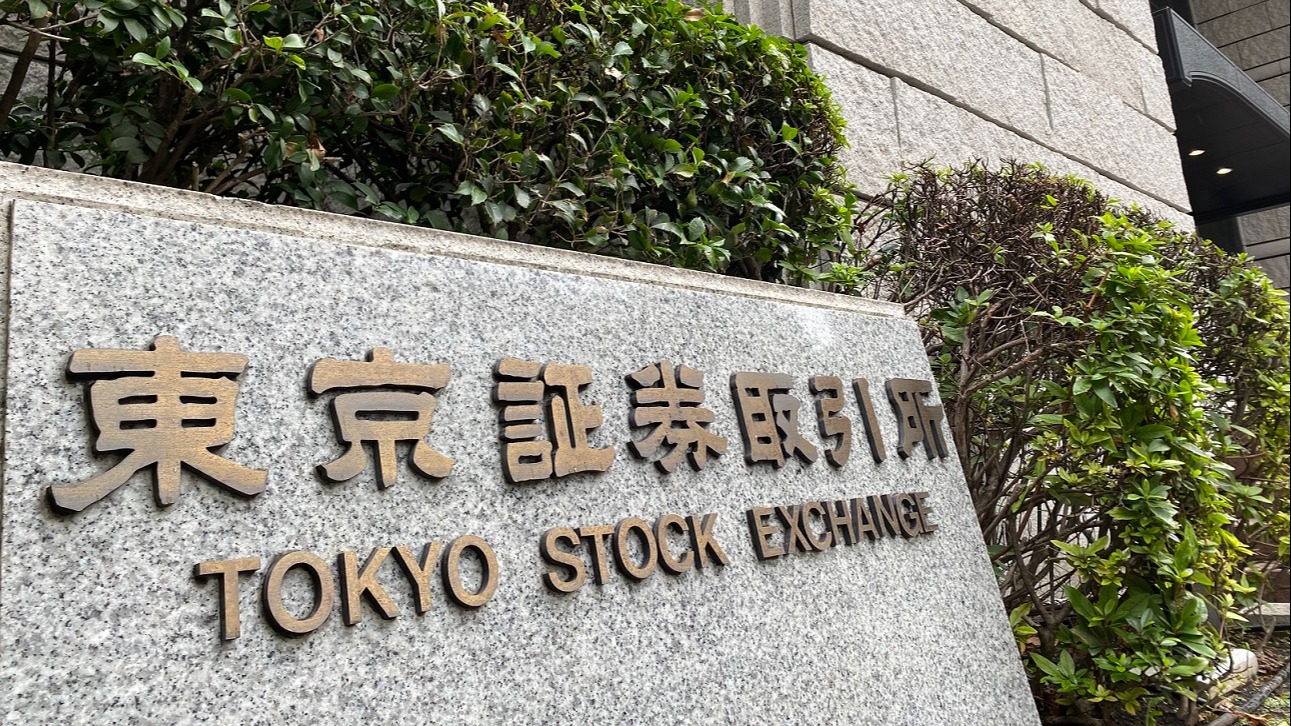
Kathmandu — A sharp pullback in Japan’s equity market on Tuesday underscored how quickly global investors are retreating to caution amid renewed geopolitical and trade-related tensions. The decline in Tokyo stocks was not driven by domestic fundamentals alone, but by a broader reassessment of risk as uncertainty deepens in the global economy.
The benchmark Nikkei 225 fell by more than one percent in a single session, while the broader TOPIX also ended firmly in negative territory. The sell-off reflected investor anxiety following signals that the United States may pursue tougher tariff measures linked to the Greenland issue, reviving fears of another phase of trade friction between major economies.
Global Signals, Local Impact
Although Japan is not directly involved in the latest tariff dispute, analysts note that its export-oriented economy is highly sensitive to disruptions in global trade. Even the possibility of worsening relations between the United States and Europe was enough to trigger profit-taking, particularly in sectors tied closely to global demand.
Stocks related to semiconductors, artificial intelligence, and electronics faced the heaviest selling pressure. These industries have been key drivers of Japan’s recent market strength, but they are also among the first to react when expectations for global growth weaken. Investors appeared concerned that any slowdown in advanced economies could quickly spill over into reduced orders and thinner margins for Japanese manufacturers.
Bond Yields Add to Market Nervousness
Adding to the cautious mood was a notable rise in Japan’s government bond yields. The yield on the 10-year benchmark bond briefly climbed to levels not seen since the late 1990s, reflecting growing expectations that the government may expand fiscal spending and issue more debt. Higher bond yields tend to reduce the relative appeal of equities, particularly growth stocks, and Tuesday’s market moves suggested investors were factoring in tighter financial conditions ahead.
Market participants said the combination of rising yields and external political risk created a “double pressure” on equities, encouraging a shift toward safer assets.
Interpretation: A Market Looking Beyond Borders
The Tokyo market’s decline illustrates how interconnected global financial systems have become. A policy signal from Washington, even one focused on Europe, can ripple through Asian markets within hours. In this context, the fall in Japanese shares appears less like a reaction to immediate economic weakness and more like a preventive adjustment by investors wary of accumulating risks.
Analysts caution that volatility may persist in the near term as markets weigh geopolitical developments, fiscal policy expectations, and the direction of global interest rates. For Japan, the challenge lies in balancing domestic recovery efforts with an increasingly uncertain external environment.
While the day’s losses do not necessarily signal a reversal of Japan’s broader economic trajectory, they serve as a reminder that global confidence remains fragile—and that financial markets are quick to respond when political signals threaten to disrupt already delicate economic balances.
Advertisement
Written by
Dipesh Ghimire