#NepalHealth #PharmaceuticalIm
Pharmaceutical Imports in Nepal Up 1.4%: Is Local Production Still Lagging?
Nepal’s pharmaceutical imports rose by 1.4% in 2025/26, underlining continued dependency on foreign medicines. Limited domestic capacity and weak industrial policy mean local production still lags far behind demand.
Sandeep Chaudhary
1 min read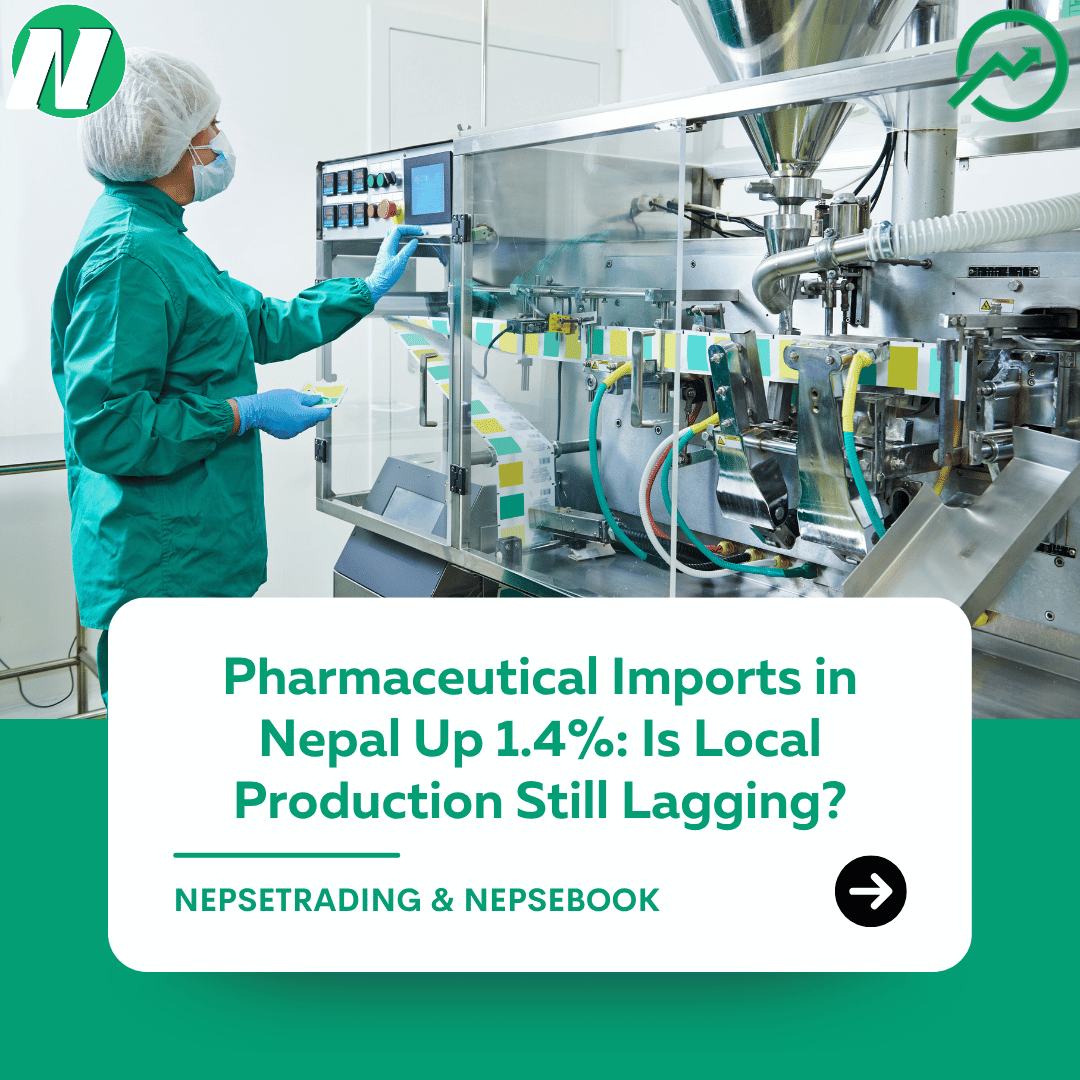
Nepal’s imports of pharmaceutical products (medicines) rose slightly by 1.4% in the first month of 2025/26, reaching Rs. 3.31 billion compared to Rs. 3.27 billion in the same period last year. Though the growth seems modest, pharmaceuticals still hold a 2.3% share of total imports, making them a critical category for Nepal’s health sector.
Analysts say the marginal increase in imports reflects the country’s continued dependence on foreign medicine supplies, particularly from India and other regional markets. Despite repeated government commitments to promote domestic pharmaceutical manufacturing, Nepal’s local production capacity remains limited to a few generic drugs and basic formulations. For specialized medicines, vaccines, and advanced treatments, Nepal still relies almost entirely on imports.
The rise in imports also highlights the growing demand for healthcare and modern medicine in Nepal, driven by urbanization, lifestyle-related diseases, and the expansion of private hospitals and pharmacies. However, this reliance on imports raises concerns about price fluctuations, supply disruptions, and vulnerability during global crises, as seen during the COVID-19 pandemic.
Experts argue that Nepal’s pharmaceutical industry is lagging because of insufficient investment in research, lack of advanced technology, small-scale operations, and weak regulatory support. While local producers meet around 40–45% of demand, they struggle to compete with large-scale Indian firms that benefit from economies of scale. Without stronger government incentives, infrastructure, and partnerships with global pharma companies, Nepal will remain import-dependent in this sector.
Advertisement
Written by
Sandeep Chaudhary