Energy
Plan Now, Deliver on Time: Energy Minister Puts NEA on the Clock for Budget Implementation
The meeting closed with a timeline. The deputy executive directors informed the minister that a detailed action plan is being prepared for submission to the NEA board by Asar 15 — that is, before the new fiscal year even begins. The sequencing matters: Nepal's chronic implementation failure is the year-end spending rush, in which plans are finalized late and budgets are burned in the final quarter. Front-loading the plan so that execution can start from day one of the fiscal year is the textbook remedy. Whether it works will depend on what no action plan can fully anticipate — procurement delays, land acquisition disputes and the everyday friction of building infrastructure in Nepal. The directives are now on record; from Shrawan onward, the only measure that counts is delivery.
Dipesh Ghimire
3 min read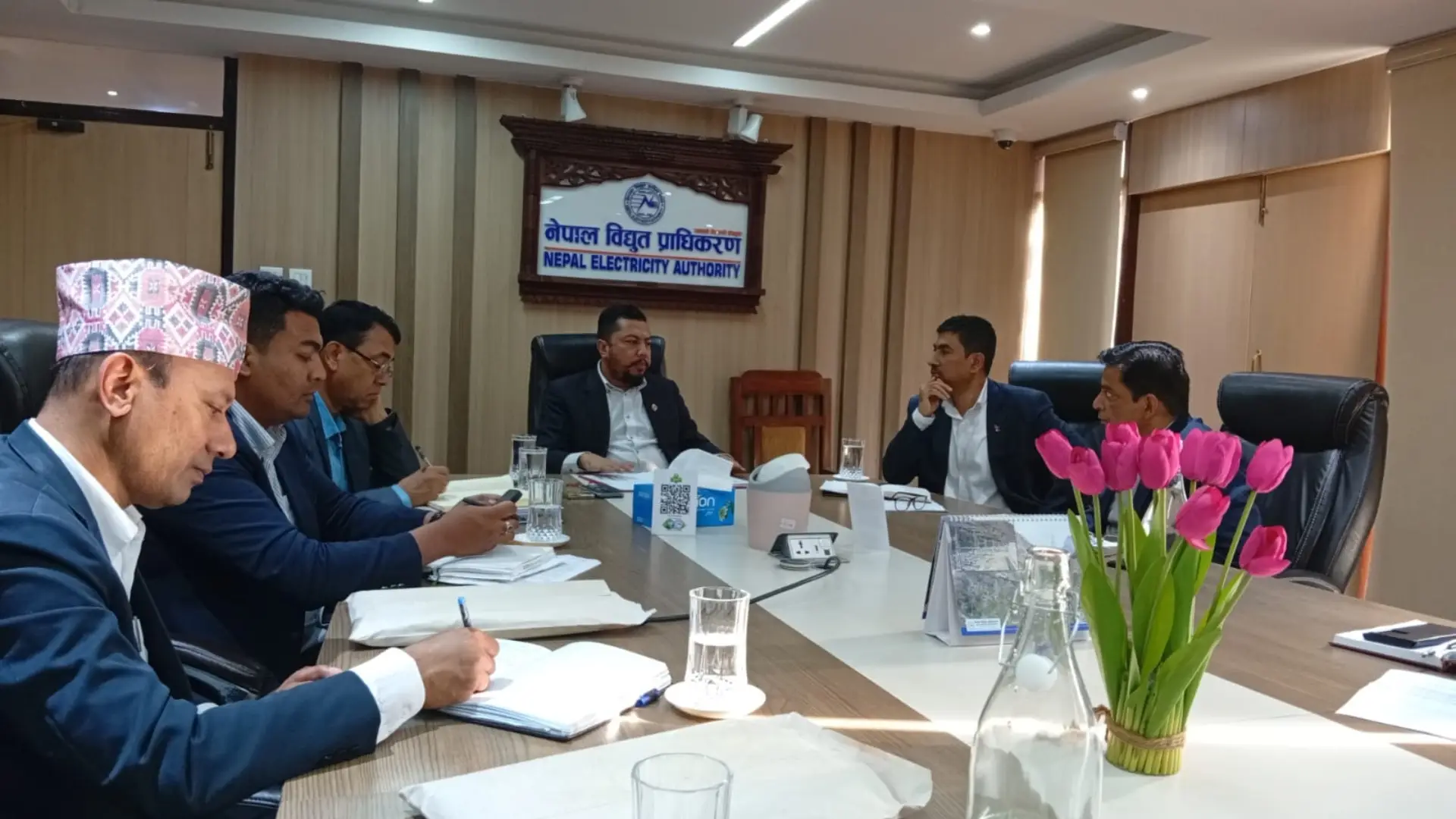
Minister for Energy, Water Resources and Irrigation Birajbhakta Shrestha has directed the Nepal Electricity Authority (NEA) to draw up a clear action plan and get to work immediately on implementing the budget for the coming fiscal year. The instruction came during a discussion with the authority's acting executive director and its deputy executive directors.
The core of the minister's message was deadline discipline. Projects and programs included in the budget, he stressed, must be completed within their stipulated timeframes. The ministry, he said, will facilitate the resolution of policy and administrative obstacles that surface during implementation — but the leadership of delivery must come from NEA's own management.
That division of labor is worth pausing on. By framing the ministry as facilitator and the utility as leader, Shrestha is drawing an accountability line in a sector where state enterprises and their parent ministries habitually pass responsibility back and forth. There is, however, a quiet irony in the framing: the demand for management leadership has landed on an organization currently headed by an acting executive director. A utility of NEA's size being asked to own delivery while operating without a full-time chief is the unspoken subtext of the meeting — and filling that leadership gap may prove as consequential as any action plan.
On substance, the minister pointed to infrastructure as the priority. Sufficient budget, he noted, has been allocated for transmission lines, substations and related works, and the authority should mobilize its subordinate units so that these projects finish on schedule.
The emphasis is well aimed. Nepal's power sector constraint has shifted in recent years from generation to evacuation: new hydropower has come online faster than the wires and substations needed to carry it, leaving surplus wet-season energy at risk of going unused and export ambitions hostage to transmission readiness. In that context, "complete the transmission projects on time" is not a routine exhortation — it targets the single bottleneck on which both domestic supply quality and electricity trade now depend.
Shrestha's directives extended beyond construction. He told the authority to improve service delivery, ensure quality and reliable power supply, and keep its investments return-oriented. He also instructed NEA to pursue the recovery of outstanding electricity tariff dues as a regular agenda item, to strengthen institutional governance, and to make its performance results-driven.
Of these, the arrears directive carries the most political weight. Tariff recovery has historically been the utility's most contentious assignment, repeatedly setting it against powerful defaulters, and collection drives have tended to flare and fade with changes in leadership and political pressure. Instructing NEA to treat recovery as routine business — not a campaign — signals that the collection push is expected to continue regardless of who pushes back. The nudge toward "return-oriented investment," meanwhile, suggests the ministry wants the authority's capital deployed where it earns, not merely where it builds.
The meeting closed with a timeline. The deputy executive directors informed the minister that a detailed action plan is being prepared for submission to the NEA board by Asar 15 — that is, before the new fiscal year even begins. The sequencing matters: Nepal's chronic implementation failure is the year-end spending rush, in which plans are finalized late and budgets are burned in the final quarter. Front-loading the plan so that execution can start from day one of the fiscal year is the textbook remedy. Whether it works will depend on what no action plan can fully anticipate — procurement delays, land acquisition disputes and the everyday friction of building infrastructure in Nepal. The directives are now on record; from Shrawan onward, the only measure that counts is delivery.
Advertisement
Written by
Dipesh Ghimire