Top
Core Challenges for Nepal’s Cu
Political Stability, Economic Recovery and Good Governance Emerge as Core Challenges for Nepal’s Current Government
Ultimately, analysts say the success of the current government will not be judged solely by speeches, plans or policy documents, but by whether ordinary citizens experience tangible improvements in their daily lives. Public expectations today are increasingly centered on employment, efficient governance, economic opportunity and visible development outcomes. If the government can demonstrate effective implementation and restore public confidence, Nepal may gradually move toward a more stable and prosperous future. Otherwise, concerns over economic stagnation, political distrust and social frustration are likely to deepen further.
Dipesh Ghimire
5 min read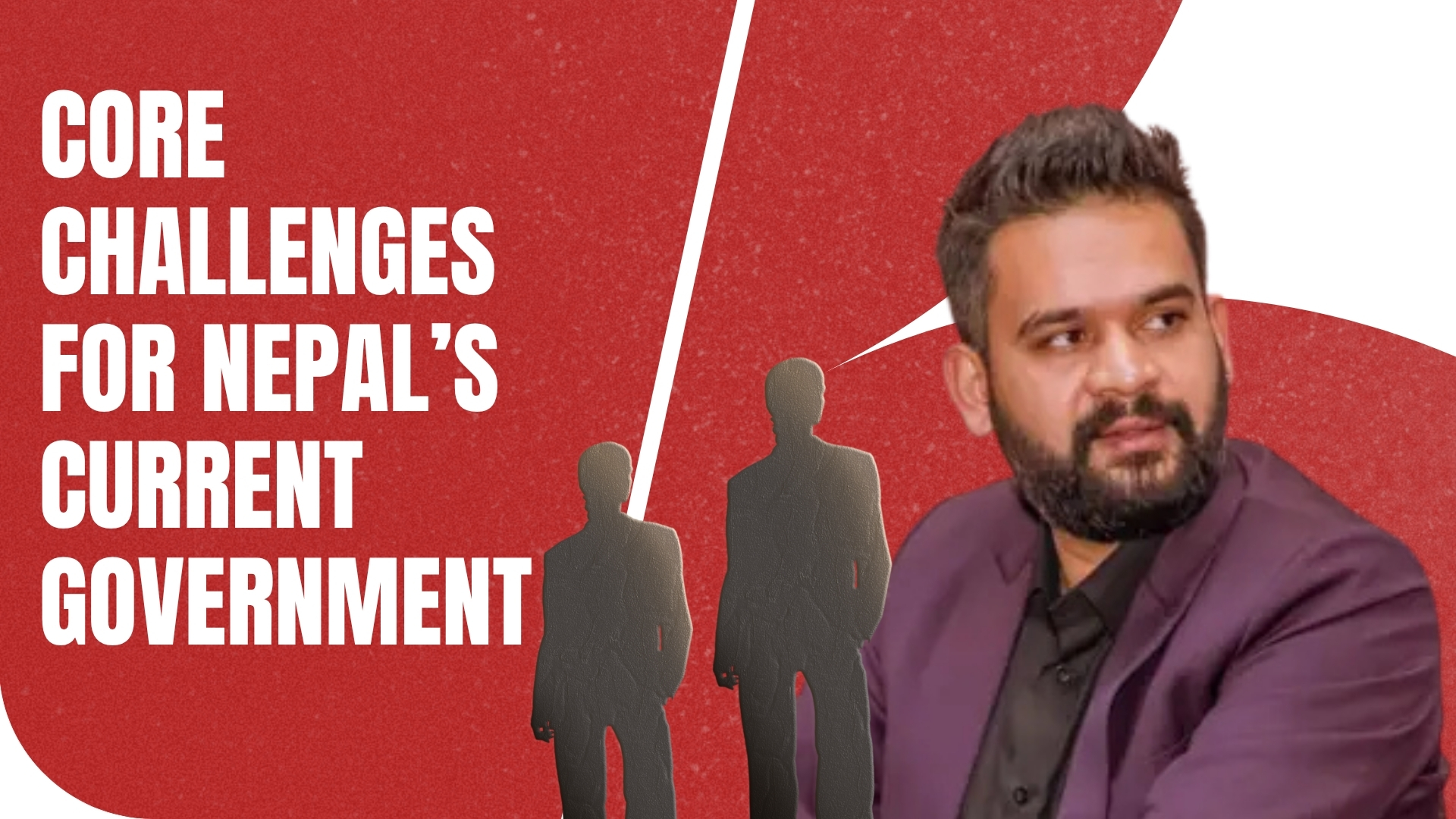
Kathmandu — In Nepal’s modern political history, government change, coalition restructuring, economic uncertainty and questions surrounding governance have consistently remained at the center of national debate. Since the establishment of the federal democratic republic, citizens have expected political stability, economic prosperity, employment opportunities and stronger public services. Yet despite repeated political transitions and policy commitments, many of those expectations remain only partially fulfilled.
The current government now faces growing pressure to restore public confidence at a time when economic activity remains weak, administrative performance is frequently criticized and public frustration over corruption and ineffective implementation continues to rise. Analysts say the government’s upcoming policy direction will not merely determine the future of the administration itself, but could significantly shape Nepal’s broader economic and social trajectory in the coming years.
Governance reform is increasingly being viewed as one of the most urgent national priorities. Public dissatisfaction over bureaucratic delays, weak service delivery, corruption and political interference within state institutions has deepened over the years. Observers argue that unless the government can strengthen transparency and accountability mechanisms, public trust in state institutions may continue to erode further.
Experts say digital transformation within public administration could become a key tool for improving governance. Expanding online public services, reducing paperwork and implementing technology-driven systems in government offices may help minimize corruption opportunities while also making state services faster and more citizen-friendly. At the same time, anti-corruption institutions such as Commission for the Investigation of Abuse of Authority and other oversight agencies are expected to face increasing pressure to demonstrate visible and impartial action against major corruption cases.
Nepal’s economic condition remains another major concern. Revenue collection has weakened, industrial activity remains sluggish and private investment confidence has yet to recover fully. Economists warn that unless economic momentum improves soon, the country could face prolonged stagnation accompanied by rising unemployment and continued outward migration of young workers.
Agriculture continues to illustrate a major structural contradiction within the economy. Despite Nepal being traditionally described as an agriculture-based nation, dependence on imported food products continues to rise. Analysts argue that without modernization of irrigation systems, better access to seeds and fertilizers, agricultural insurance and market guarantees for farmers, domestic production will struggle to compete. Strengthening agro-based industries is increasingly viewed as essential not only for food security but also for revitalizing rural economies.
Industrial development and investment promotion are also expected to define the government’s long-term success. Business groups have repeatedly complained about policy instability, complicated tax systems and administrative hurdles that discourage both domestic and foreign investment. Economists argue that sectors such as hydropower, tourism, information technology, cement production and agricultural processing could become major economic drivers if supported through stable policies and infrastructure expansion.
Youth migration remains one of the country’s most serious socioeconomic challenges. Every year, thousands of young Nepalis leave for foreign employment due to limited opportunities at home. Analysts say the government’s future direction must prioritize job creation through skill-based education, startup promotion, concessional financing and digital-economy development. Without domestic opportunities, Nepal risks losing a large portion of its productive workforce for the long term.
Infrastructure development continues to be seen as another critical pillar of economic transformation. Although Nepal has launched several large-scale road, hydropower and urban development projects, delays, rising costs and weak implementation have repeatedly undermined progress. Experts say stronger project management, transparent procurement systems and stricter accountability mechanisms are necessary if infrastructure expansion is to contribute meaningfully to economic growth.
The energy sector remains one of Nepal’s strongest long-term opportunities. With abundant hydropower potential, the country could significantly increase foreign currency earnings through electricity exports to neighboring markets such as India and Bangladesh. Analysts believe expanding transmission infrastructure and encouraging greater private-sector participation will be essential for transforming Nepal into a regional energy exporter.
Education reform has also emerged as a major policy challenge. Nepal’s education system is frequently criticized for failing to align with labor-market demands. The growing number of students seeking higher education abroad reflects both dissatisfaction with domestic institutions and the limited availability of practical, career-oriented education within the country. Experts argue that technical and vocational education linked directly to industry needs must become a national priority.
Similarly, the health sector continues to reveal structural weaknesses that became particularly visible during the COVID-19 pandemic. Rural healthcare access remains uneven, while shortages of medical personnel and infrastructure persist outside major urban centers. Strengthening provincial and district hospitals, improving healthcare insurance implementation and ensuring affordable access to medicine are increasingly viewed as essential reforms.
The implementation of federalism remains another unfinished national project. Although Nepal’s constitution established a federal governance structure, coordination challenges between federal, provincial and local governments continue to affect policy execution. Analysts say clearer division of authority, stronger resource allocation mechanisms and institutional coordination are necessary if federalism is to function effectively at the local level.
Social inclusion and equality also remain central political concerns. Despite constitutional commitments toward inclusivity, marginalized communities including Dalits, women, indigenous groups and economically disadvantaged populations continue to face structural inequalities. Policy experts argue that social justice programs must move beyond symbolic representation toward measurable improvements in education, employment and political participation.
Tourism, one of Nepal’s most important economic sectors, is also expected to play a larger role in future economic recovery strategies. Destinations such as Mount Everest, Lumbini and Pashupatinath Temple continue to attract international attention, but experts believe Nepal still lacks sufficient infrastructure, international promotion and integrated tourism services to fully capitalize on its potential.
Environmental protection is emerging as an equally urgent challenge. Climate change has already begun affecting Nepal through glacial melting, floods, landslides and agricultural disruption. Analysts argue that future development policies must incorporate disaster preparedness, forest conservation and investment in clean energy if long-term sustainability is to be achieved.
Nepal’s geopolitical position between India and China also makes foreign policy management increasingly important. Diplomats and policy analysts emphasize the need for balanced diplomacy focused on national interest, economic cooperation and protection of migrant workers abroad.
At the same time, the rapid expansion of information technology presents both opportunities and policy challenges. Nepal’s young population has demonstrated growing potential in digital services and software-related industries. Analysts say stronger support for startups, digital payments, cyber security and e-governance could help position technology as a major pillar of future economic growth.
Underlying all these issues, however, remains the broader question of political stability. Frequent government changes and coalition instability have repeatedly weakened policy continuity in Nepal. Observers argue that without stronger political consensus and institutional cooperation, even well-designed policies risk remaining ineffective at the implementation stage.
Ultimately, analysts say the success of the current government will not be judged solely by speeches, plans or policy documents, but by whether ordinary citizens experience tangible improvements in their daily lives. Public expectations today are increasingly centered on employment, efficient governance, economic opportunity and visible development outcomes. If the government can demonstrate effective implementation and restore public confidence, Nepal may gradually move toward a more stable and prosperous future. Otherwise, concerns over economic stagnation, political distrust and social frustration are likely to deepen further.
Advertisement
Written by
Dipesh Ghimire