Budget
Pressure Mounts for Tax Reform as Budget Discussions Focus on Relief and Transparency
Whether the government incorporates these recommendations into the final budget remains uncertain. However, the discussions have already intensified expectations from businesses, salaried employees, and ordinary taxpayers who are looking to the upcoming budget not only for fiscal management, but also for practical economic relief in an increasingly expensive economic environment.
Dipesh Ghimire
3 min read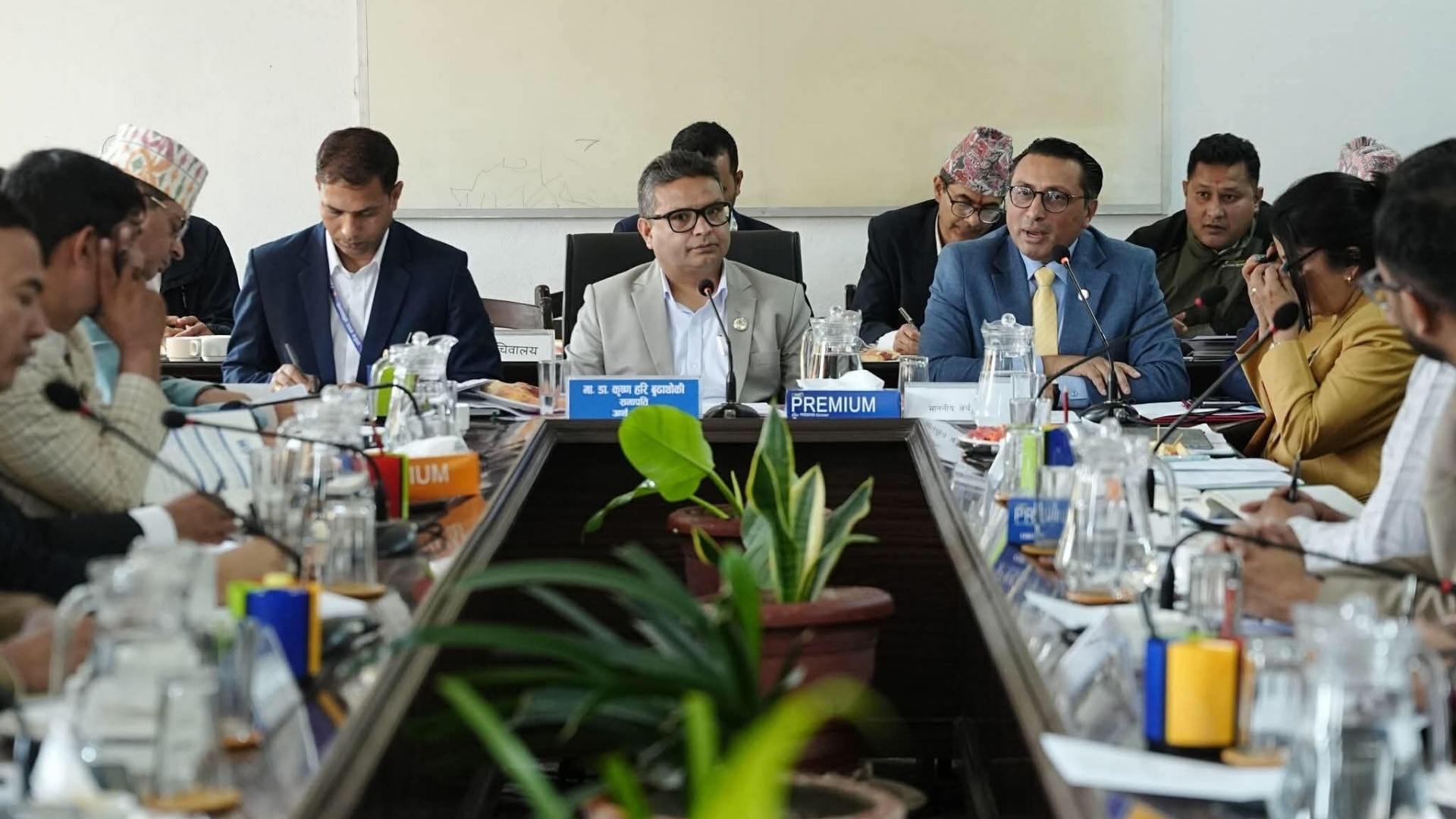
As Nepal prepares to unveil the budget for the upcoming fiscal year 2083/84, pressure is growing on the government to revise the country’s tax structure amid rising living costs and weakening purchasing power. A series of discussions held by parliamentary committees and subcommittees has now produced a 27-point recommendation package for the Ministry of Finance, with one of the key proposals being a significant increase in the personal income tax exemption threshold.
The recommendation suggests raising the tax-free annual income limit to Rs 1.2 million for married individuals and Rs 1 million for unmarried individuals. Economists, business leaders, government officials, and policy stakeholders involved in the discussions argued that the existing tax slabs no longer reflect Nepal’s current economic realities, particularly in urban areas where household expenses have increased sharply in recent years.
The proposal reflects a broader concern that middle-income groups are gradually facing greater financial pressure despite stagnant income growth. Inflation in housing, education, transportation, healthcare, and daily consumption has steadily increased the cost of living, especially in major cities. In such a context, many stakeholders believe the current tax threshold has become outdated and is placing disproportionate pressure on salaried citizens.
The recommendation to revise the exemption ceiling is therefore being interpreted not only as a tax adjustment, but also as an attempt to restore purchasing power and stimulate domestic economic activity. Analysts say increasing disposable income among middle-class households could support consumption-driven sectors of the economy, including housing, automobiles, retail trade, and services.
Another important proposal discussed during the meetings involves providing tax incentives for first-time buyers of land, houses, and vehicles. Stakeholders argued that such targeted relief measures could encourage formal economic transactions while simultaneously supporting sectors currently experiencing weak demand. Nepal’s real estate and automobile sectors have both witnessed slower activity in recent years due to high interest rates, declining consumer confidence, and tighter liquidity conditions.
The discussions also highlighted growing demand for reforms in Nepal’s tax administration system itself. Participants strongly recommended the full implementation of a faceless and paperless tax audit system aimed at making revenue administration more transparent, accountable, and technology-driven.
The recommendation carries particular significance because Nepal’s tax system has long faced criticism over bureaucratic complexity, procedural delays, and concerns regarding discretionary practices during tax audits. Business communities have repeatedly argued that excessive paperwork and face-to-face audit processes often create uncertainty and increase compliance burdens. A fully digital audit system is therefore being viewed as a potential step toward reducing administrative friction while improving trust between taxpayers and revenue authorities.
At the same time, the proposal to bring the scrap business sector under mandatory Value Added Tax (VAT) coverage indicates the government’s continuing focus on expanding the formal tax base. Stakeholders argued that large segments of the scrap trade continue operating informally despite handling significant financial transactions. Bringing the sector into the VAT system could help reduce revenue leakage and improve overall tax compliance.
The broader message emerging from the discussions is that the government is facing increasing expectations to balance revenue collection with economic relief measures. Nepal’s economy continues to experience sluggish private sector expansion, weak industrial confidence, and moderate consumer spending despite improving liquidity conditions in the banking system. In such circumstances, tax policy is increasingly being viewed not merely as a revenue tool, but as an instrument for economic stimulation and confidence building.
The recommendations also reveal a growing shift in public debate regarding the role of taxation in Nepal’s economy. Rather than focusing solely on increasing state revenue, discussions are now increasingly centered around how tax structures affect household consumption, investment behavior, and economic sentiment. This marks a gradual transition toward a more policy-oriented debate on taxation and economic growth.
Whether the government incorporates these recommendations into the final budget remains uncertain. However, the discussions have already intensified expectations from businesses, salaried employees, and ordinary taxpayers who are looking to the upcoming budget not only for fiscal management, but also for practical economic relief in an increasingly expensive economic environment.
Advertisement
Written by
Dipesh Ghimire