West Seti 400 kV
Private Capital Enters Nepal's Power Grid: West Seti 400 kV Line Marks a Structural Shift
Taken together, the project is being viewed as an important milestone in the development of Nepal's transmission infrastructure — both for the precedent it sets in private participation and for the role it could play in turning the far-west into a genuine power-generating region rather than one whose rivers run untapped.
Dipesh Ghimire
4 min read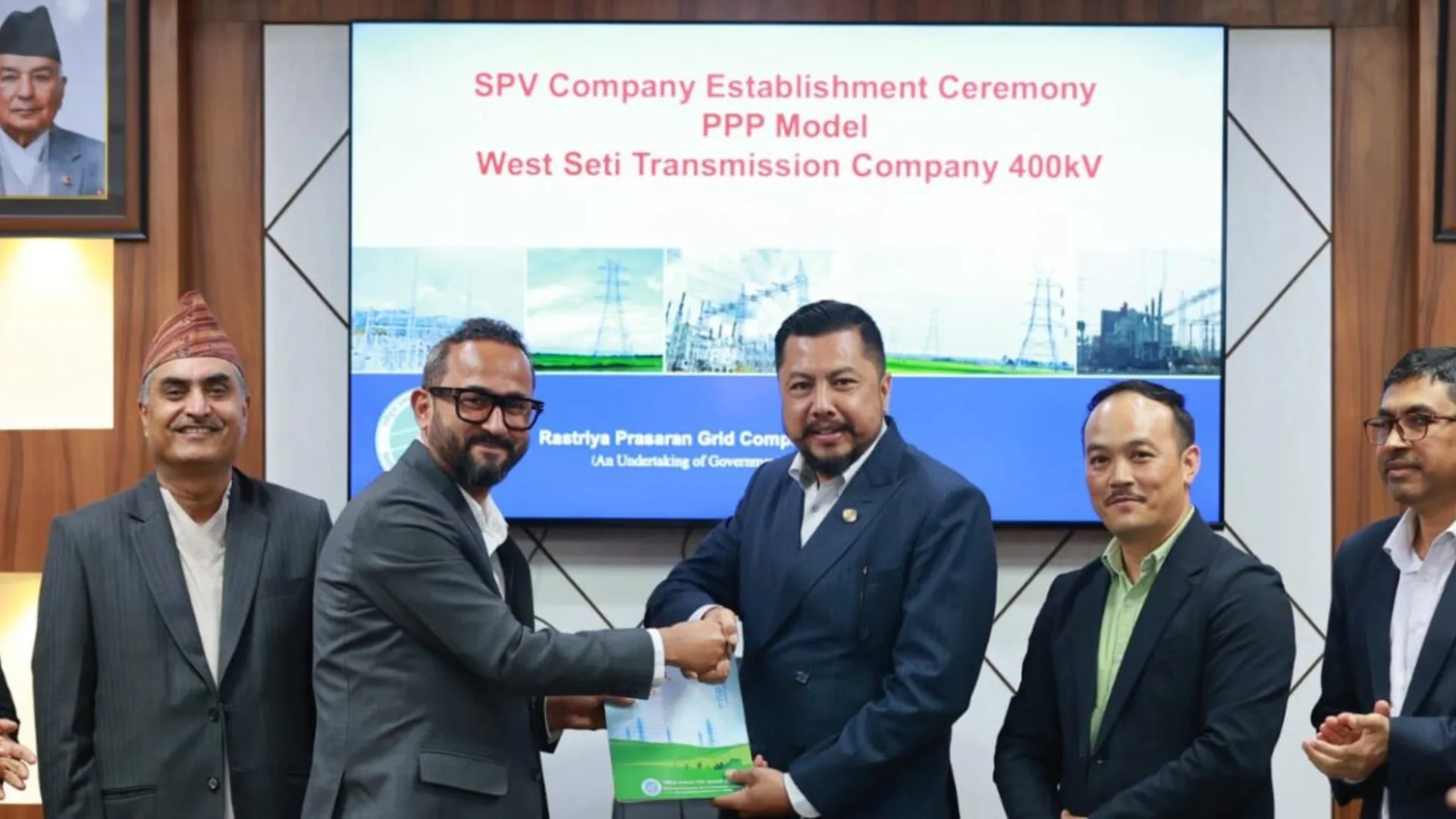
Nepal has long faced a paradox in its power sector — hydropower plants get built, but the electricity they generate often has nowhere to go because transmission lines lag years behind. The West Seti 400 kV Transmission Line, now being advanced under a Public-Private Partnership (PPP) model, is an attempt to break that cycle in the far-western Seti basin before it begins. By laying the wire ahead of the power, the project aims to ensure that the region's upcoming hydropower output reaches the national grid without the bottleneck that has stranded so many earlier projects.
What makes this project stand out is not its size alone but its ownership model. Transmission in Nepal has traditionally been the exclusive domain of state entities such as the Nepal Electricity Authority and the Rastriya Prasaran Grid Company Limited (RPGCL). Opening this segment to private investors is one of the first instances of the private sector co-building large transmission infrastructure in the country — a departure that could reshape how Nepal finances its grid in the years ahead. To carry out the work, a special purpose vehicle named 'West Seti Transmission Limited' has been established.
The project carries an estimated cost of around Rs 20 billion, to be financed through a 30 percent equity and 70 percent debt structure. In practical terms, that translates to roughly Rs 6 billion in equity and Rs 14 billion in borrowing — a standard project-finance arrangement that signals lenders are willing to back transmission assets on commercial terms. The company's registration was finalised after RPGCL's board of directors approved this investment framework.
The ownership split has been deliberately weighted to keep public control intact while drawing in private money. The government side retains a 51 percent majority stake — RPGCL holding 26 percent, Chilime Hydropower 12.5 percent, and Chainpur Seti Hydropower 12.5 percent. On the private side, Samriddhi Energy will hold 25.1 percent, Ngadi Group Power 7 percent, and Syuri Ngadi Power 6.9 percent. The remaining 10 percent has been reserved for the general public, which points to an eventual share issuance that would let ordinary investors buy into the country's grid for the first time.
Addressing a programme on Monday, Energy, Water Resources and Irrigation Minister Biraj Bhakta Shrestha said the role the private sector has played in power generation was now expanding into the building of transmission infrastructure as well. Describing the transmission line as the 'lifeline' of the energy sector, he expressed confidence that cooperation between the government and the private sector would open a new chapter in energy development. The framing is apt — without adequate lines, even fully built power plants sit idle, making transmission the decisive link in the chain.
Minister Shrestha noted that expanding transmission infrastructure is indispensable both for attracting investment into the energy sector and for ensuring the smooth flow of generated electricity. Informing that study and review of the Power Purchase Agreement (PPA) are under way, he said the necessary decisions would be taken on the basis of the recommendations received. A reliable transmission network, he added, would not only strengthen energy security but also contribute significantly to expanding economic activity across the far-western region.
According to RPGCL Chief Executive Officer Sagar Shrestha, the preliminary studies, engineering work and environmental assessment required for the project have already been completed. Construction will move ahead once land acquisition, forest-area clearance and 'right of way' procedures are finalised. It is worth reading this carefully: these very steps — land, forest clearance and right of way — are precisely what have historically delayed Nepal's transmission projects by years. That the technical groundwork is done is encouraging, but the project's real test lies in clearing these procedural hurdles on schedule.
Geographically, the line will begin at the Chainpur substation in ward 1 of Jayaprithvi Municipality in Bajhang, run through Banlek in Doti, and terminate at the Dodhodhara substation in ward 2 of Bardagoriya Rural Municipality in Kailali. Stretching roughly 145 kilometres, the 400 kV double-circuit line will be accompanied by substations of 160 MVA capacity at Chainpur and 315 MVA at Banlek.
The strategic value of the route becomes clearer when one looks at what it will carry. Through this line, power from the 750 MW West Seti, the 450 MW Seti River-6 and the 170 MW Upper Seti — along with various other projects on the Seti river system and its tributaries — will be fed into the national grid. The named projects alone account for about 1,370 MW, yet the line is being developed with a long-term evacuation capacity of up to around 2,500 MW. That deliberate headroom of more than a thousand megawatts indicates the planners are building not just for projects already on the table but for a wave of future development in the basin.
Stakeholders in the energy sector say the project is also tied to the government's plan to develop Dodhodhara as the principal 'power hub' of the far-west. The choice of location is telling: a 400 kV line terminating in Kailali, close to the Indian border, positions the Seti basin's output not only for domestic consumption but for future cross-border electricity trade. Once the line comes into operation, integrating power from far-western hydropower projects into the national system — and exporting surplus across the border — is expected to become considerably easier.
West Seti Transmission Limited was formally registered on Jeth 13, 2083 (May 27, 2026). The construction process is set to begin once the necessary regulatory approvals are obtained, with a target of completing the project within five years. Taken together, the project is being viewed as an important milestone in the development of Nepal's transmission infrastructure — both for the precedent it sets in private participation and for the role it could play in turning the far-west into a genuine power-generating region rather than one whose rivers run untapped.
Advertisement
Written by
Dipesh Ghimire