Budget 2084/84
Private Sector Looks to Upcoming Budget for Economic Revival and Investment Confidence
For many observers, the upcoming budget is not merely a financial document but a broader test of whether the government can balance political commitments with the urgent economic realities facing the country. In an environment where investor confidence has weakened and economic activity remains slow, policy credibility may prove just as important as the size of the budget itself.
Dipesh Ghimire
3 min read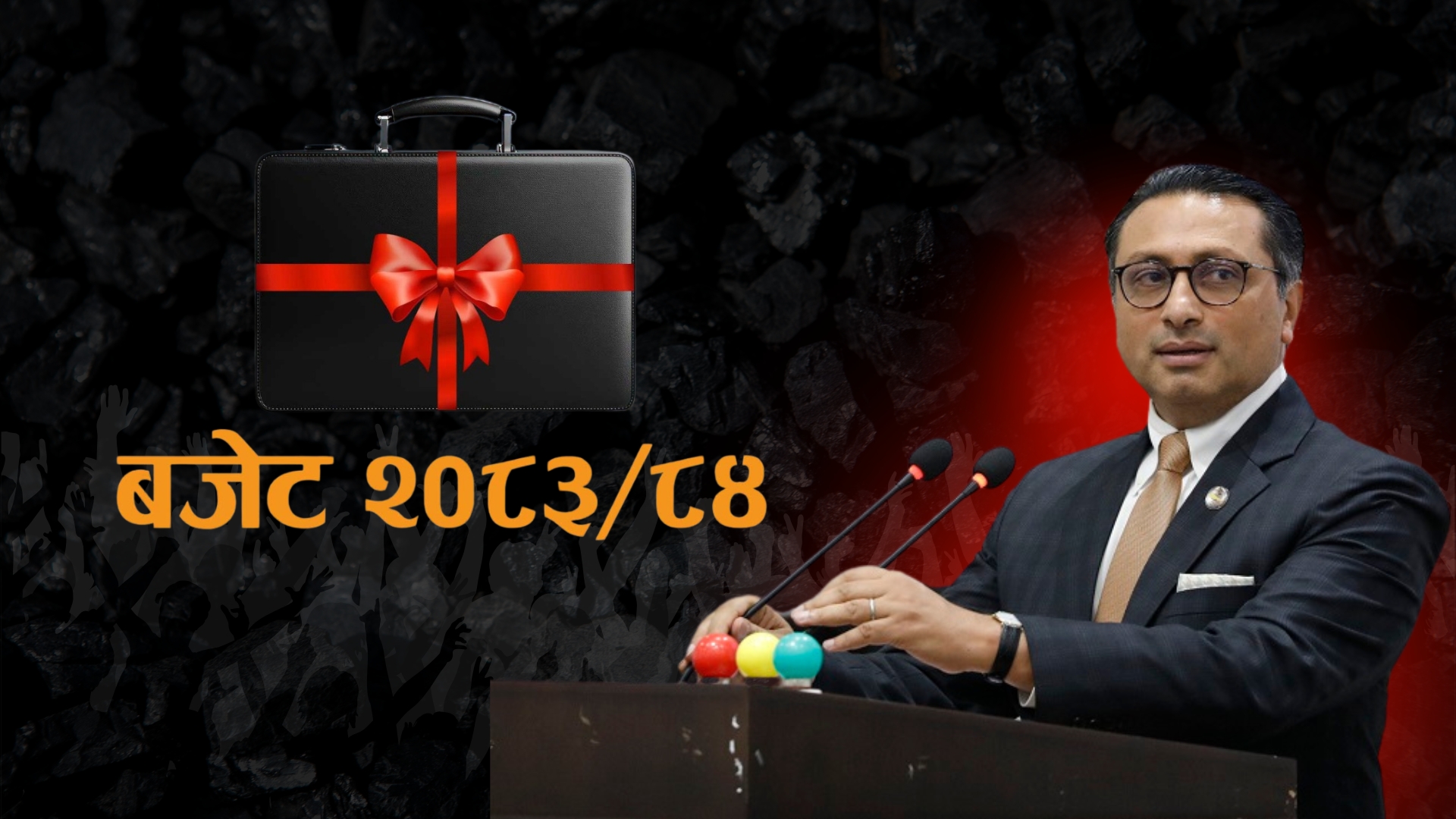
Kathmandu — With only a few days remaining before the government unveils Nepal’s budget for the fiscal year 2083/84, expectations from the private sector are rising sharply. At a time when the economy continues to struggle with weak demand, declining industrial investment and sluggish market activity, business leaders are looking toward the upcoming budget as a possible turning point for economic recovery.
Nepal’s private sector currently finds itself under mounting pressure. Industrial expansion has slowed, several businesses are operating below capacity and investor confidence has weakened amid policy uncertainty and fragile market conditions. Although interest rates have gradually softened compared to previous years, entrepreneurs argue that the overall business environment still remains discouraging for fresh investment.
Against this backdrop, industrialists, traders and investors are urging the government to introduce policies focused on production growth, employment generation and private investment expansion rather than relying solely on distribution-oriented programs. Business leaders say the country can no longer afford a budget centered only on short-term populist spending while productive sectors continue to weaken.
One of the strongest demands from the private sector is the creation of a more investment-friendly environment. Entrepreneurs argue that inconsistent government policies, complex taxation systems and lengthy administrative procedures have significantly discouraged both domestic and foreign investors over the past several years.
Business groups have repeatedly called for reforms that simplify the tax structure, remove double taxation practices and ease industrial registration and operational procedures. According to industry representatives, policy instability has become one of the largest barriers to long-term investment planning in Nepal. Frequent changes in taxation rules and regulatory uncertainty have made many investors reluctant to expand operations.
The private sector is also seeking stronger government attention toward struggling domestic industries. Several manufacturing industries are reportedly operating on the verge of closure due to declining demand, rising operational costs and weak policy support. Entrepreneurs argue that although the government has introduced various reform commitments in recent years, implementation has remained weak because of inadequate resource management and bureaucratic delays.
The information technology sector has emerged as another major focus area ahead of the budget announcement. Nepal’s IT industry has been expanding rapidly in recent years, driven largely by young skilled workers providing services to international markets. Industry stakeholders believe the upcoming budget should introduce targeted tax incentives, startup-friendly policies and programs aimed at retaining skilled youth within the country.
Economists say strengthening the IT sector could help Nepal generate foreign currency earnings while simultaneously reducing outward migration among educated youth. In the absence of adequate domestic opportunities, a growing number of skilled young professionals continue to seek employment abroad, contributing to concerns over long-term human capital loss.
Analysts also stress that Nepal’s economic challenges cannot be addressed through isolated measures alone. Sectors such as agriculture, tourism, hydropower, information technology and small-scale industries require coordinated policy support capable of encouraging both domestic entrepreneurship and external investment. A budget that prioritizes production-oriented growth, rather than only recurrent expenditure, is increasingly viewed as essential for sustainable recovery.
The private sector is further demanding stronger guarantees for investment security and easier access to affordable financing. Many businesses argue that despite improvements in liquidity within the banking system, credit expansion has remained limited due to weak market confidence and cautious lending practices. Entrepreneurs are therefore expecting concessional loan programs and industry-friendly financing policies in the upcoming fiscal plan.
The newly formed government led by Rastriya Swatantra Party is now under growing pressure to demonstrate that it can restore confidence among investors and revive economic momentum. Business leaders believe that if the government genuinely incorporates private-sector recommendations into the budget, it could help reactivate industrial activity, stimulate employment generation and gradually improve market sentiment.
For many observers, the upcoming budget is not merely a financial document but a broader test of whether the government can balance political commitments with the urgent economic realities facing the country. In an environment where investor confidence has weakened and economic activity remains slow, policy credibility may prove just as important as the size of the budget itself.
Advertisement
Written by
Dipesh Ghimire