Monetary Policy
Private Sector Pushes for Bold Monetary Policy Reform as Economy Faces Demand Slowdown
Monetary Policy The discussions reflect growing pressure from both private sector and financial experts for a more flexible, demand-driven, and structurally reform-oriented monetary policy at a time when Nepal’s economy is facing weak credit growth, rising bad loans, and subdued investment sentiment.
Dipesh Ghimire
3 min read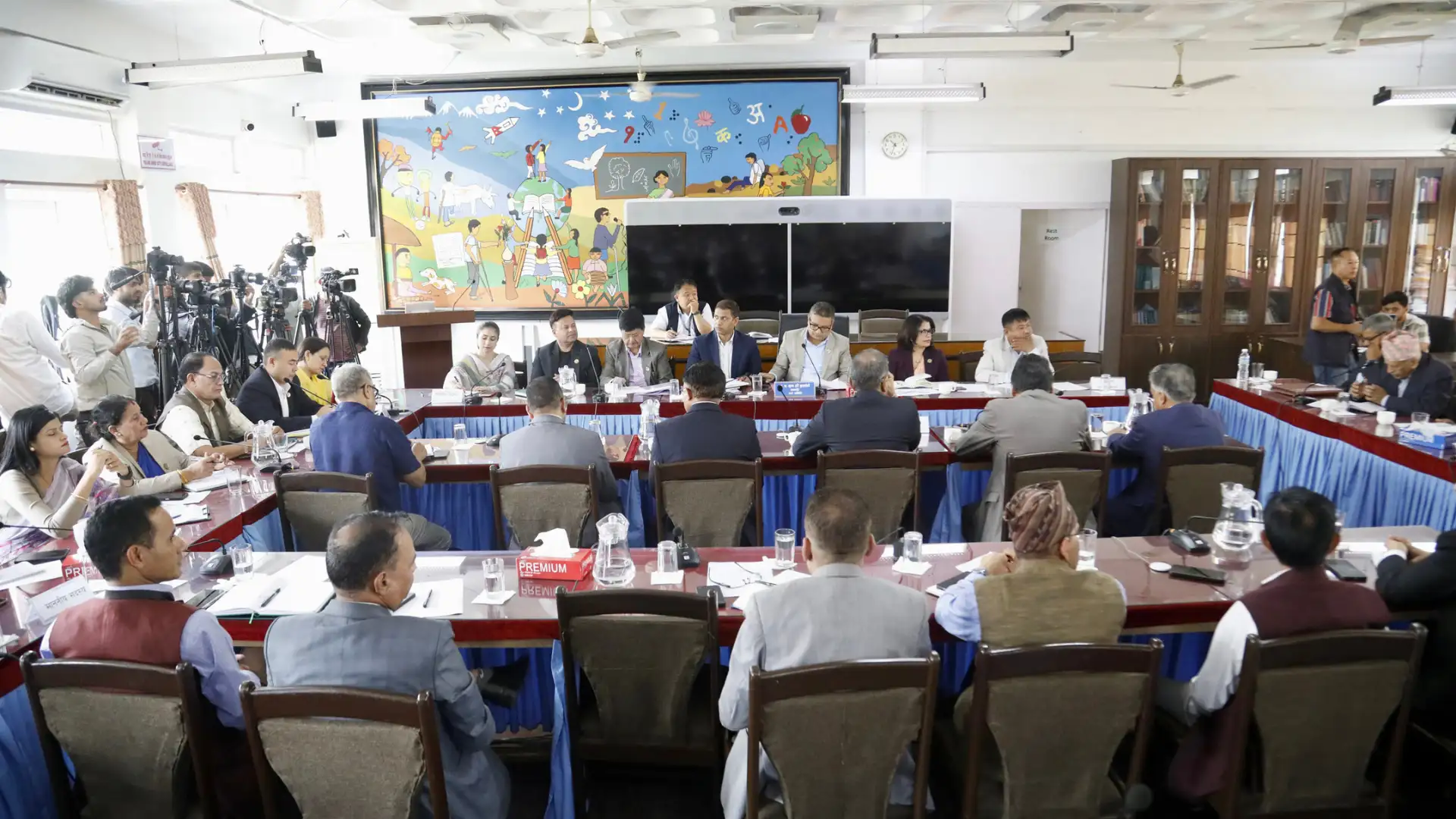
Kathmandu — Nepal’s private sector has called for a more proactive and reform-oriented monetary policy, arguing that several structural challenges in the economy cannot be addressed through the national budget alone and must be tackled through central bank interventions.
Speaking at a discussion held under the House of Representatives’ Finance Committee on monetary policy, representatives of major private sector bodies, including the Federation of Nepalese Chambers of Commerce and Industry (FNCCI) and the Confederation of Nepalese Industries (CNI), said that the upcoming monetary policy for fiscal year 2083/84 should focus on reviving economic activity, boosting investment, and restoring investor confidence.
FNCCI President Anjan Shrestha said Nepal’s economy is facing a period of slowdown, rising unemployment, and declining production. He stressed that monetary policy must play a stronger role in addressing issues that were not adequately covered by the fiscal budget.
He noted that Nepal’s economic structure, where imports account for about 70 percent and domestic production only 30 percent, requires urgent industrial transformation. According to him, without a supportive industrial environment, the economy will continue to depend heavily on imports.
Shrestha also pointed to declining investor confidence, arguing that private sector activity improves only when policy direction, implementation, and institutional intent are aligned. He emphasized that despite sufficient liquidity in banks, credit is not flowing into productive sectors due to weak transmission mechanisms.
He proposed removing charges on internal fund transfers between bank accounts and easing rules related to personal guarantees in lending, arguing that such measures would improve financial flexibility and encourage borrowing.
CNI Vice President Bhim Ghimire said the main challenge in the current economy is not interest rates but weak demand in the market. He urged monetary authorities to introduce demand-stimulating measures, particularly to boost consumption and industrial activity.
He also called for revisions in working capital loan guidelines, targeted credit support for small and cottage industries, and easier access to finance for startups. According to him, industries affected by the current slowdown should be allowed one-time loan restructuring and rescheduling to prevent closures.
Both organizations jointly called for the establishment of an independent monetary policy committee, similar to India’s framework, along with structural reforms in Nepal Rastra Bank to improve policy effectiveness.
They also demanded a 1 percent interest rate differential for productive sector lending, arguing that such incentives could help channel credit toward manufacturing and export-oriented industries.
Shrestha further said that working capital guidelines should not be applied uniformly across all businesses, stressing that different sectors require different financial treatment based on their operational nature. He also called for easier overdraft facilities and improved capital circulation mechanisms.
Rising non-performing loans, which have reached around 5.7 percent according to industry estimates cited in the discussion, were also highlighted as a growing concern. Private sector leaders suggested establishing an asset management company to deal with non-performing and distressed assets held by banks.
They further recommended revising blacklisting rules to a three-year standard similar to India and easing collateral requirements, including removal of mandatory personal guarantees for all company directors.
From the banking sector side, Nabil Bank CEO Manoj Gyawali reiterated that monetary policy should remain focused on core objectives rather than becoming overly detailed. He said fiscal and regulatory issues should be handled through separate mechanisms such as central bank circulars.
He also highlighted risks in the construction sector, noting that delayed government payments are increasing exposure for banks and contributing to systemic financial stress.
Former Nepal Rastra Bank executive director Narbahadur Thapa said structural reforms in the financial sector are now unavoidable. He suggested that monetary policy should shift from annual frameworks to a medium-term strategy of three to five years.
Thapa also emphasized the need for digital credit systems, AI-based regulatory tools, and reforms allowing movable assets to be used as collateral. He warned that repeated loan restructuring alone cannot resolve underlying financial weaknesses and called for stronger insolvency and corporate restructuring laws.
The discussions reflect growing pressure from both private sector and financial experts for a more flexible, demand-driven, and structurally reform-oriented monetary policy at a time when Nepal’s economy is facing weak credit growth, rising bad loans, and subdued investment sentiment.
Advertisement
Written by
Dipesh Ghimire