India’s economy
RBI Chooses Growth Over Aggressive Rate Hikes as Indian Economy Faces Mounting Pressure
For investors, the broader message emerging from the current environment is becoming increasingly clear. Rather than reacting solely to macroeconomic headlines, many analysts advise focusing on fundamentally strong companies with stable earnings potential and resilient balance sheets. In periods of economic uncertainty, disciplined long-term investment strategies often prove more sustainable than decisions driven by short-term market sentiment or currency volatility.
Dipesh Ghimire
3 min read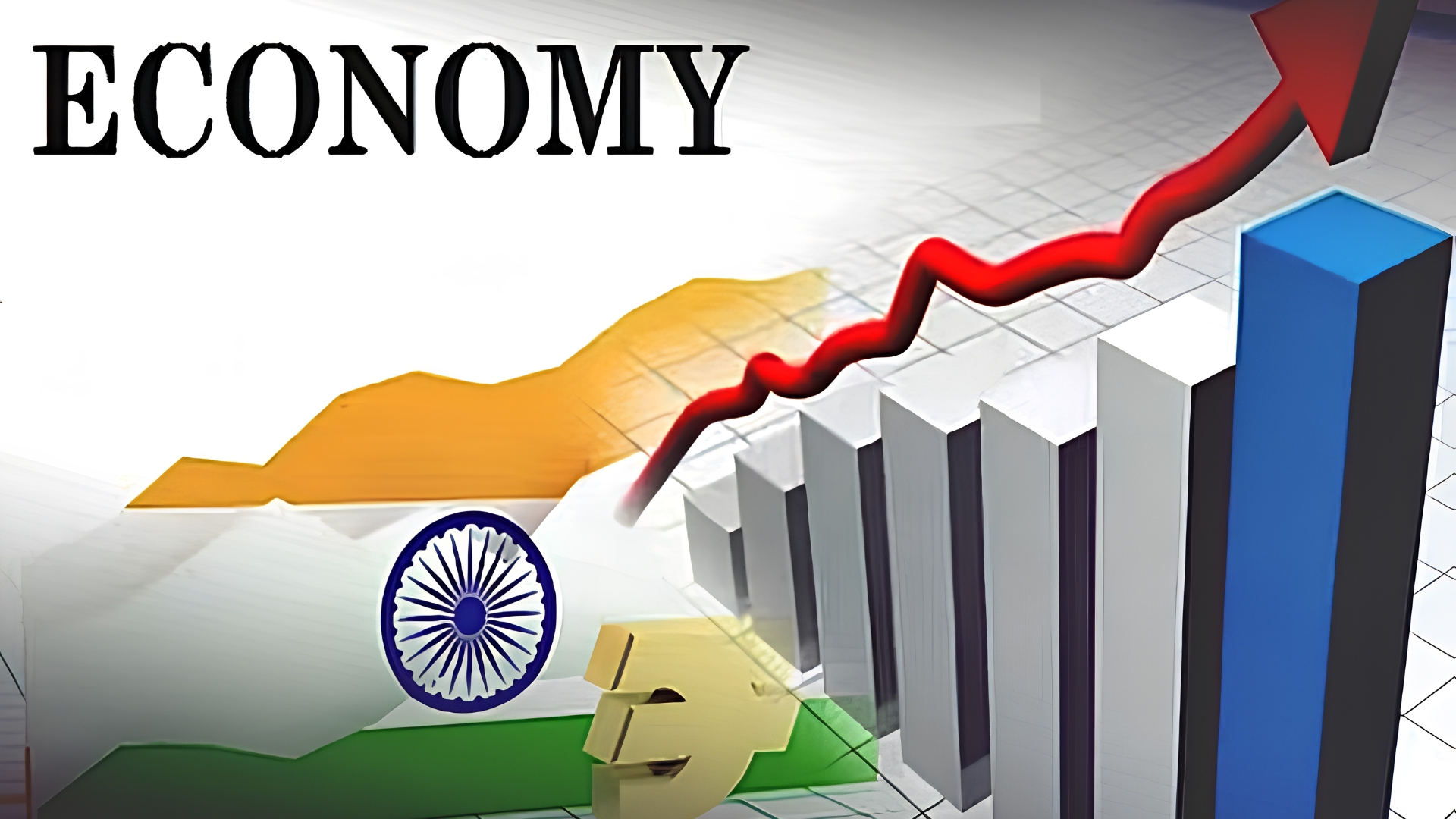
India’s economy is entering a delicate phase marked by a weakening currency, rising inflation and slowing economic momentum. Under normal circumstances, such conditions would typically push a central bank toward tighter monetary policy and higher interest rates. But the Reserve Bank of India appears to be taking a different path.
Despite the Indian rupee falling to historic lows against the US dollar and inflationary pressure intensifying, the RBI has signaled that it is unlikely to aggressively raise interest rates in the near term. Economists say the central bank’s approach reflects growing concern that conventional monetary tightening could damage an already fragile domestic economy rather than stabilize it.
The Indian rupee recently weakened close to the 96-per-dollar range, highlighting mounting pressure on the country’s external sector. At the same time, inflation remains elevated while economic growth indicators have shown signs of moderation. Traditionally, central banks respond to such situations by increasing borrowing costs to contain inflation and support the currency. However, analysts say the current inflationary environment differs significantly from demand-driven price surges seen in previous economic cycles.
According to market observers, much of the present inflation in India is being driven by external supply shocks rather than excessive domestic consumption. Rising geopolitical tensions in the Middle East, particularly involving Iran, have pushed global crude oil prices upward. Since India depends heavily on imported energy, higher oil prices quickly translate into increased transportation and production costs across the economy.
In such a scenario, economists argue that raising interest rates would do little to directly reduce fuel prices. Instead, it could weaken domestic investment, slow business expansion and reduce consumer spending at a time when growth is already under pressure. Analysts compare the situation to administering a strong medicine for the wrong illness — a measure that may create additional economic stress without solving the core problem.
Another major concern for policymakers is the potential impact of aggressive rate hikes on India’s financial system and small businesses. Experts note that defending the rupee through marginal interest-rate increases may not be sufficient. To meaningfully slow capital outflows and strengthen the currency, the RBI would likely need to implement much sharper hikes.
Such a move, however, could severely affect small and medium-sized enterprises that rely heavily on bank financing. Higher borrowing costs could also increase the volume of non-performing loans within the banking sector, reviving concerns that emerged during earlier periods of financial instability. Some analysts point to the economic stress experienced around 2018, when elevated rates and liquidity pressures exposed structural vulnerabilities in parts of India’s financial system.
The RBI is also confronting factors largely beyond India’s direct control. The US dollar has strengthened globally amid shifting monetary policies in the United States and changing international investment flows. Foreign investors have increasingly redirected capital toward markets perceived as offering stronger returns or greater geopolitical certainty, including sectors linked to China’s recovery strategy. Economists say modest adjustments to India’s policy rate alone are unlikely to reverse such broad global trends.
As a result, the RBI appears to be prioritizing economic stability and growth preservation over an aggressive defense of the currency. Analysts describe the strategy as cautious but risky. While maintaining lower borrowing costs may help support investment and consumption in the short term, prolonged currency weakness and imported inflation could eventually create additional pressure on households and businesses.
For investors, the broader message emerging from the current environment is becoming increasingly clear. Rather than reacting solely to macroeconomic headlines, many analysts advise focusing on fundamentally strong companies with stable earnings potential and resilient balance sheets. In periods of economic uncertainty, disciplined long-term investment strategies often prove more sustainable than decisions driven by short-term market sentiment or currency volatility.
Advertisement
Written by
Dipesh Ghimire