Top
Reconstruction After ‘Gen-Z’ Protests to Cost Over Rs 36 Billion, Total Damages Cross Rs 84 Billion
Reconstruction After ‘Gen-Z’ Protests to Cost Over Rs 36 Billion, Total Damages Cross Rs 84 Billion Kathmandu — The financial implications of the ‘Gen-Z’ protests held on Bhadra 23–24 have begun to surface more clearly, with the government estimating that over Rs 36.3 billion will be required to rebuild damaged public infrastructure and restore physical assets. A detailed action plan prepared by the National Planning Commission outlines the scale of destruction and the fiscal burden the state now faces across federal, provincial, and local levels.
Dipesh Ghimire
4 min read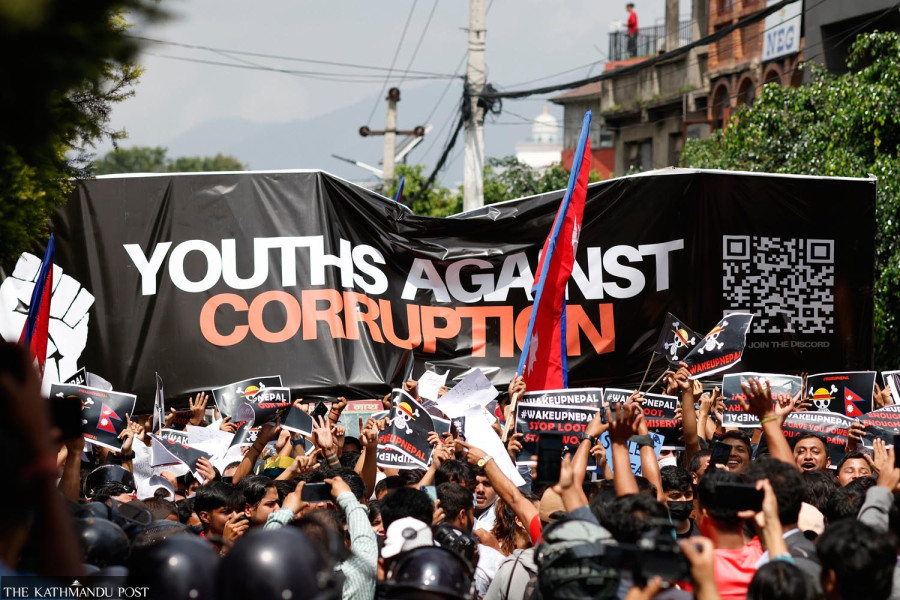
Kathmandu — The financial implications of the ‘Gen-Z’ protests held on Bhadra 23–24 have begun to surface more clearly, with the government estimating that over Rs 36.3 billion will be required to rebuild damaged public infrastructure and restore physical assets. A detailed action plan prepared by the National Planning Commission outlines the scale of destruction and the fiscal burden the state now faces across federal, provincial, and local levels.
According to the report, a total of Rs 36.30 billion has been projected for the reconstruction of public structures alone. Of this, the federal government bears the largest share, requiring nearly Rs 24.69 billion, followed by Rs 3.74 billion at the provincial level and Rs 7.86 billion for local governments. The distribution reflects the concentration of key administrative and strategic infrastructure under federal jurisdiction, which appears to have been most affected during the unrest.
The breakdown of reconstruction costs reveals that rebuilding physical structures such as buildings and offices will require approximately Rs 19.98 billion. In addition, the replacement of damaged vehicles is estimated to cost Rs 6.16 billion, while recovery and management of other physical assets will demand a further Rs 10.14 billion. This diversified expenditure structure indicates that the damage extended beyond buildings to operational capacities of government institutions, potentially affecting service delivery in the short term.
The reconstruction effort is planned over a phased timeline. Within the current fiscal year, the federal government alone is expected to allocate Rs 4.34 billion, with the remaining amount to be distributed over the next two fiscal years at an annual rate exceeding Rs 10 billion. Similar phased commitments are outlined for provincial and local governments, suggesting that the financial burden will extend into the medium term and require sustained fiscal discipline.
However, the broader economic impact of the protests is far more extensive. The report estimates total damages — including government, public institutions, private businesses, and households — at over Rs 84.45 billion. Of this, public sector losses account for Rs 44.93 billion, while the private sector has suffered damages amounting to Rs 33.54 billion. This highlights that the economic shock was not limited to state infrastructure but also significantly disrupted private economic activity.
Within the public sector, federal structures alone account for nearly Rs 29.67 billion in damages, underscoring their vulnerability during large-scale protests. Provincial and local governments have also incurred substantial losses, amounting to Rs 4.49 billion and Rs 9.81 billion respectively. The scale of damage across all three tiers suggests systemic exposure of public infrastructure to civil unrest and raises questions about resilience and risk mitigation strategies.
The private sector has also been severely affected, particularly commercial establishments and households. Businesses have reported losses of approximately Rs 27.49 billion, while household damages stand at over Rs 6.05 billion. Notably, nearly 45 percent of private sector damage is concentrated in buildings and residential structures, indicating widespread physical destruction. Vehicle losses and damage to other assets further compound the financial strain on individuals and enterprises.
In response, the government has proposed a series of relief measures aimed at easing the burden on affected private entities. These include waiving building permit fees for reconstruction, offering property tax exemptions for up to three years, and removing taxes associated with scrapping fully damaged vehicles. Additionally, provisions have been made to facilitate access to concessional loans for insurance companies, potentially supported by institutions such as the central bank or employee provident funds. These measures are expected to accelerate recovery, although their effectiveness will depend on timely implementation.
The reconstruction strategy aims to complete the rebuilding of public infrastructure within three years. Minor repairs are expected to be handled through internal resources of respective government levels, while completely destroyed structures will be rebuilt under a coordinated framework involving national project banks and medium-term expenditure planning systems. The emphasis on intergovernmental coordination and cost-sharing reflects an attempt to manage the fiscal burden more efficiently.
Despite these plans, financing the reconstruction remains a critical challenge. While the government has indicated that around Rs 57 billion remains available from previously withheld funds — after cutting smaller infrastructure projects — the scale of required expenditure may still strain public finances. This comes at a time when the economy is already experiencing slower growth and limited fiscal space.
From an economic perspective, the reconstruction drive presents both risks and opportunities. In the short term, it is likely to increase fiscal pressure and widen budgetary constraints. However, if implemented effectively, it could stimulate economic activity, particularly in the construction sector, generate employment, and contribute to a gradual recovery of affected regions. The pace and efficiency of execution will therefore play a crucial role in determining whether the rebuilding effort becomes a fiscal burden or a catalyst for economic revival.
Advertisement
Written by
Dipesh Ghimire