SEBON’s IPO
SEBON’s IPO Pipeline Swells to 82 Companies; Over Rs 54 Billion Issues Await Approval
SEBON’s IPO Pipeline Swells to 82 Companies; Over Rs 54 Billion Issues Await Approval Nepal’s primary market is preparing for a significant expansion as 82 companies have formally applied to the Securities Board of Nepal (SEBON) for approval to issue Initial Public Offerings (IPOs). According to the latest update from SEBON, the firms in the pipeline are collectively planning to issue Rs 54.95 billion worth of public shares, signaling one of the largest upcoming IPO waves in recent years. In total, these companies have requested permission to issue 382.5 million shares to the general public. SEBON officials stated that only companies with a per-share net worth above Rs 90 are being allowed to remain in the IPO pipeline. This follows a directive from Parliament’s Public Accounts Committee, which ordered that firms with weaker financial health — specifically those with a net worth below Rs 90 — should not be permitted to proceed with public issuance.
Dipesh Ghimire
3 min read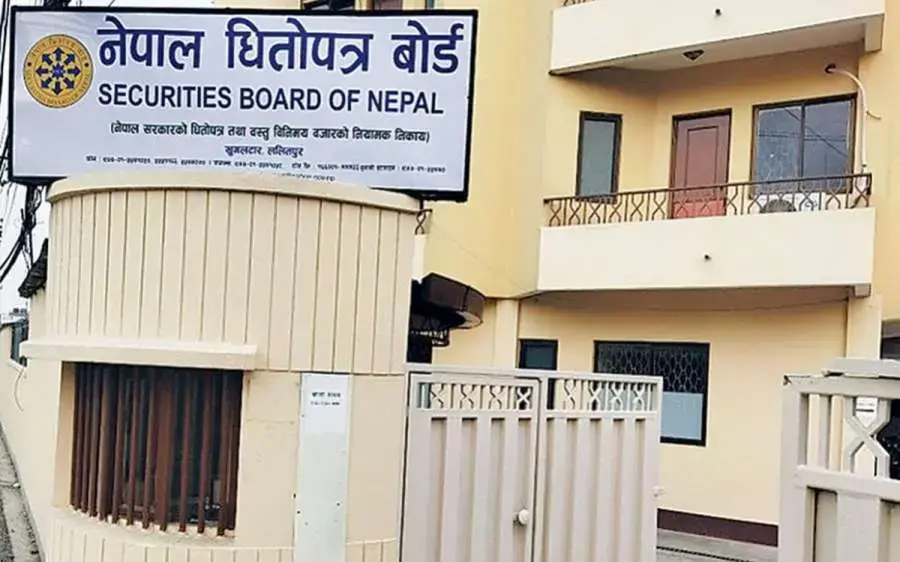
Nepal’s primary market is preparing for a significant expansion as 82 companies have formally applied to the Securities Board of Nepal (SEBON) for approval to issue Initial Public Offerings (IPOs). According to the latest update from SEBON, the firms in the pipeline are collectively planning to issue Rs 54.95 billion worth of public shares, signaling one of the largest upcoming IPO waves in recent years.
In total, these companies have requested permission to issue 382.5 million shares to the general public. SEBON officials stated that only companies with a per-share net worth above Rs 90 are being allowed to remain in the IPO pipeline. This follows a directive from Parliament’s Public Accounts Committee, which ordered that firms with weaker financial health — specifically those with a net worth below Rs 90 — should not be permitted to proceed with public issuance.
The screening process has tightened the quality threshold for IPO candidates. SEBON clarified that any company failing to meet the minimum net-worth requirement has already been removed or will not be considered for the pipeline. This move is expected to boost investor confidence by ensuring that only financially strong entities are allowed to raise funds from the general public.
A sector-wise breakdown shows that the hydropower sector dominates the pipeline, continuing its long-standing lead in Nepal’s primary market. As many as 39 hydropower developers have applied to issue 17.51 billion rupees worth of 171 million shares. Market observers say this reflects both the aggressive expansion of private energy developers and investors’ sustained interest in power-related stocks despite market volatility.
Similarly, the hotel and tourism sector has submitted applications from six companies, seeking approval to issue shares worth Rs 2.11 billion. Industry experts interpret this as a sign of renewed confidence in Nepal’s tourism recovery trajectory post-COVID, supported by increasing tourist arrivals and hotel occupancy trends in recent months.
The pipeline also includes four investment companies, planning to issue Rs 3.14 billion worth of shares. Among these, one company has requested approval to issue its IPO at a premium — a sign that some firms believe their valuation justifies pricing above face value despite cautious market sentiment.
The manufacturing and processing sector has also shown strong participation, with 19 companies seeking to issue shares worth Rs 27.45 billion. SEBON noted that at least six of these companies have requested permission to issue shares at a premium rate. Rising participation from manufacturing companies is seen as a positive shift, indicating that Nepal’s industrial sector is gradually turning to the capital market for long-term financing.
In addition, three micro-insurance companies have applied to float 6.75 million shares worth Rs 675 million, reflecting growing interest in insurance penetration in rural Nepal. Likewise, 11 companies from other sectors have requested approval to issue 33.7 million shares amounting to over Rs 4.05 billion.
According to NEPSE data, the stock exchange currently lists 276 companies. Out of these, 132 are banks, financial institutions, and insurance companies, while 94 are hydropower firms. The remaining include manufacturing, tourism, trading, and other categories. With 82 companies now awaiting IPO approval, analysts say the market could see one of the most diversified IPO cycles in Nepal's history.
Experts believe that the swelling IPO pipeline indicates strong corporate interest in capital mobilization, but they also caution that the secondary market’s ability to absorb such a large volume of new shares remains uncertain. Investor liquidity, regulatory efficiency, and market confidence will play critical roles in determining how smoothly these IPOs are subscribed when they open for application.
Market analysts also note that the stricter net-worth requirement may help stabilize the IPO environment by filtering out financially weak companies. This could create a more competitive and credible primary market, ultimately safeguarding retail investors and strengthening long-term market discipline.
Overall, SEBON’s updated IPO pipeline suggests both growing corporate participation and the potential for increased market depth in the coming months. However, the actual pace of approvals — and how investors respond amid fluctuating secondary market conditions — will determine the broader impact on NEPSE’s liquidity and momentum.
Advertisement
Written by
Dipesh Ghimire