Swarnim Waglé’s
Swarnim Waglé’s Early Economic Direction Signals Discipline, but Nepal’s Real Challenges Remain Untouched
For that reason, the finance minister’s real political and economic evaluation has not yet begun. His credibility will ultimately depend not on policy language or intellectual framing, but on whether the upcoming budget and its implementation can produce measurable improvement in an economy that has spent years trapped between fiscal limitations, political instability, and weak private sector confidence.
Dipesh Ghimire
5 min read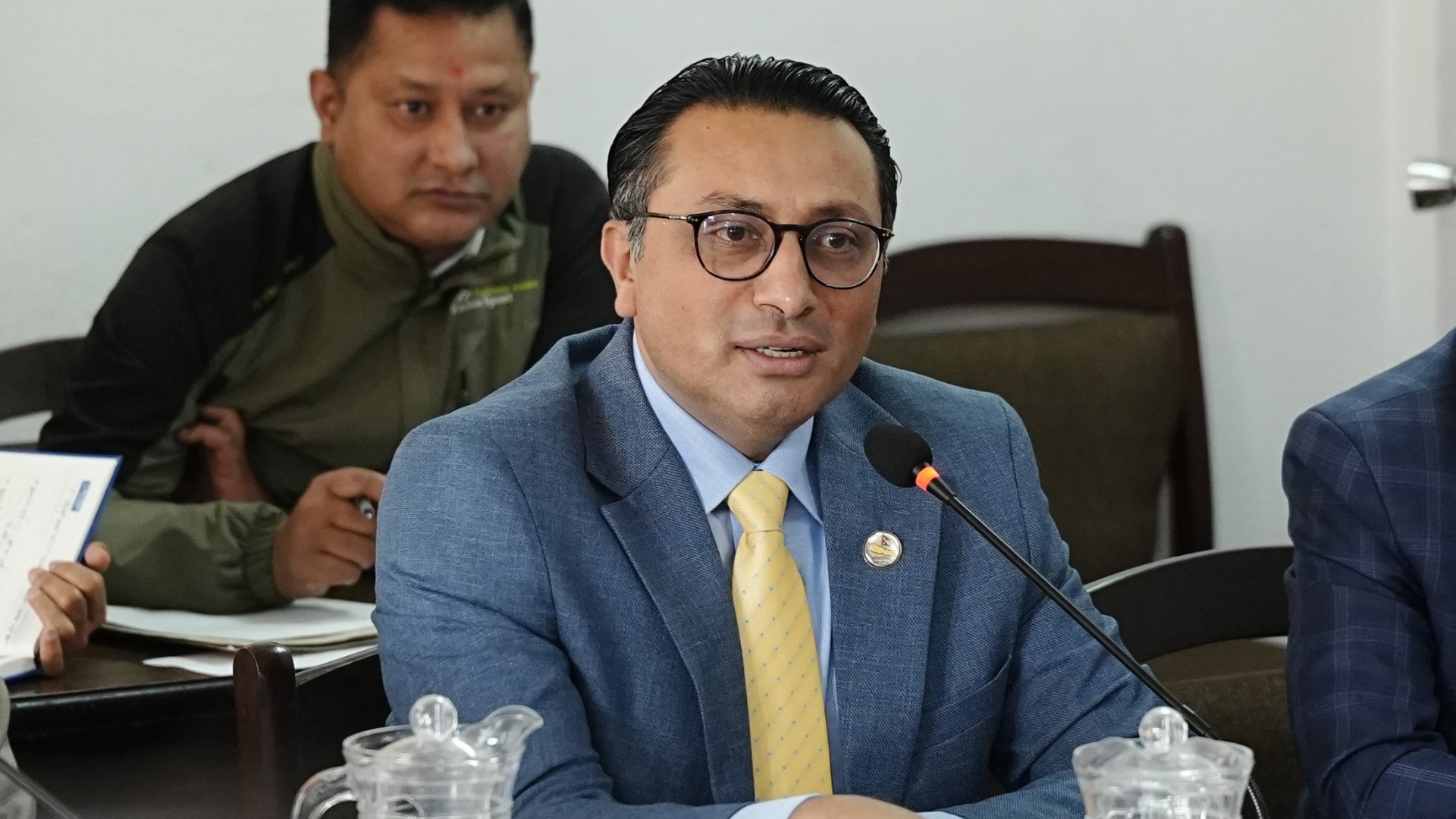
When Dr. Swarnim Waglé assumed office as Nepal’s Finance Minister on March 26, expectations inside political, economic, and private sector circles rose unusually fast. Unlike many of his predecessors, Waglé entered Singha Durbar carrying the image of a policy intellectual — an economist known more for academic and institutional expertise than traditional political bargaining. That image immediately created hope that Nepal’s economic management might finally move toward structural reform instead of short-term populism.
Yet, after nearly six weeks in office, the direction emerging from the Ministry of Finance presents a more complex picture. While the government has projected signs of administrative activism, fiscal caution, and policy discipline, the broader economy continues to struggle with the same structural weaknesses that existed before his arrival. As a result, Waglé’s early tenure is increasingly being viewed as a period of “policy signaling,” where intentions are visible but measurable economic outcomes remain uncertain.
From the beginning, the finance minister appeared determined to differentiate his approach from the traditional model of budget politics. Inside the ministry, discussions quickly shifted toward fiscal discipline, expenditure realism, and administrative efficiency. Officials close to the ministry claimed efforts were underway to introduce more merit-based decision-making, reduce procedural delays, and tighten financial oversight.
However, the biggest challenge before Waglé is not administrative style — it is the economic reality confronting the state itself. Nepal’s revenue collection remains weak, capital expenditure performance continues to disappoint, and economic activity in several productive sectors remains sluggish. In that environment, the upcoming budget for fiscal year 2083/84 has effectively become the first major test of his credibility.
One of the strongest themes repeatedly emphasized by Waglé has been public debt sustainability. According to his own assessment, Nepal’s public debt has expanded rapidly over the past decade, rising from nearly 25 percent of GDP in 2016 to around 42–43 percent today. That figure may still appear manageable compared to heavily indebted economies, but the finance minister’s concern seems rooted not only in the size of debt, but in the quality of spending financed through it.
His criticism of previous budgeting practices reflects that concern clearly. For years, Nepal’s governments have frequently presented large and politically attractive budgets despite lacking the institutional capacity to spend them effectively. Significant portions of allocated development budgets often remain unspent by the end of the fiscal year. Waglé has openly described that pattern as a failed model, signaling that future budgets may prioritize implementation realism over headline size.
This marks an important shift in policy philosophy. Instead of using large budget figures as political messaging tools, the ministry now appears to be focusing on “spending capacity” and fiscal sustainability. But that approach has also triggered debate among economists and private sector representatives. Critics argue that in a slow-moving economy already suffering from weak demand and low investment confidence, excessive fiscal restraint could further reduce economic momentum.
This debate reveals Nepal’s larger economic dilemma. On one side, the government cannot indefinitely rely on debt-financed spending without risking long-term fiscal stress. On the other side, a weak economy often requires active state spending to stimulate growth, employment, and investor confidence. The challenge for Waglé is therefore not simply reducing expenditure, but balancing discipline with economic expansion.
The finance minister has also attempted to reshape discussions around large infrastructure financing. His remarks regarding Nijgadh International Airport and the Budhigandaki Hydropower Project indicate growing reluctance inside the government to rely entirely on sovereign borrowing for mega projects. The operational struggles of Pokhara and Bhairahawa international airports — both constructed through foreign loans but still underutilized — appear to have deeply influenced the ministry’s thinking.
As a result, the government is increasingly discussing Public-Private Partnership (PPP) models and Foreign Direct Investment (FDI) alternatives. While such models may reduce direct debt pressure on the state, they also introduce new risks involving investor confidence, political stability, and long-term contractual management. Nepal’s weak implementation record in large-scale PPP projects remains a concern.
Waglé has also taken a reform-oriented position on Nepal’s struggling health insurance system. By publicly acknowledging that the current model is financially unsustainable, he has signaled willingness to pursue structural changes rather than temporary fixes. His proposed framework — where wealthy citizens pay premiums, middle-income groups contribute through co-payment systems, and poor households receive free coverage — reflects an attempt to introduce differentiated social financing based on income level.
Similarly, his stance on Nepal’s cooperative crisis reflects fiscal caution. While promising support for small depositors, the government has avoided committing taxpayer money directly to cooperative bailouts. Instead, the proposed solution revolves around asset recovery, liquidation mechanisms, and revolving funds. Economically, the approach may appear prudent. Politically and socially, however, the challenge is enormous because the cooperative crisis has already affected thousands of households across the country.
Another important dimension of Waglé’s early tenure has been his engagement with international financial institutions and development partners. Meetings with the World Bank, IMF, and donor agencies suggest that Nepal’s government is attempting to maintain external financial credibility at a time when fiscal pressures are intensifying. For a country heavily dependent on foreign assistance and concessional financing, maintaining international confidence remains critically important.
At the same time, the finance minister has become closely associated with the government’s broader governance reform agenda. Discussions regarding downsizing unproductive institutions, expanding digital governance, controlling unnecessary expenditure, and improving administrative efficiency increasingly place the Finance Ministry at the center of structural reform efforts.
Still, Nepal’s underlying economic indicators remain fragile. Revenue growth has not significantly accelerated. Capital expenditure remains structurally weak. Private sector investment confidence is still recovering from years of uncertainty. Although liquidity conditions inside banks have improved considerably, loan demand and productive investment remain sluggish. This suggests that deeper problems inside Nepal’s economy extend beyond monetary conditions alone.
In many ways, the public expectation surrounding Swarnim Waglé reflects Nepal’s broader frustration with economic stagnation itself. Citizens are no longer satisfied with speeches about reform, discipline, or long-term planning. What they increasingly expect are visible economic outcomes — employment opportunities, market confidence, stronger investment activity, and direct financial relief.
For that reason, the finance minister’s real political and economic evaluation has not yet begun. His credibility will ultimately depend not on policy language or intellectual framing, but on whether the upcoming budget and its implementation can produce measurable improvement in an economy that has spent years trapped between fiscal limitations, political instability, and weak private sector confidence.
Advertisement
Written by
Dipesh Ghimire