Top
Latest
Popular
Top
Stock
Dipesh Ghimire
The Appointment of the Central Bank Governor: Challenges and Expectations
The Appointment of the Central Bank Governor: Challenges and Expectations Following the expiration of Governor Maha Prasad Adhikari’s term on Chaitra 6, Nepal Rastra Bank remained without a formal Governor for an extended period—a delay that not only signaled institutional paralysis but also breached the provisions outlined in the Nepal Rastra Bank Act, 2058. During this interim period, a Deputy Governor was temporarily tasked with leading the institution. Legally, the Governor is to be appointed by the Council of Ministers for a five-year term, based on recommendations from a selection committee established under the Act. The central bank is a cornerstone of economic governance, and its leadership demands deep expertise in macroeconomics and monetary policy. It is generally expected that the Governor should be a seasoned economist, capable of crafting and steering policy to maintain price stability and manage inflation. Globally, many central banks have moved toward inflation targeting, setting clear benchmarks to maintain economic balance. Nepal too must embrace this forward-looking approach. A prominent case is India’s RBI Governor Shaktikanta Das, who was ranked among the top central bankers worldwide by Global Finance magazine. His recognition was based on his success in managing inflation, ensuring currency stability, and guiding interest rate policies—areas in which any central bank leader must excel.
Dipesh Ghimire
4 min read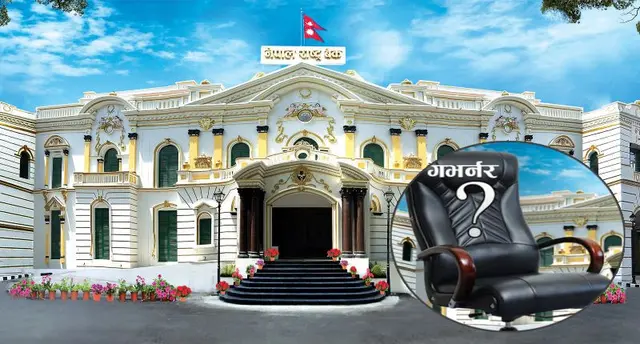
Following the expiration of Governor Maha Prasad Adhikari’s term on Chaitra 6, Nepal Rastra Bank remained without a formal Governor for an extended period—a delay that not only signaled institutional paralysis but also breached the provisions outlined in the Nepal Rastra Bank Act, 2058. During this interim period, a Deputy Governor was temporarily tasked with leading the institution. Legally, the Governor is to be appointed by the Council of Ministers for a five-year term, based on recommendations from a selection committee established under the Act.
The central bank is a cornerstone of economic governance, and its leadership demands deep expertise in macroeconomics and monetary policy. It is generally expected that the Governor should be a seasoned economist, capable of crafting and steering policy to maintain price stability and manage inflation. Globally, many central banks have moved toward inflation targeting, setting clear benchmarks to maintain economic balance. Nepal too must embrace this forward-looking approach.
A prominent case is India’s RBI Governor Shaktikanta Das, who was ranked among the top central bankers worldwide by Global Finance magazine. His recognition was based on his success in managing inflation, ensuring currency stability, and guiding interest rate policies—areas in which any central bank leader must excel.
Is It Necessary for the Governor to Be an Economist?
Even when a central bank Governor does not come from an economics background, the position demands the skill set of a capable executive who can coordinate across departments and drive technical mandates forward. In Nepal’s context, the role is highly technical—it requires much more than on-the-job learning. An effective Governor must possess solid understanding of financial systems, global markets, and the dynamics of monetary policy. They must also demonstrate the ability to collaborate with domain experts and manage cross-functional teams.
Leadership in such roles requires experience in handling diverse teams and stakeholders with varied temperaments and professional strengths. Ultimately, economic leadership is about performance, and political leaders are often evaluated based on how effectively they manage national finances.
Political Influence and Central Bank Autonomy
In many democracies, maintaining the central bank's independence is easier said than done. While the law may stipulate autonomy, central bank officials are typically appointed by political authorities and remain indirectly influenced. Governments often avoid taking direct responsibility for monetary decisions, using central bank independence as a shield—while still exerting informal influence through appointments and policy pressure.
The idea of a truly independent central bank is relatively new in global finance. In the UK, the Bank of England was granted operational independence only in the late 1990s, yet the Governor is still appointed by the Treasury. In such cases, independence exists only within defined boundaries.
Countries like China present the opposite scenario—where political leadership, notably under President Xi Jinping, directly controls the central bank. In such systems, monetary policy is shaped by political priorities, often blurring the lines between state governance and financial regulation.
Middlemen, Lobbying, and the Politicization of Appointments
One growing concern in Nepal is the undue influence of business lobbies and political intermediaries in shaping appointments to key regulatory bodies, including the central bank. The Governor of Nepal Rastra Bank should ideally be selected based on merit, experience, and vision—not allegiance to any political or business interest.
Lobbyists and intermediaries are now deeply embedded in policymaking structures, often manipulating processes behind the scenes. If policymaking is driven by interest groups rather than public interest, accountability and transparency are compromised.
Effective lobbying involves informing and persuading lawmakers to support or oppose certain policies. However, when these efforts are tied to financial gain or political favoritism, they erode public trust and institutional integrity.
Nepal's economic and governance ecosystem must remain vigilant against turning crucial regulatory roles into bargaining chips for powerful groups. A competent and independent Governor is vital for maintaining public confidence and ensuring effective economic oversight.
Learning from Global Failures
History offers plenty of cautionary tales. Nations where central banks were heavily politicized—such as Zimbabwe and Venezuela—suffered severe economic collapses, hyperinflation, and public disillusionment. Promising "free money" without raising taxes is a tempting political tactic, but it is economically disastrous. Monetary policy should remain shielded from such populist temptations.
A central bank’s core function is to maintain monetary stability. This requires public trust. Letting political figures control that function introduces volatility and risk. Ensuring the bank’s independence is the best way to protect the value of a nation’s currency.
Creating a Conducive Environment for the Next Governor
Given Nepal’s current macroeconomic challenges—limited credit flow, high remittances, weak domestic demand, growing trade deficit, and ongoing FATF gray list status—the next Governor will inherit a complex landscape. It is crucial that whoever is appointed, politically aligned or not, is given the space and support to operate effectively.
Nepal needs a Governor who can guide monetary policy without being micromanaged or compromised by vested interests. The priority must be institutional integrity and national interest—not personal or party gain.
Advertisement
Written by
Dipesh Ghimire