Bheri–Babai
Transmission Link Planned to Connect Bheri–Babai Hydropower Output to National Grid
The Bheri–Babai Diversion Multipurpose Project is considered one of Nepal’s important infrastructure investments because it combines water resource management, agricultural development and electricity generation in a single project framework. Successful completion of the remaining construction works and timely integration with the national grid will determine how effectively the project delivers its expected economic benefits.
Dipesh Ghimire
3 min read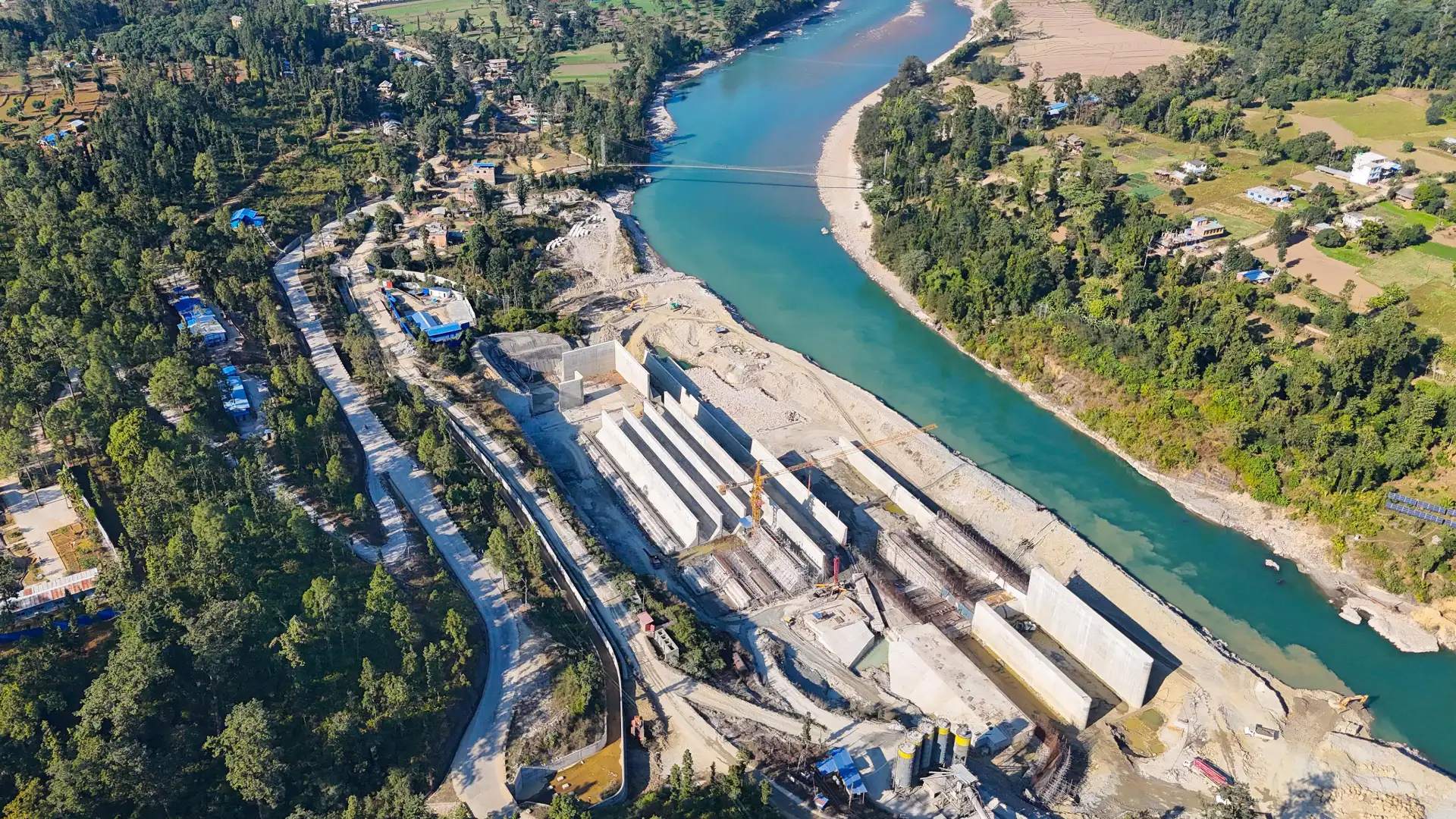
The government has moved forward with plans to connect electricity generated from the national pride Bheri–Babai Diversion Multipurpose Project to Nepal’s national power system through a dedicated 132 kV transmission line. The proposed connection is expected to ensure that electricity produced from the project can be efficiently evacuated and supplied to the national grid once the hydropower component becomes operational.
The proposed transmission infrastructure will link the power generated by the Bheri–Babai project with the Nepal Electricity Authority’s existing Kohalpur–Surkhet 132 kV transmission line. According to project officials, a 1.7-kilometre transmission line will be constructed for this purpose, creating a direct connection between the project’s powerhouse and the national transmission network.
The Bheri–Babai Diversion Multipurpose Project is designed as a combined irrigation and hydropower initiative. Under the project plan, water from the Bheri River will be diverted through a 12-kilometre-long tunnel into the Babai River, providing year-round irrigation facilities to agricultural land in Banke and Bardiya districts. In addition to expanding irrigation coverage, the project aims to generate around 46.8 megawatts of electricity.
The planned transmission line will consist of nine towers. Of these, three towers will be located inside the core area of Bardiya National Park, while six towers will fall within the park’s buffer zone. The transmission corridor will cover an area with an 18-metre right of way, affecting parts of Bheriganga Municipality–5 of Surkhet and areas under Bardiya National Park.
Since the proposed transmission route passes through environmentally sensitive areas, the project has started preparations for an Environmental Impact Assessment (EIA). The project office has invited suggestions from concerned stakeholders as part of the assessment process before moving ahead with construction activities.
Officials say that the transmission line has become a critical component of the project because the successful operation of the hydropower facility depends on a reliable evacuation system. Without adequate transmission infrastructure, electricity generation capacity from the project could face operational limitations even after the completion of power generation facilities.
The overall implementation of the Bheri–Babai project, however, remains behind the expected timeline. According to project officials, physical progress has reached around 70 percent, while financial progress stands at approximately 57 percent. The remaining works are expected to require nearly three more years for completion.
The project’s progress has attracted increased government attention after implementation moved slower than anticipated. Energy, Water Resources and Irrigation Minister Biraj Bhakta Shrestha recently conducted an inspection visit to the project site and directed officials to accelerate construction activities.
A major milestone of the project has already been achieved with the completion of the main diversion tunnel. The tunnel, considered one of the most technically significant parts of the project, will serve as the main structure for transferring water from the Bheri River to the Babai River.
Following the completion of tunnel construction, the remaining focus has shifted toward civil works, hydro-mechanical systems and electro-mechanical installations. These components are essential for both irrigation operations and electricity generation from the project.
The development of the transmission line indicates that the project is entering a more integrated implementation phase, where irrigation infrastructure and energy production facilities must progress together. The government expects that once completed, the project will contribute not only to agricultural productivity in western Nepal but also to strengthening the country’s renewable energy supply.
However, the project faces challenges related to environmental approval, construction coordination and timely completion of remaining works. The involvement of protected areas in the transmission route will require careful planning to balance infrastructure development with environmental protection.
The Bheri–Babai Diversion Multipurpose Project is considered one of Nepal’s important infrastructure investments because it combines water resource management, agricultural development and electricity generation in a single project framework. Successful completion of the remaining construction works and timely integration with the national grid will determine how effectively the project delivers its expected economic benefits.
Advertisement
Written by
Dipesh Ghimire