#NRBReport2025 #EnergySectorNe
Transport and Energy Sectors Drive Credit Growth — Electricity Loans Up by Rs. 1.7 Billion
The latest NRB data shows that credit to transport and energy sectors grew steadily, with electricity loans up by Rs. 1.7 billion and transport loans rising modestly. This indicates that infrastructure-led financing remains a crucial pillar of Nepal’s banking system, fueling both power generation and logistics growth.
Sandeep Chaudhary
1 min read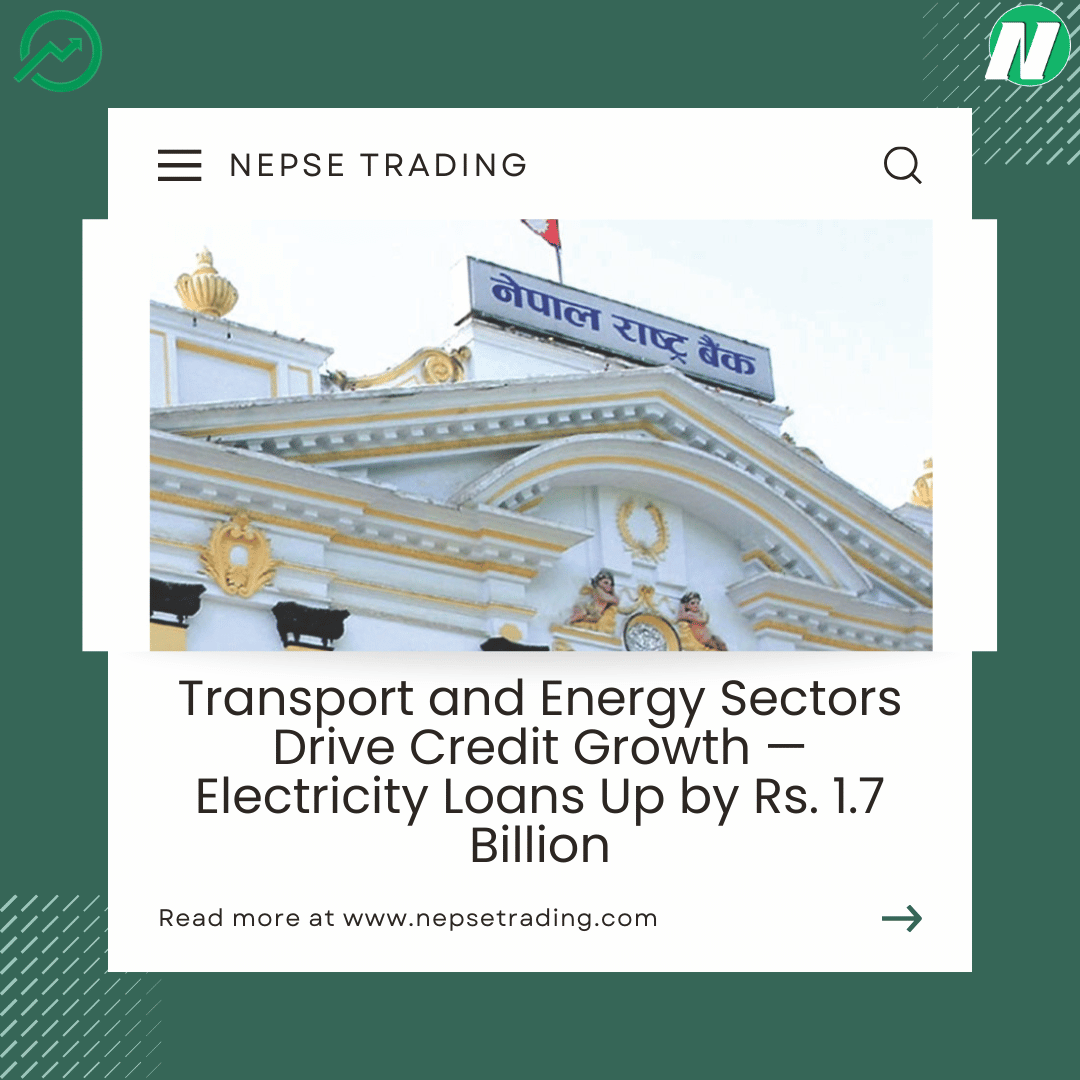
According to the Nepal Rastra Bank’s sectorwise credit report for Mid-August 2025, the transportation and energy sectors have emerged as key drivers of credit growth, even as overall lending in other areas remained subdued. The total outstanding credit in these sectors reached nearly Rs. 478.87 billion, marking a steady increase from the previous month. Notably, the electricity sector alone accounted for Rs. 437.76 billion, rising by Rs. 1.7 billion (0.4%) compared to July 2025 — signaling ongoing investment momentum in hydropower and renewable energy projects.
The data highlights that energy financing continues to dominate the infrastructure loan portfolio of commercial banks, supported by both private and government-backed projects under construction. The increase reflects continued disbursements to hydropower developers, power transmission projects, and emerging renewable ventures. Moreover, transport-related loans — including those for vehicles, airlines, and logistics — showed moderate expansion, with the transport equipment production and fitting sector up by 1.7%, reaching Rs. 53.2 billion.
Breaking down the transport segment, vehicle and spare parts financing rose by Rs. 500 million, while aircraft and aviation loans increased by Rs. 390 million, reflecting renewed optimism in domestic airlines and logistics firms following stable fuel prices and improved travel demand. Trucking and storage services also saw marginal recovery, supported by gradual revival in trade and goods movement.
Economists interpret this trend as a positive indicator of real-sector activity — suggesting that energy infrastructure and transportation services are regaining traction as core engines of Nepal’s post-COVID economic recovery. However, they also caution that rising project costs, delayed energy evacuations, and high interest rates could constrain the pace of expansion in the months ahead.
Advertisement
Written by
Sandeep Chaudhary