Trump Visits China
Trump Visits China Amid Rising Global Tensions
The central question now facing global markets and diplomats alike is whether the two powers can still find enough common ground to stabilize international tensions, or whether strategic rivalry will continue pushing the world toward deeper economic and political fragmentation.
Dipesh Ghimire
4 min read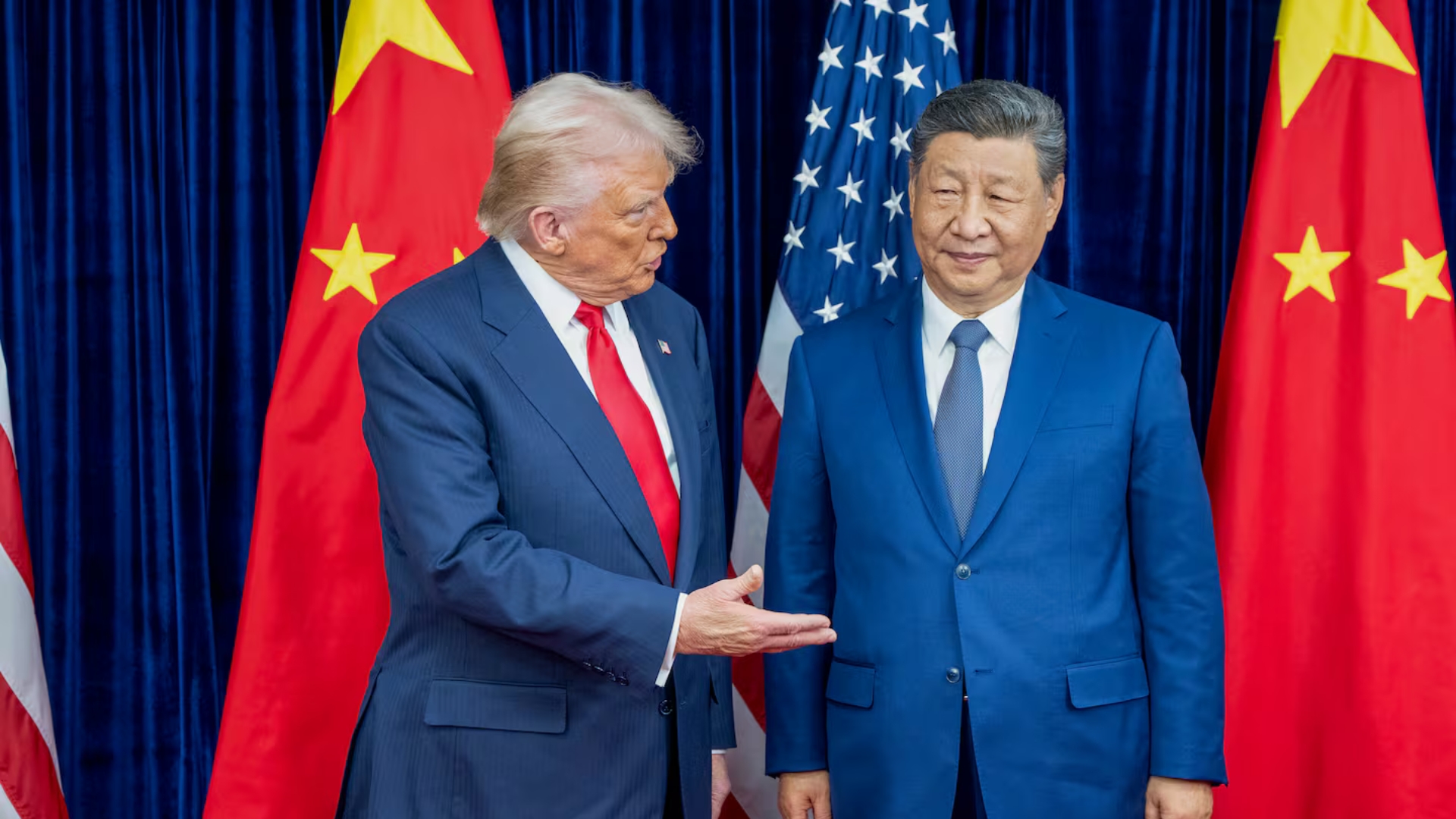
Nearly nine years after his last visit to China, former US President Donald Trump has arrived in Beijing for high-level meetings with Chinese President Xi Jinping, in what is being closely watched as one of the most politically sensitive diplomatic engagements between the world’s two largest economies in recent years.
Chinese authorities are expected to host Trump, senior American officials and a delegation of business leaders through Friday, signaling Beijing’s intention to project stability and strategic confidence despite growing geopolitical uncertainty. The visit comes at a time when global markets are already under pressure from rising tensions in the Middle East, fragile economic recovery and intensifying technological competition between Washington and Beijing.
This year’s meeting carries a far heavier geopolitical backdrop than previous US-China engagements. The escalating conflict involving Iran has pushed energy security back to the center of global diplomacy, disrupting oil markets and increasing fears of broader economic instability. Rising crude oil prices and uncertainty over supply routes have added pressure to inflation-sensitive economies worldwide.
Against that backdrop, Trump’s visit is no longer viewed purely as a trade-focused engagement. Analysts believe discussions are likely to extend well beyond tariffs and market access, touching instead on strategic security issues, export controls, technological rivalry and regional stability.
Within the United States itself, reactions to the Iran conflict have reportedly become increasingly divided. Some political groups have questioned the broader economic consequences of prolonged geopolitical confrontation, while recent legal and judicial challenges to parts of Trump-era tariff policies have also complicated Washington’s trade positioning internationally.
This has created an unusual diplomatic environment in which both sides appear to be entering negotiations with different forms of leverage. While the United States continues to dominate global finance and military influence, China appears increasingly confident in its role within global manufacturing, supply chains and strategic minerals.
Particular attention has focused on China’s dominance in rare earth minerals, which have become one of the most important strategic tools in modern geopolitical competition. Rare earth elements are critical for advanced electronics, electric vehicles, batteries, semiconductor production and defense technology. Because China controls a significant portion of global processing and supply capacity, analysts say Beijing now holds substantial influence over industries central to the future global economy.
Chinese policymakers are also believed to feel less vulnerable to American trade pressure than during the earlier phases of the US-China trade war. Over the past several years, many Chinese firms have diversified supply chains, expanded into alternative export markets and strengthened regional manufacturing networks. As a result, economists argue that the direct impact of US tariffs on China may no longer be as severe as it once was.
At the same time, neither Washington nor Beijing appears eager to allow tensions to escalate uncontrollably. Both countries are facing mounting domestic economic pressures. China continues to deal with weak property markets, slower consumer confidence and export uncertainties, while the United States remains under pressure from inflation concerns, political polarization and strategic competition with multiple global rivals simultaneously.
This has created a situation where competition and cooperation are now unfolding side by side. While both countries increasingly compete over technology, artificial intelligence, semiconductors and military influence, they also remain deeply economically interconnected through trade, investment and financial systems.
Analysts expect several sensitive issues to dominate the discussions between Donald Trump and Xi Jinping. Among them are likely to be export restrictions on advanced technologies, artificial intelligence governance, tensions surrounding Taiwan, global energy security and the broader implications of instability in the Middle East.
The Taiwan issue in particular continues to remain one of the most sensitive fault lines between the two powers. Beijing considers Taiwan part of its territory, while the United States maintains strategic support for the island’s defense and democratic system. Any escalation around Taiwan carries major implications not only for regional security but also for global semiconductor supply chains.
The broader international community is therefore viewing this meeting as more than a routine diplomatic event. The relationship between the United States and China increasingly shapes global trade flows, energy prices, investment trends, technological development and geopolitical stability. Even limited progress in dialogue between the two sides could influence financial markets and investor confidence worldwide.
Yet expectations for major breakthroughs remain cautious. Relations between the two countries over the past decade have repeatedly shifted between engagement and confrontation. Periods of trade negotiations have often been followed by disputes over technology, security or strategic influence.
For this reason, many observers believe the most important outcome of the visit may not necessarily be a large agreement, but rather whether both sides can prevent tensions from escalating further during a period of global instability.
Ultimately, the meeting between Donald Trump and Xi Jinping is being viewed as a reflection of a changing global order — one in which economic interdependence, geopolitical rivalry and technological competition are becoming increasingly difficult to separate.
The central question now facing global markets and diplomats alike is whether the two powers can still find enough common ground to stabilize international tensions, or whether strategic rivalry will continue pushing the world toward deeper economic and political fragmentation.
Advertisement
Written by
Dipesh Ghimire