Top
Uneven Growth Pattern Emerges in Nepal’s Economy as Energy Surges and Agriculture Slows
Uneven Growth Pattern Emerges in Nepal’s Economy as Energy Surges and Agriculture Slows Nepal’s economy is projected to witness an uneven sectoral growth pattern in the current fiscal year 2082/83, according to preliminary national accounts estimates. While certain sectors—particularly energy and financial services—are showing strong momentum, the sluggish performance of agriculture and public services is expected to constrain overall economic expansion. The data points to a structural imbalance where high-growth sectors are not fully aligned with those that carry the largest share of the economy.
Dipesh Ghimire
3 min read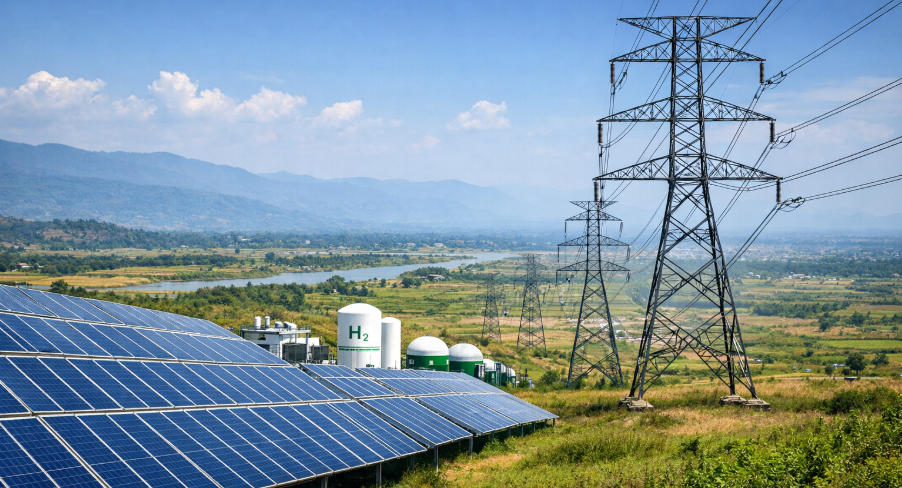
Nepal’s economy is projected to witness an uneven sectoral growth pattern in the current fiscal year 2082/83, according to preliminary national accounts estimates. While certain sectors—particularly energy and financial services—are showing strong momentum, the sluggish performance of agriculture and public services is expected to constrain overall economic expansion. The data points to a structural imbalance where high-growth sectors are not fully aligned with those that carry the largest share of the economy.
The most striking growth is expected in the electricity and gas sector, with an estimated expansion of 20.93 percent. This surge reflects the addition of new hydropower projects, improvements in transmission infrastructure, and a gradual increase in domestic electricity consumption. The rapid growth of this sector signals Nepal’s ongoing transition toward energy self-sufficiency and its broader ambition to position itself as a regional electricity exporter. However, despite its high growth rate, the sector’s overall share in GDP remains relatively modest, limiting its immediate impact on aggregate economic output.
The financial and insurance sector is projected to grow by 9.16 percent, making it the second fastest-growing segment of the economy. This expansion is indicative of improving financial intermediation, increased lending activity, and a gradual recovery in economic confidence. The sector is also expected to contribute around 6.72 percent to GDP, reinforcing its role as a key driver of economic activity. Growth in financial services often reflects underlying improvements in other sectors, suggesting a broader, albeit uneven, economic recovery.
In contrast, agriculture—the backbone of Nepal’s economy—continues to underperform. Despite accounting for the largest share of GDP at 24.03 percent, the sector is expected to grow by only 1.58 percent. A projected 4.16 percent decline in paddy production has significantly weighed on overall agricultural output, overshadowing modest gains in crops such as maize, wheat, pulses, and industrial crops. The limited growth in livestock production further highlights structural challenges, including dependency on monsoon patterns, low mechanization, and insufficient modernization.
The industrial sector, while still modest in size, is showing signs of recovery. Growth is estimated at 2.83 percent, an improvement compared to the previous year. Increased production of cement, steel rods, vegetable ghee, and tobacco products, along with higher imports of raw materials, has supported this rebound. This suggests that domestic demand is gradually strengthening, although the pace of industrial expansion remains below its potential.
Construction activity, however, continues to lag behind. With an estimated growth of just 2.21 percent, the sector remains constrained by weak capital expenditure and delays in infrastructure projects. Given its strong linkages with employment and industrial demand, the slow growth in construction represents a missed opportunity for broader economic stimulus.
Within the service sector, performance appears relatively stable. Transportation and storage are expected to grow by 5.79 percent, while information and communication services may expand by 5.53 percent, reflecting increasing digital adoption and mobility. Wholesale and retail trade is projected to grow by 4.51 percent, indicating steady consumption trends. Tourism-related accommodation and food services are also expected to record moderate growth of 3.12 percent, suggesting a gradual recovery in visitor arrivals.
Despite these positive trends, public administration and education sectors are projected to grow by only 0.23 percent and 1.50 percent respectively. This weak performance is largely attributed to limited expansion in government spending and slow policy execution. As these sectors play a crucial role in long-term human capital development and institutional efficiency, their sluggish growth raises concerns about the sustainability of broader economic progress.
Overall, the data highlights a growing imbalance in Nepal’s economic structure. While high-growth sectors such as energy and finance are expanding rapidly, they are not yet large enough to offset the slow growth in agriculture and public services. This divergence underscores the need for more balanced policy interventions—particularly in modernizing agriculture, accelerating public investment, and improving productivity across key sectors.
As Nepal moves forward, the challenge will be to translate sectoral gains into inclusive and sustainable economic growth. Without addressing the structural weaknesses in its largest and most labor-intensive sectors, the economy risks remaining uneven—growing in pockets, but lacking the broad-based momentum needed for long-term stability and resilience.
Advertisement
Written by
Dipesh Ghimire