NEPSE
What is the New Benchmark? Unveiling the True Face of the Nepal Stock Exchange
How the massive gap between the government's rushed deadline and the Board's 24-month technical timeline will be bridged remains to be seen. Nevertheless, SEBON’s initiative—which is currently seeking stakeholder feedback—marks a historic step toward making the capital market transparent and globally aligned. Once implemented, it will finally reveal the true, investable face of the Nepali stock market, ultimately safeguarding the interests of the general investors.
Dipesh Ghimire
3 min read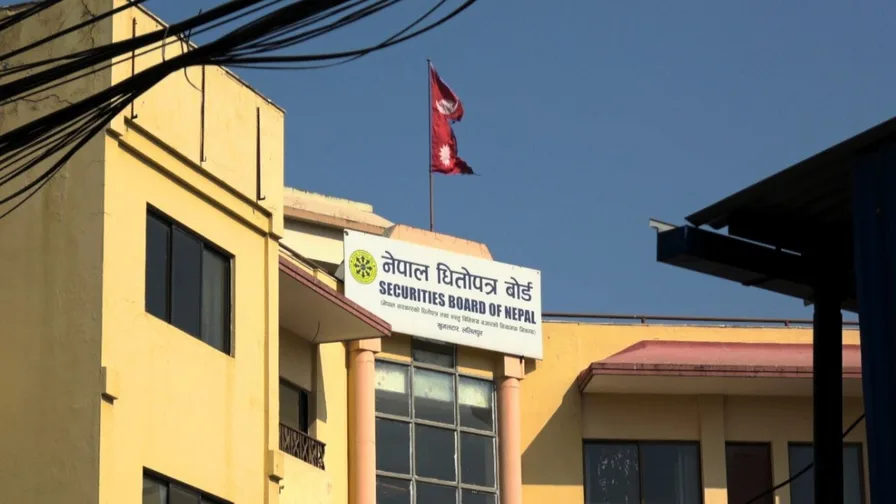
Investors and analysts have long criticized the current 'NEPSE Index' for failing to reflect the stock market's true condition. The primary flaw lies in its calculation, which incorporates non-tradable shares—such as promoter, locked-in, and government-owned equities—into the total market capitalization. Consequently, even minor trading volumes can trigger massive index fluctuations. To rectify this severe technical anomaly, the Securities Board of Nepal (SEBON) is spearheading the development of a new 'Benchmark Index' based exclusively on tradable shares.
This brings up the central question for general investors: 'What exactly is the new benchmark?' In simple terms, it is a scientific indicator that calculates only 'free-float' shares—those fully available for public trading. Currently, NEPSE calculates total market capitalization by multiplying a company's total listed shares by its market price. The proposed benchmark, however, will strictly apply a free-float factor. This means that no matter how massive a company's total market capitalization is, its influence (weightage) in the new index will automatically shrink if its shares are not actively available for trading.
According to SEBON’s recently published working paper on the restructuring of the benchmark index, the market will soon feature two distinct indicators. The existing NEPSE index will not be scrapped; instead, it will be redefined as the 'NEPSE All Equity Index' to measure the overall performance of all listed shares. Running parallel to this, the new 'NEPSE Benchmark Index' will be introduced to track the daily performance of shares that are genuinely available for investment.
The working paper uses a compelling example to illustrate how this new index will balance the market. Suppose three companies have a combined market capitalization of Rs 200 billion. Under the current system, Company 'A', with a massive Rs 100 billion capitalization, dominates the index with a 50% weight. However, under the new benchmark, if Company 'A' has only 20% of its shares available for trade, while a smaller Company 'C' (with a Rs 40 billion capitalization) has a 90% free-float ratio, the smaller company will hold a higher weight (41.86%) than the larger one (23.26%). This mechanism will heavily discourage the tendency of certain large companies to manipulate the overall index by floating only a fraction of their shares.
Furthermore, not all listed companies will automatically qualify for the new Benchmark Index. Entry is bound by stringent criteria, including the issuance of ordinary shares, meeting minimum free-float thresholds, maintaining regular trading history, and ensuring adequate market liquidity. Companies failing to maintain financial discipline or timely information disclosure will be excluded, making the new index a highly reliable filtering tool for investors.
The vision behind this new benchmark extends beyond merely fixing a calculation error; it aims to usher in a new era for Nepal’s capital market. This free-float index will serve as the foundational infrastructure for launching modern financial instruments like Index Funds and Exchange Traded Funds (ETFs) in the future. Additionally, it will allow foreign investors to analyze the domestic market using metrics that align with standard international practices.
Despite its merits, implementing this ambitious project will not be easy. An action plan introduced by the Ministry of Finance set an aggressive target to launch the new index by mid-December. However, SEBON’s detailed working paper reveals the stark technical reality: fully implementing this system will take approximately 24 months. The process involves massive technical hurdles, including back-testing 5 to 10 years of historical data, running parallel indices for six months, and developing an integrated ownership data system in coordination with NEPSE, CDSC, and the Board.
How the massive gap between the government's rushed deadline and the Board's 24-month technical timeline will be bridged remains to be seen. Nevertheless, SEBON’s initiative—which is currently seeking stakeholder feedback—marks a historic step toward making the capital market transparent and globally aligned. Once implemented, it will finally reveal the true, investable face of the Nepali stock market, ultimately safeguarding the interests of the general investors.
Advertisement
Written by
Dipesh Ghimire