NEPSE
Why NEPSE's Optimism Keeps Flickering Out — and Why the Budget Couldn't Light It
Seen as a whole, the past few months describe a market whose direction is dictated by political and policy signals — arrests, ministerial reassurances, budget clauses — rather than by the performance of listed companies. Confidence stays brittle precisely because the recurring sources of fear, namely regulatory and legal risk on one side and tax uncertainty on the other, keep resurfacing just as optimism builds. The budget was meant to be the catalyst that finally lifted sentiment for good; instead it stacked a tax increase on top of an unresolved question, leaving the rally hostage to a clarity that has yet to fully arrive. Until that clarity comes — in unambiguous implementation of the final-tax provision and a steadier regulatory climate — NEPSE's enthusiasm looks set to keep flaring up and fading away.
Dipesh Ghimire
5 min read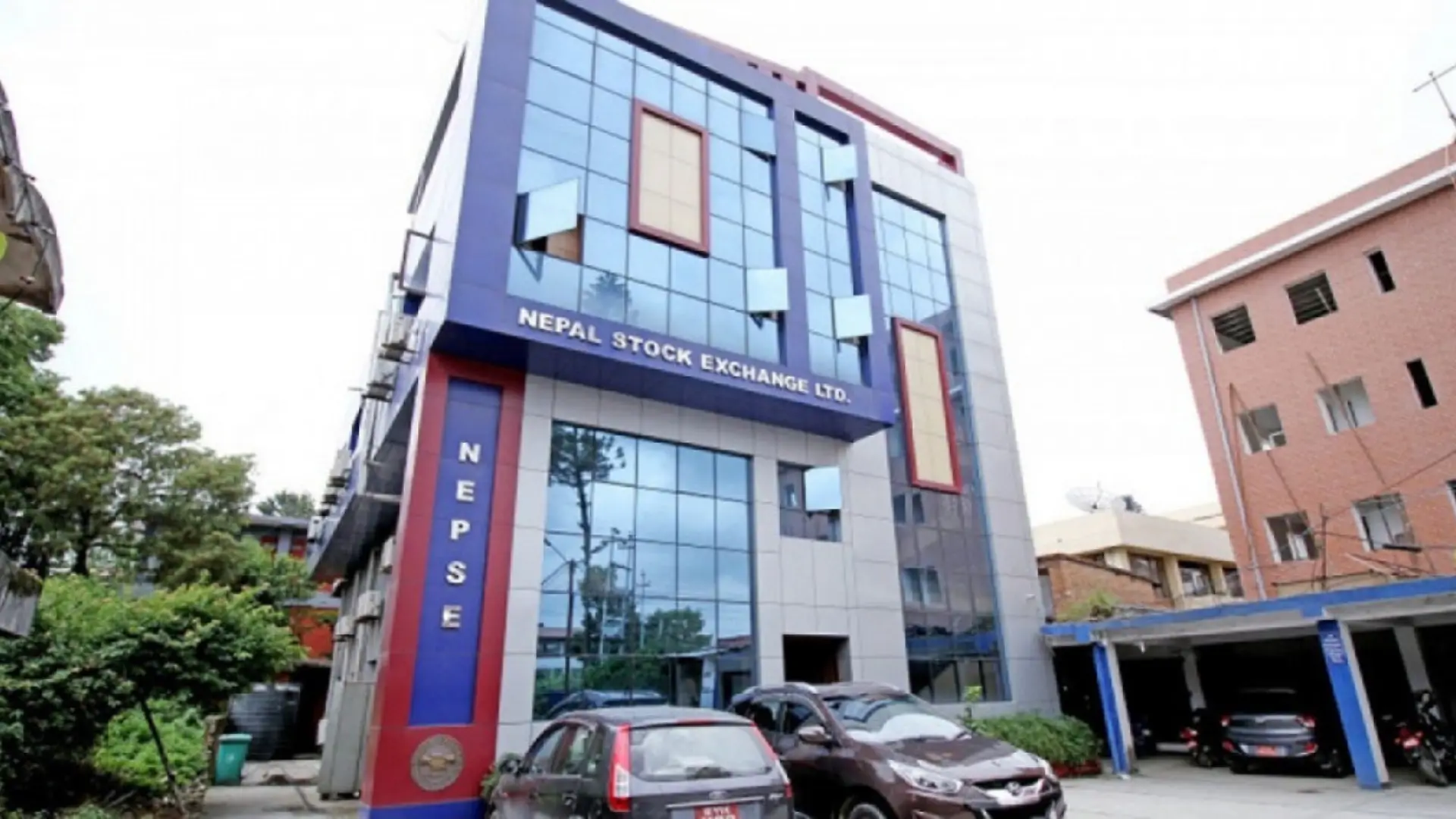
The share market runs on enthusiasm: when confidence rises, so does buying. But for several months now, every flicker of optimism on the Nepal Stock Exchange (NEPSE) has proved fleeting, igniting briefly only to die out within days. The market's slide on the first trading day after the budget is simply the latest episode in a pattern that has defined the post-election period — a market that keeps trying to rally, and keeps being pulled back down.
The story begins with the election held last Falgun. Once it became clear that a majority government would take shape, investors responded with the kind of conviction that only political certainty produces. On Falgun 25 (early March), the market surged 6 percent in a single session, with the index climbing 162 points to 2,875. After years of fragile coalitions and short-lived governments, the prospect of a stable, decisive administration was exactly the catalyst the market had been waiting for.
That conviction did not last. Almost as soon as the government was formed, businessmen began to be arrested, and the rally lost its footing. The crackdown on alleged wrongdoers injected a fresh dose of fear — investors worried the dragnet might widen to ensnare market players — and the government's unflinching posture, signalling that those who had done wrong should indeed be afraid, only sharpened the anxiety. In effect, the political certainty that had lifted the market was replaced by a new uncertainty premium tied to the question of how far the crackdown would reach.
Sentiment began to recover only as the action came to look targeted rather than indiscriminate. As businesspeople judged to have acted in "good faith" were released from among those detained, the cloud gradually lifted, and by Chaitra 12 (late March) the index had climbed to 2,950. The recovery, in other words, tracked not corporate earnings but the perceived narrowing of legal risk.
It did not hold either. By the time Finance Minister Dr. Swarnim Wagle addressed investors on Chaitra 23, the rally had already unwound — the index had slipped back toward 2,677 — and his reassurance that financial offences would draw monetary penalties rather than arrests, coupled with his appeal that "golden days" lay ahead and that investors should not panic, triggered an immediate 3 percent, 83-point bounce to 2,760. The speed of that reaction was itself telling: it revealed a market increasingly dependent on verbal intervention from officials, responding to words of comfort rather than to fundamentals.
The fragility resurfaced soon after. In the final week of Baishakh, the arrest of the chief executive of Nepal Investment Bank sent another ripple through the market. The reaction this time was muted — the index merely wobbled within a narrow range rather than tumbling — but the episode underscored why gains could not be sustained: each new arrest reset the confidence clock, and the political-risk overhang kept returning before any rally could mature.
By the eve of the budget, hope had migrated from politics to policy. On the Wednesday before its presentation, the market edged up and, notably, turnover improved over preceding sessions — a sign that investors were positioning themselves optimistically, betting the budget would finally deliver the lift that ministerial reassurances had only briefly provided. The expectation was that fiscal policy would succeed where everything else had fallen short.
Instead, the budget became the latest disappointment. When the market reopened on the Monday after (June 1), the index fell 26 points to 2,755, and the finance minister's stated aim of using the budget to energise investors went unrealised. Two provisions, in particular, failed to win the market over.
The first was the increase in capital gains tax on share trading from the coming fiscal year. Those selling within a year will now pay 10 percent on their gains, up from 7.5 percent, while those selling after a year will pay 7.5 percent, up from 5 percent. The logic of the disappointment is straightforward: a higher tax on trading profits directly raises the cost of participating in the market, and when investors had been hoping for relief, an added burden lands as a setback regardless of its size.
That said, the gloom deserves some balancing context. Even after the hike, analysts point out that Nepal's capital gains tax remains among the lowest in South Asia, and the same budget paired the increase with relief elsewhere, raising the personal income tax exemption threshold to a flat Rs 1 million. The disappointment, then, is driven less by the absolute level of the tax than by its direction — upward when investors wanted it lowered — and, more importantly, by the uncertainty bundled alongside it.
That uncertainty is the second, and arguably deeper, grievance. Although the budget declared capital gains tax to be a final tax — a provision officially meant to remove the need for any secondary settlement, and one the trading community had long demanded — investors remain unconvinced that the matter is truly settled. Those who file income returns are still unsure whether this tax is genuinely the end of their liability, and that doubt has kept enthusiasm from taking hold. The unease is rooted in precedent: in the fiscal year 2080-81, natural persons trading securities "as a regular business" were told to file income returns and pay any outstanding tax, with a 50 percent discount dangled for those who came forward voluntarily — and investors have been jittery ever since.
What investors wanted was a clean, policy-level end to that ambiguity. The budget raised the tax and, at the same time, left the new arrangement insufficiently clear — and it is this combination, a heavier levy delivered without definitive closure, that has left the market deflated.
Seen as a whole, the past few months describe a market whose direction is dictated by political and policy signals — arrests, ministerial reassurances, budget clauses — rather than by the performance of listed companies. Confidence stays brittle precisely because the recurring sources of fear, namely regulatory and legal risk on one side and tax uncertainty on the other, keep resurfacing just as optimism builds. The budget was meant to be the catalyst that finally lifted sentiment for good; instead it stacked a tax increase on top of an unresolved question, leaving the rally hostage to a clarity that has yet to fully arrive. Until that clarity comes — in unambiguous implementation of the final-tax provision and a steadier regulatory climate — NEPSE's enthusiasm looks set to keep flaring up and fading away.
Advertisement
Written by
Dipesh Ghimire