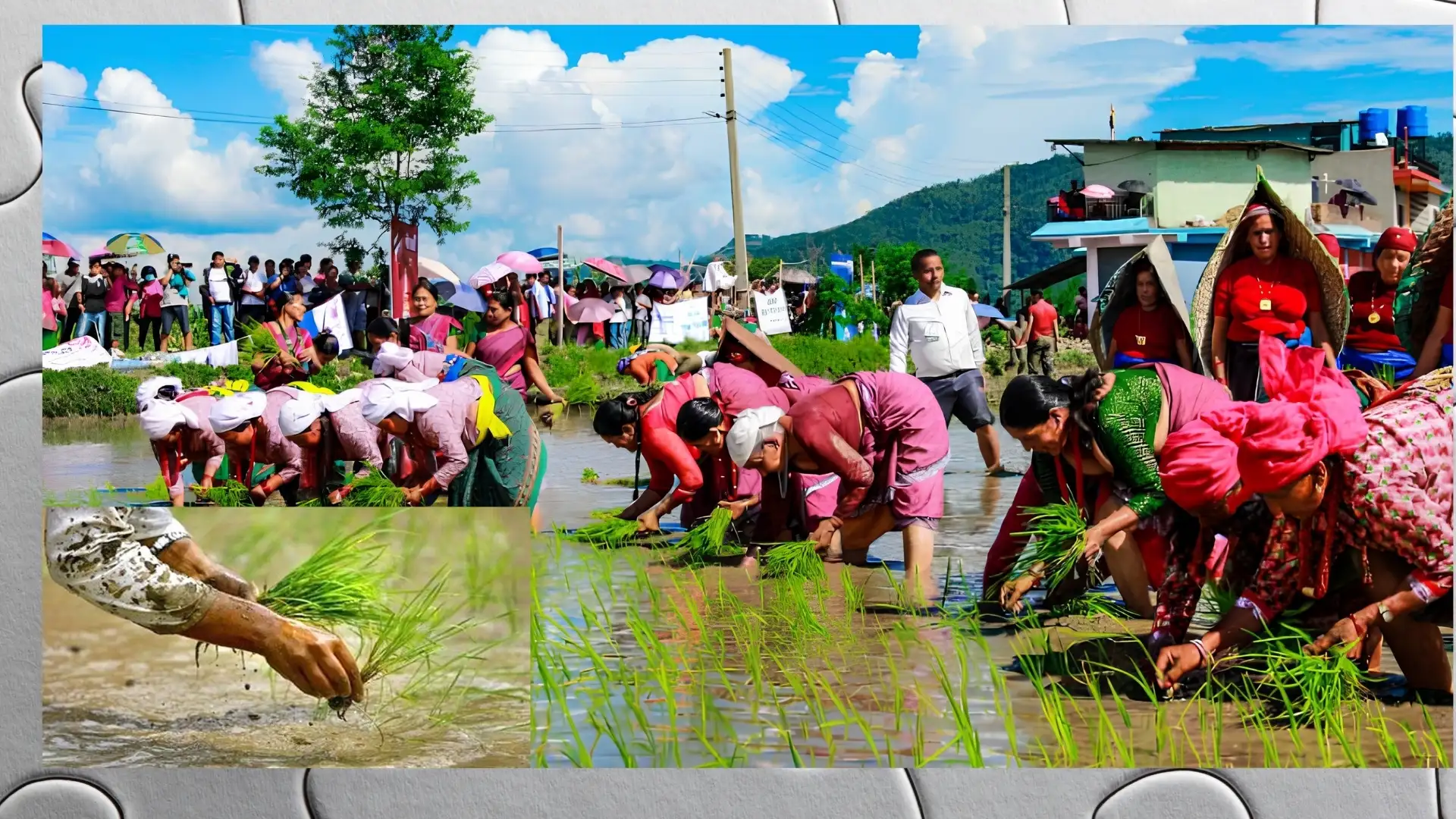
देशभर आज असार १५ मनाइँदै छ। खेतमा हिलो छचल्किएको छ, किसानका हातमा धानको बिरुवा छ र ओठमा असारे गीत।
वर्षायाम सुरु भएसँगै किसान खेततिर ओर्लन्छन्। दिनभरको रोपाइँपछि दहीचिउरा खाने यो चलन पुस्तौँदेखि चलिआएको छ। थकान मेटाउन र शरीरलाई ताजा राख्न यो खाना उपयुक्त मानिँदै आएको छ।
दही नेपाली जीवनमा शुभताको प्रतीक हो। यात्रामा निस्कँदा, नयाँ काम थाल्दा दही खुवाउने परम्परा आजसम्म कायम छ। आयुर्वेदले पनि दहीलाई पाचनका लागि लाभदायक मानेको छ।
सरकारले २०६२ सालदेखि यो दिनलाई राष्ट्रिय धान दिवसका रूपमा मनाउँदै आएको छ। कृषि मन्त्रालयदेखि स्थानीय तहसम्म विभिन्न कार्यक्रम आयोजना भएका छन्।
तर यस वर्ष वर्षाले ढिलाइ गरेको छ। कतिपय जिल्लामा रोपाइँ अझै पूरा हुन सकेको छैन। मलखादको अभाव पनि किसानका लागि चुनौती बनेको छ।
धान नेपालको मुख्य खाद्यान्न बाली हो। असार १५ केवल पर्व मात्र होइन — यो किसानको पसिनाको सम्मान हो।
Asar 15 is being celebrated across Nepal today. Fields are filled with mud, farmers hold paddy seedlings in their hands, and folk songs echo through the countryside.
With the arrival of the monsoon season, farmers descend into the fields. The tradition of eating curd and beaten rice after a long day of planting has been passed down for generations. This meal is considered ideal for relieving fatigue and keeping the body refreshed.
Curd holds a special place in Nepali culture as a symbol of good fortune. The tradition of offering curd before a journey or the start of a new task continues to this day. Ayurveda also recognizes curd as beneficial for digestion.
The government has been observing this day as National Paddy Day since 2062 BS. Various programs have been organized from the Ministry of Agriculture down to the local government level.
However, this year the monsoon has been delayed. In several districts, planting is yet to be completed. The shortage of chemical fertilizers has also become a challenge for farmers.
Rice is Nepal's primary food crop. Asar 15 is not just a festival — it is a tribute to the sweat and labor of every farmer who fills the plate of every Nepali.