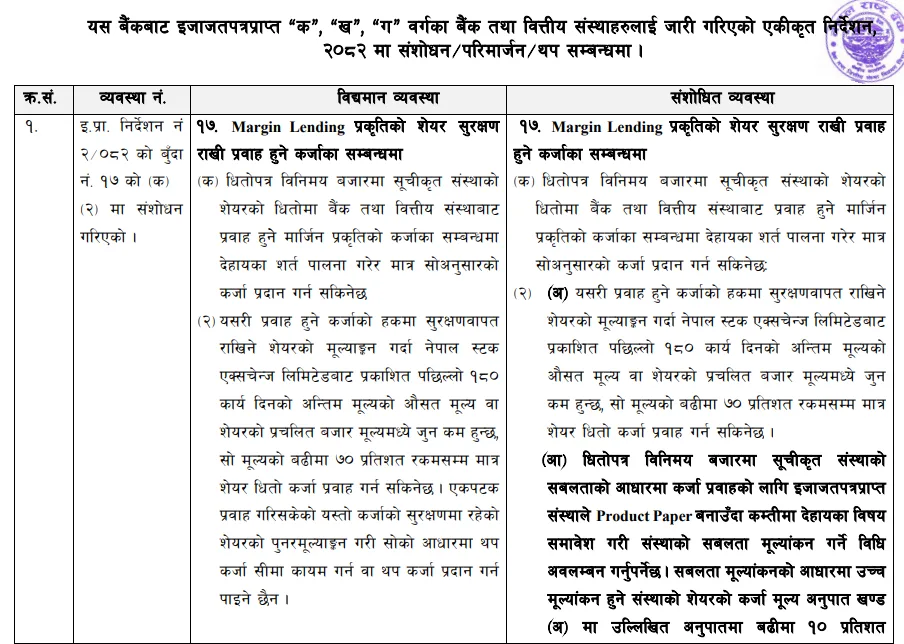
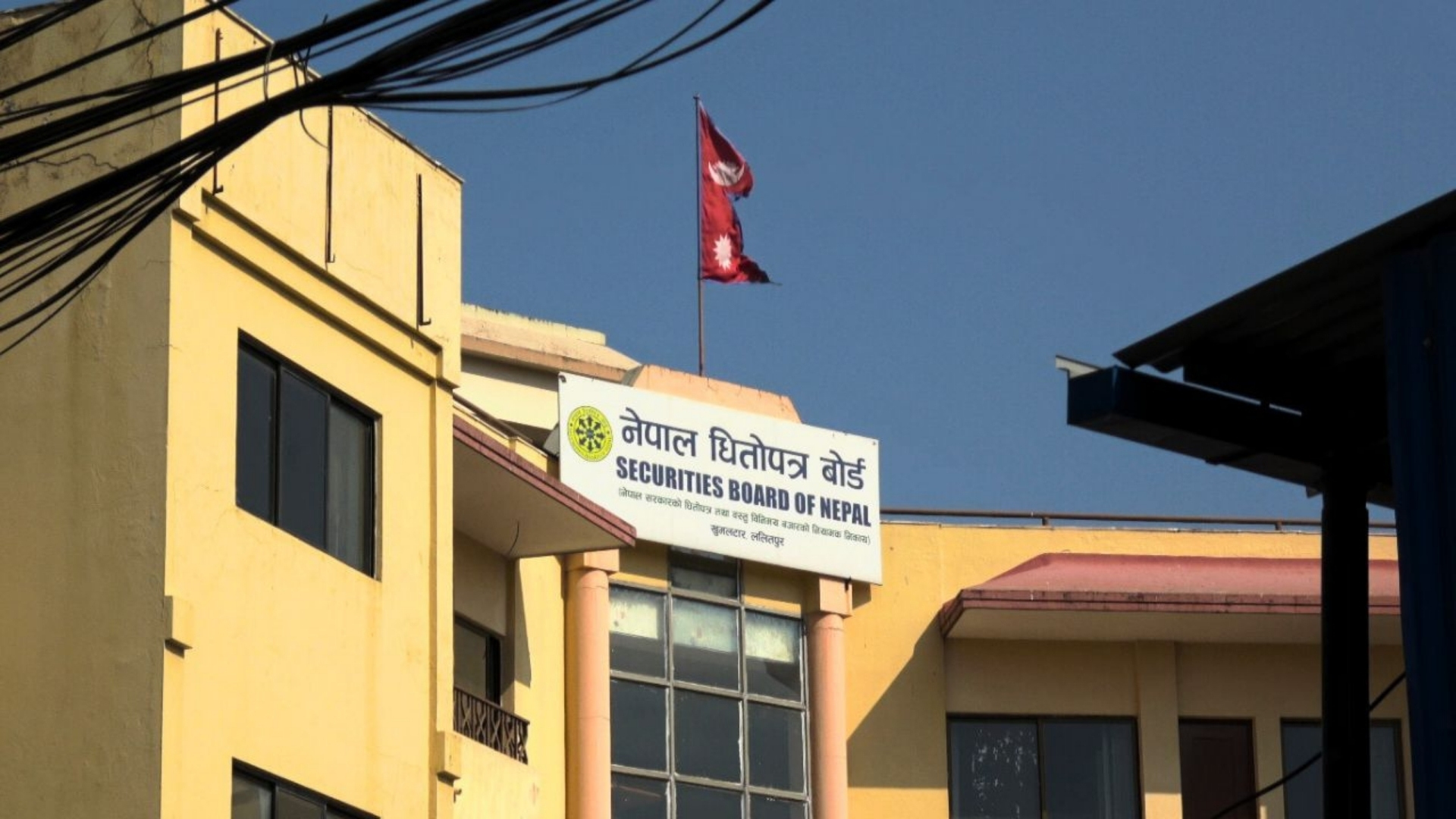
काठमाडौँ — नेपाल राष्ट्र बैंकले वित्तीय अवस्था राम्रो भएका सूचीकृत कम्पनीको सेयर धितोमा प्रवाह हुने कर्जाको सीमा बढाएको छ। नयाँ व्यवस्थाअनुसार बैंक तथा वित्तीय संस्थाले योग्य कम्पनीको सेयर धितो राखी अधिकतम ८० प्रतिशतसम्म कर्जा दिन सक्नेछन्।
राष्ट्र बैंकले एकीकृत निर्देशन, २०८२ संशोधन गर्दै यसअघि कायम ७० प्रतिशतको सीमामा थप १० प्रतिशत बिन्दुसम्म कर्जा दिन सकिने व्यवस्था गरेको हो। तर यस्तो सुविधा सबै सूचीकृत कम्पनीका सेयरमा समान रूपमा लागू हुने छैन।
बैंक तथा वित्तीय संस्थाले सूचीकृत कम्पनीहरूको वित्तीय अवस्था, नाफा तथा लाभांश वितरणको इतिहास, चुक्ता पुँजी, सूचीकरण अवधि, क्रेडिट रेटिङ र नियामकीय पालना मूल्यांकन गर्नुपर्नेछ। नियमित वार्षिक साधारणसभा सम्पन्न गरे–नगरेको विषय पनि मूल्यांकनमा समेटिनेछ।
मूल्यांकनका लागि प्रत्येक बैंकले आफ्नै ‘प्रोडक्ट पेपर’ तयार गर्नुपर्ने व्यवस्था छ। उच्च अंक प्राप्त गर्ने कम्पनीको सेयर धितोमा मात्रै ८० प्रतिशतसम्म कर्जा दिन पाइनेछ। यस्तो प्रोडक्ट पेपर बैंक तथा वित्तीय संस्थाले वेबसाइटमार्फत सार्वजनिक गर्नुपर्नेछ।
कर्जा गणना गर्दा नेप्सेमा प्रकाशित पछिल्लो १८० कार्यदिनको औसत मूल्य र प्रचलित बजार मूल्यमध्ये कम मूल्यलाई आधार मानिनेछ। सोही मूल्यको अधिकतम ८० प्रतिशतसम्म कर्जा उपलब्ध हुन सक्नेछ।
राष्ट्र बैंकले कर्जा प्रवाहपछि धितोमा रहेको सेयरको पुनर्मूल्यांकन गरी थप कर्जा सीमा बढाउन भने रोक लगाएको छ। प्रारम्भमा निर्धारण गरिएको सीमाभन्दा पछि थप कर्जा दिन पाइने छैन।
नयाँ व्यवस्थाले वित्तीय रूपमा सबल कम्पनीका सेयरमा लगानी गर्नेहरूलाई कर्जा पहुँच सहज बनाउने अपेक्षा गरिएको छ। जोखिमका आधारमा कम्पनीहरूबीच फरक व्यवहार गर्ने नीतिले बैंकको कर्जा जोखिम व्यवस्थापनमा समेत सहयोग पुग्ने राष्ट्र बैंकको विश्वास छ।
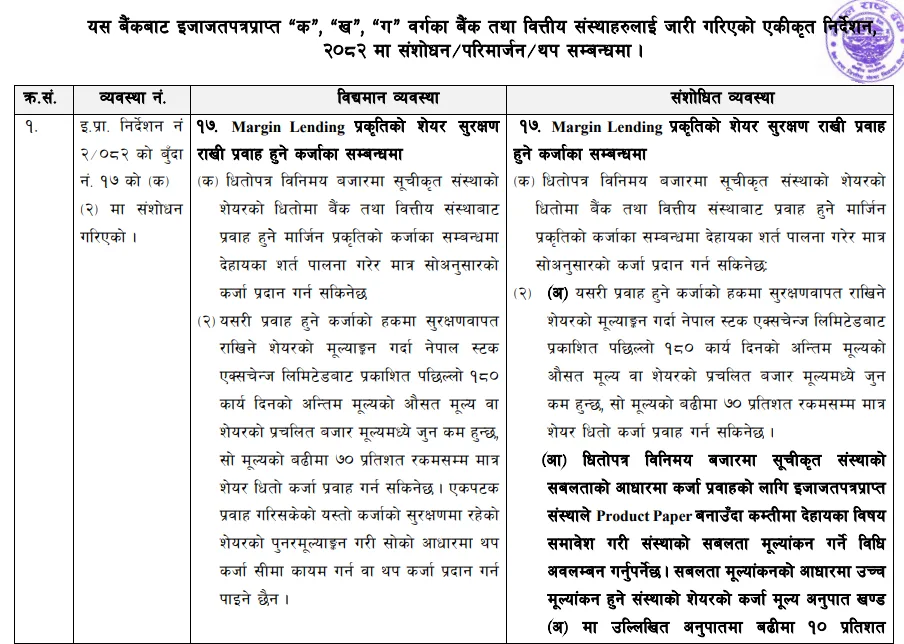
Kathmandu — Nepal Rastra Bank has increased the loan limit against shares of financially sound listed companies. Under the revised provision, banks and financial institutions can provide loans of up to 80 percent of the value of eligible shares pledged as collateral.
The central bank amended the Unified Directives, 2082, allowing lenders to add up to 10 percentage points to the existing 70 percent limit based on a company’s financial strength and credibility. However, the facility will not apply equally to all listed companies.
Banks and financial institutions must prepare their own “product paper” to assess listed companies. The evaluation must include paid-up capital, listing period, profitability, dividend history, credit rating, compliance with regulatory requirements and the regular completion of annual general meetings.
Only shares of companies receiving high scores under the assessment will qualify for loans of up to 80 percent. Banks and financial institutions will also be required to publish the product paper on their websites to make the lending process more transparent.
The loan value will continue to be calculated using the lower of the prevailing market price or the average share price published by Nepal Stock Exchange over the previous 180 trading days.
The central bank has clarified that lenders cannot later increase the loan amount by revaluing the pledged shares. The loan limit determined during the initial assessment must remain unchanged.
The revised policy is expected to improve access to credit for investors holding shares of financially strong companies. It is also expected to promote quality share-backed lending, strengthen investor confidence and improve risk management in banks and financial institutions.