NEPSEtrading

Make smarter moves backed by machine learning. Join thousands of traders leveraging AI to maximize profits.

nepsetrading.com is an online news portal that provides insights into trading and investment by analyzing the stock market and the global economy. We create charts based on the analysis of various indicators. Please do not rely solely on this information for investment decisions. Self-study is crucial. Use this information only as an educational and informational resource.

Marketminds Investment Group Private Limited

DOIB Registration certificate no.: 4680-2081/2082

Director & Editor-in-chief: Dipesh Ghimire · 9802363868, 9851119988

Koteshwor 32, Kathmandu
01-5253221 · +977 9709066745

Contact support

Subscribe to our newsletter

Weekly insights from the NEPSE market in your inbox.

Market

  • Stocks
  • Sectors

Company

  • About Us
  • Our Team
  • Terms of Use
  • Our Policy
  • Training
  • Contact Us

Help

  • Support
  • Report
  • FAQ

© 2026 nepsetrading.com. All rights reserved.
Owned and operated by Marketminds Investment Group Private Limited.

Charts powered by TradingView

  • Home
  • Latest
  • Trending
  • Stock
  • Education
  • International
    1. News
    2. Top
    3. Borrowings Rise Significantly Across Nepal's Commercial Banks by Jestha End 2082
    जेष्ठ अन्त्य २०८२ सम्मको विवरण : बैंकहरूको ऋण लिनेको दर उल्लेख्य रूपमा बढ्यो
    Top
    2 min read
    Published on July 11, 2025
    Nepse Trading

    जेष्ठ अन्त्य २०८२ सम्मको विवरण : बैंकहरूको ऋण लिनेको दर उल्लेख्य रूपमा बढ्योBorrowings Rise Significantly Across Nepal's Commercial Banks by Jestha End 2082

    नेपालका प्रमुख वाणिज्य बैंकहरूले जेष्ठ महिनाको अन्त्यसम्ममा लिएको ऋणको विवरणले बैंकहरू अझैपनि कर्जा तथा वित्त व्यवस्थापनका लागि बाह्य स्रोतहरूमा निर्भर रहेको देखाएको छ। यस अवधिमा लिएको ऋण विभिन्न स्रोतबाट जस्तै अन्तरबैंक कर्जा, विदेशी वित्तीय संस्था, अन्य वित्तीय संस्था तथा बन्ड र सेक्युरिटीमार्फत गरिएको पाइन्छ।

    मुख्य बुँदाहरू:

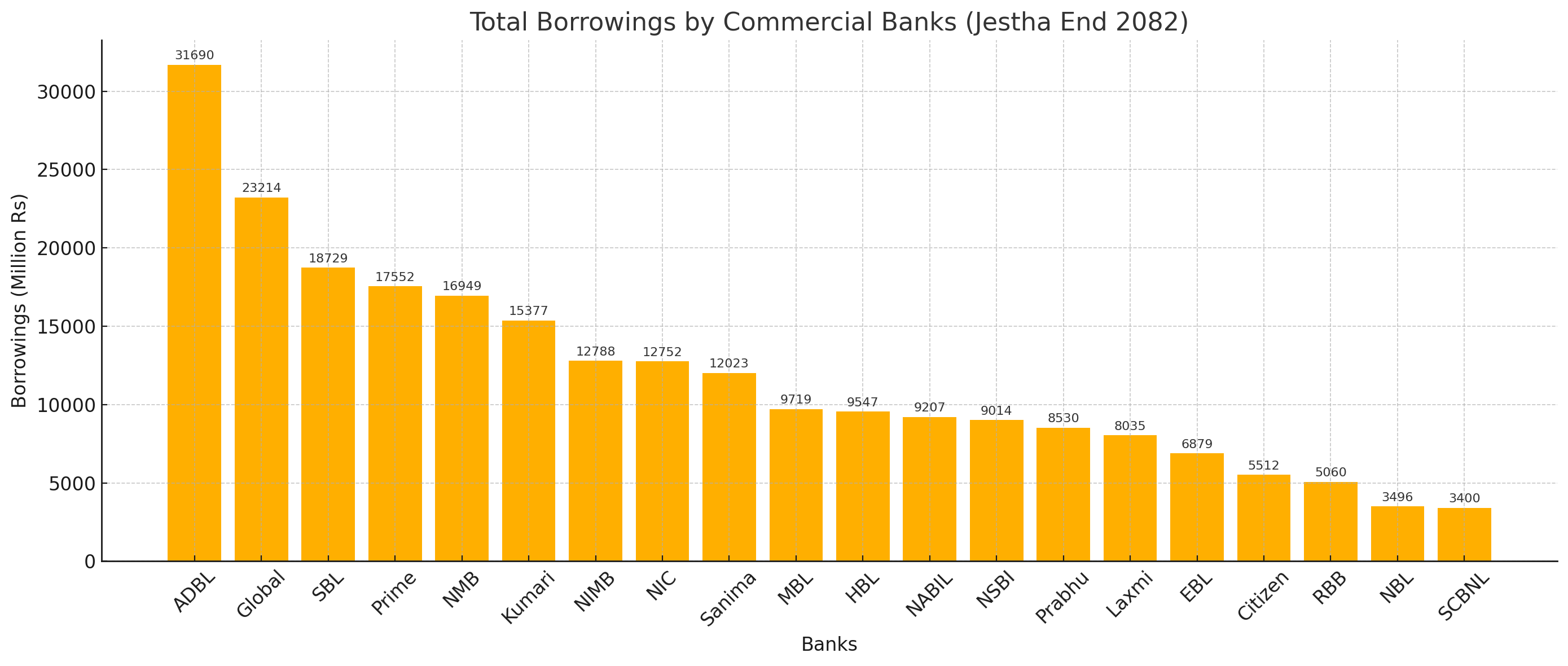
    जेष्ठ २०८२ को अन्त्यसम्ममा सबैभन्दा बढी ऋण लिने बैंक कृषि विकास बैंक (ADBL) हो, जसले कूल रु. ३१.६९ अर्ब बराबरको ऋण लिएको छ। यसपछिका बैंकहरूमा ग्लोबल आइएमई बैंकले रु. २३.२१ अर्ब, र प्राइम कमर्शियल बैंकले रु. १७.५५ अर्ब बराबरको ऋण लिएका छन्। अन्य बैंकहरू जस्तै एनएमबी (रु. १६.९५ अर्ब), सानिमा (रु. १२.०२ अर्ब), र प्रभु बैंक (रु. ८.५२ अर्ब) पनि उच्च ऋणकर्ताको सूचीमा छन्।

    बन्ड र सेक्युरिटीको प्रमुखता:

    अधिकांश बैंकहरूले बन्ड तथा सेक्युरिटी जारी गरेर ऋण लिएका छन्। कुमारी बैंक (रु. १४ अर्ब), एनआईसी एशिया (रु. १२.७५ अर्ब), र नबिल बैंक (रु. ९.२१ अर्ब) यसमा अगाडि छन्। कृषि विकास बैंक (ADBL) ले मात्र रु. २०.४८ अर्ब बराबरको बन्ड जारी गरेको देखिन्छ।

    विभिन्न स्रोतबाट ऋण:

    • राष्ट्र बैंक (NRB) बाट कर्जा: न्यून देखिन्छ, केवल सिभिल बैंक (SBL) ले रु. ३९१.९२ मिलियन र सिटिजेन बैंकले रु. ४१.४४ मिलियन लिएका छन्।

    • अन्तरबैंक कर्जा (Interbank Borrowing): स्ट्यान्डर्ड चार्टर्ड (Rs. 1 अर्ब), एचबीएल (Rs. 1.5 अर्ब), एमबीएल (Rs. 2.4 अर्ब), र प्राइम बैंक (Rs. 5.5 अर्ब) सक्रिय छन्।

    • विदेशी वित्तीय संस्था: एनएमबी (Rs. 5.03 अर्ब), ADBL (Rs. 12.17 अर्ब), र सिभिल बैंक (Rs. 5.77 अर्ब) अगाडि छन्।

    • अन्य वित्तीय संस्था: ADBL ले रु. १०.३९ अर्ब र एनएसबीआईले रु. ३.१६ अर्ब बराबर ऋण लिएका छन्।

    यस विवरणले देखाउँछ कि नेपाली बैंकहरूले अझैपनि ऋण विस्तार र तरलता व्यवस्थापनका लागि कर्जा लिने रणनीतिमा केन्द्रित छन्। बन्डमार्फत दीर्घकालीन पूँजी संकलन भइरहेको छ, जुन सकारात्मक मानिन्छ। तथापि, विदेशी कर्जा स्रोतमा अत्यधिक निर्भर बैंकहरूले अन्तर्राष्ट्रिय ब्याजदरको जोखिम व्यवस्थापनमा सतर्कता अपनाउनु पर्ने आवश्यकता देखिन्छ।

    जेष्ठ २०८२ को अन्त्यसम्मको यो वित्तीय स्थिति नेपाली बैंकिङ्ग प्रणालीले बजारमा लगानी विस्तारका लागि आन्तरिक र बाह्य स्रोतहरू प्रयोग गरिरहेको स्पष्ट संकेत हो।

    As per the financial data disclosed for the period ending Jestha 2082, borrowings by major commercial banks in Nepal have seen notable increases, underlining the continued reliance on debt instruments for funding and liquidity management. The breakdown reveals a diversified borrowing structure including interbank loans, foreign financial institutions, and domestic bond issuances.

    Key Highlights:

    The total borrowings are led by Agricultural Development Bank Limited (ADBL) at Rs. 31.69 billion, followed by Global IME Bank at Rs. 23.21 billion, and Prime Commercial Bank at Rs. 17.55 billion. Other major banks such as NMB, Sanima, and Prabhu also report significant borrowings of Rs. 16.95 billion, Rs. 12.02 billion, and Rs. 8.52 billion respectively.

    Most of the borrowings across banks are sourced through bonds and securities, with NABIL, NIC Asia, and Kumari Bank each issuing over Rs. 9 billion in bonds. This indicates a strategic move by banks to secure longer-term capital to support lending and investment portfolios.

    Breakdown of Borrowing Sources:

    • NRB Borrowing: Minimal presence, with only a few institutions like SBL and Citizen Bank reporting small amounts (Rs. 391.92 million and Rs. 41.44 million respectively).

    • Interbank Borrowing: Active primarily among SCBNL (Rs. 1 billion), HBL (Rs. 1.5 billion), MBL (Rs. 2.4 billion), and Prime Bank (Rs. 5.5 billion), reflecting short-term liquidity adjustments.

    • Foreign Financial Institutions: NMB leads with Rs. 5.03 billion, followed by ADBL (Rs. 12.17 billion), and SBL (Rs. 5.77 billion), showcasing Nepalese banks’ growing exposure to international debt markets.

    • Other Financial Institutions: ADBL again tops with Rs. 10.39 billion, while NSBI has Rs. 3.17 billion in this category.

    Bond Dominance:

    The largest contributor across the board remains bond and securities issuance. Notably:

    • Kumari Bank: Rs. 14 billion

    • NIC Asia: Rs. 12.75 billion

    • NABIL: Rs. 9.21 billion

    • ADBL: Rs. 20.48 billion

    This reflects not just a diversification of liabilities, but also a shift towards more structured and long-term financing tools.

    The borrowing pattern indicates increased credit expansion needs, possibly driven by a recovering economy and rising loan demands post-COVID. The dominance of bonds suggests banks are actively working to manage maturity mismatches and sustain capital adequacy.

    The substantial foreign exposure of a few banks, however, raises the need for careful risk management amid global interest rate volatility.

    Overall, the figures as of Jestha 2082 highlight a robust banking sector willing to leverage external and internal financial instruments to sustain operations and growth.

    Trending News

    • Trending14 Jun, 2026

      असारमा वाणिज्य बैंकको मुद्दति ब्याजदर थप घट्यो, ७ बैंकले दर घटाए

      Read news
    • Trending14 Jun, 2026

      नेपालकै सबैभन्दा ठूलो सम्पत्ति शुद्धीकरण मुद्दा अदालत पुग्यो, एक खर्ब ६ अर्बभन्दा बढी बिगो दाबी

      Read news
    • Trending14 Jun, 2026

      अमेरिका–इरान शान्ति सम्झौता निर्णायक मोडमा, पाकिस्तानले भन्यो — '२४ घण्टामा हस्ताक्षर सम्भव'

      Read news

    Related News

  • असारमा वाणिज्य बैंकको मुद्दति ब्याजदर थप घट्यो, ७ बैंकले दर घटाए
    Investor

    1 min read

    असारमा वाणिज्य बैंकको मुद्दति ब्याजदर थप घट्यो, ७ बैंकले दर घटाए

    NEPSE TRADING

    ·

    14 Jun, 2026

  • नेपालकै सबैभन्दा ठूलो सम्पत्ति शुद्धीकरण मुद्दा अदालत पुग्यो, एक खर्ब ६ अर्बभन्दा बढी बिगो दाबी
    Investor

    4 min read

    नेपालकै सबैभन्दा ठूलो सम्पत्ति शुद्धीकरण मुद्दा अदालत पुग्यो, एक खर्ब ६ अर्बभन्दा बढी बिगो दाबी

    NEPSE TRADING

    ·

    14 Jun, 2026

  • अमेरिका–इरान शान्ति सम्झौता निर्णायक मोडमा, पाकिस्तानले भन्यो — '२४ घण्टामा हस्ताक्षर सम्भव'
    Top

    1 min read

    अमेरिका–इरान शान्ति सम्झौता निर्णायक मोडमा, पाकिस्तानले भन्यो — '२४ घण्टामा हस्ताक्षर सम्भव'

    NEPSE TRADING

    ·

    14 Jun, 2026

  • शेयर बजारमा जलविद्युत कम्पनी : अनुत्तरित प्रश्नहरूको भारले थिचिएको लगानीकर्ता
    Investor

    5 min read

    शेयर बजारमा जलविद्युत कम्पनी : अनुत्तरित प्रश्नहरूको भारले थिचिएको लगानीकर्ता

    NEPSE TRADING

    ·

    12 Jun, 2026

  • नेपालको पुँजी बजार : तीन दशकको यात्रा, अझै अधुरो सुधार
    Investor

    3 min read

    नेपालको पुँजी बजार : तीन दशकको यात्रा, अझै अधुरो सुधार

    Dipesh Ghimire

    ·

    12 Jun, 2026