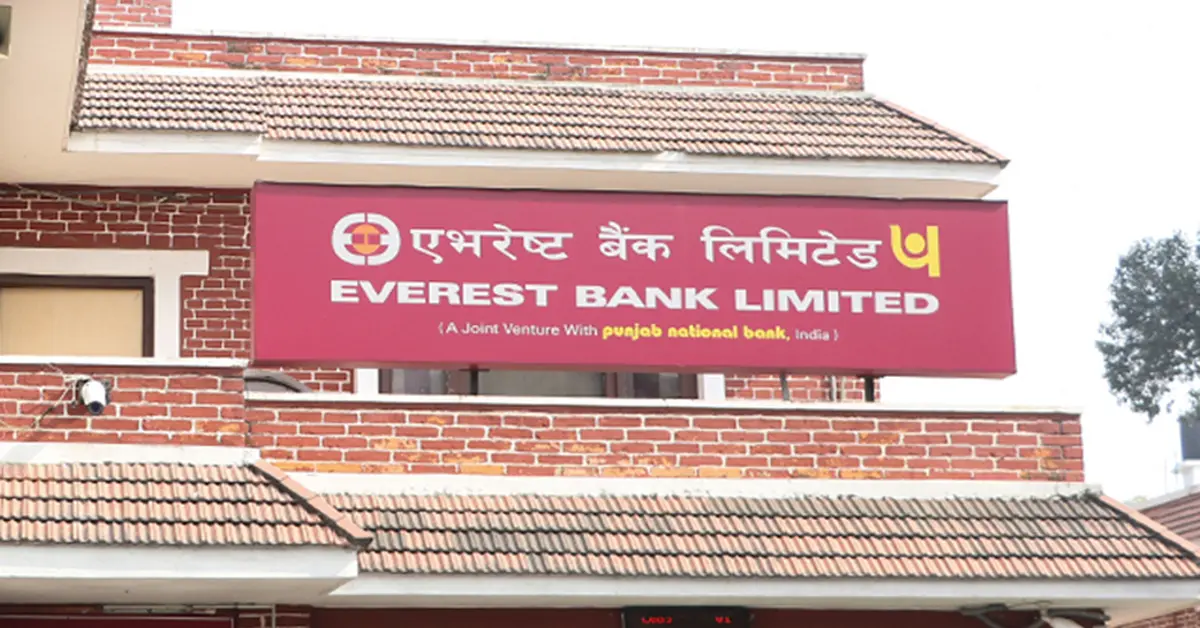
एभरेष्ट बैंकको नाफा ३.३२ अर्ब, प्रतिफल सूचकमा दबाब — कर्जा विस्तार उच्च, तर आम्दानीको गुणस्तरमा चुनौतीEverest Bank Posts Rs. 3.32 Billion Profit, Faces Pressure on Returns Despite Strong Loan Growth
काठमाडौँ । एभरेष्ट बैंक लिमिटेडले चालु आर्थिक वर्ष २०८२/८३ को तेस्रो त्रैमाससम्मको अपरिष्कृत वित्तीय विवरण सार्वजनिक गर्दै ३ अर्ब ३२ करोड रुपैयाँभन्दा बढी खुद नाफा आर्जन गरेको जनाएको छ। अघिल्लो वर्षको सोही अवधिको तुलनामा नाफा सामान्य रूपमा घटेको देखिए पनि बैंकको व्यवसायिक विस्तार भने निरन्तर अगाडि बढिरहेको संकेत वित्तीय तथ्यांकले देखाएको छ। तेस्रो त्रैमासमा मात्रै बैंकले १ अर्ब २१ करोड रुपैयाँभन्दा बढी नाफा कमाएको छ।
बैंकको मुख्य आम्दानी स्रोत ब्याज आम्दानीमा उल्लेख्य वृद्धि देखिएको छ। कुल ब्याज आम्दानी १५ अर्ब रुपैयाँ नाघ्दा खुद ब्याज आम्दानी ८ अर्ब १८ करोड रुपैयाँ पुगेको छ। यद्यपि, ब्याज खर्च पनि समान रूपमा बढ्दा नाफाको वृद्धिदरमा दबाब परेको देखिन्छ। शुल्क तथा कमिसन आम्दानीमा सुधार आएकोले गैर–ब्याज आम्दानी विस्तार गर्ने बैंकको प्रयास सकारात्मक दिशातर्फ उन्मुख देखिन्छ।
समग्र सञ्चालन आम्दानी ८ अर्ब ९३ करोड रुपैयाँभन्दा बढी पुगेको छ भने सञ्चालन नाफा करिब ४ अर्ब ९० करोड रुपैयाँ कायम भएको छ। तर, ऋण नोक्सानी प्रावधान र सञ्चालन खर्च बढ्दा अन्तिम नाफामा केही खुम्चिने अवस्था आएको विश्लेषण गर्न सकिन्छ। विशेषगरी कर्मचारी खर्च, प्रशासनिक खर्च तथा डिप्रिसिएसन वृद्धि हुनु लागत पक्षमा दबाबको मुख्य कारण बनेको छ।
बैंकको कर्जा विस्तार उल्लेख्य रूपमा बढेको छ। ग्राहकलाई प्रवाह गरिएको कर्जा २५० अर्ब रुपैयाँ नाघेको छ, जसले बैंकले आक्रामक ऋण विस्तार रणनीति अपनाएको देखाउँछ। यद्यपि, खराब कर्जा (NPL) ०.६१ प्रतिशतमै सीमित रहनु कर्जा गुणस्तर सन्तोषजनक रहेको संकेत हो। साथै, कुल खराब कर्जाको तुलनामा प्रावधान २५३ प्रतिशतभन्दा माथि रहनु जोखिम व्यवस्थापन पक्ष बलियो रहेको देखिन्छ।
निक्षेप संकलनमा पनि बैंकले मजबुत उपस्थिति देखाएको छ। ग्राहक निक्षेप करिब २९८ अर्ब रुपैयाँ पुगेको छ, जसले तरलता स्थिति बलियो बनाएको छ। तर, बैंकिङ प्रणालीमै देखिएको अधिक तरलता (liquidity surplus) को प्रभावले कर्जा विस्तारमा चुनौती सिर्जना गरिरहेको व्यवस्थापनले जनाएको छ।
वित्तीय सूचकतर्फ भने केही कमजोरी देखिएको छ। प्रतिशेयर आम्दानी (EPS) ३२.३५ रुपैयाँमा सीमित हुँदा अघिल्लो वर्षको तुलनामा घटेको छ। त्यस्तै, प्रतिफल सूचकहरू ROA १.२० प्रतिशत र ROE १३.५६ प्रतिशतमा झरेका छन्। यसले बैंकको नाफा उत्पादन क्षमता केही कमजोर बनेको संकेत गर्दछ। यद्यपि, प्रतिशेयर नेटवर्थ २४४ रुपैयाँ पुग्नुले बैंकको आधारभूत वित्तीय अवस्था अझै मजबुत रहेको देखिन्छ।
बैंक व्यवस्थापनले वैश्विक आर्थिक परिस्थितिलाई प्रमुख चुनौतीको रूपमा उल्लेख गरेको छ। विशेषगरी मध्यपूर्वमा बढ्दो द्वन्द्व, इन्धन आपूर्ति अवरोध, मुद्रास्फीति र अन्तर्राष्ट्रिय व्यापारमा आएको सुस्तताले नेपालको अर्थतन्त्रमा प्रत्यक्ष असर परेको बताइएको छ। रेमिट्यान्समा निर्भर अर्थतन्त्र भएकाले खाडी क्षेत्रमा अस्थिरता थप जोखिमपूर्ण बनेको विश्लेषण गरिएको छ।
आन्तरिक चुनौतीतर्फ पूँजी पहुँचमा सीमितता, दक्ष जनशक्तिको अभाव, गैर–ब्याज आम्दानी बढाउन कठिनाइ तथा ऋण असुलीमा समस्या देखिएको बैंकले जनाएको छ। साथै, साइबर सुरक्षा जोखिम, नियामकीय परिवर्तन, ESG मापदण्डको दबाब र FATF ग्रे लिस्टमा नेपालको उपस्थिति पनि बैंकिङ क्षेत्रका लागि चुनौतीपूर्ण विषय बनेका छन्।
यस्ता चुनौतीबीच बैंकले डिजिटल बैंकिङ विस्तार, नयाँ वित्तीय उत्पादन विकास, ग्राहक केन्द्रित सेवा सुधार तथा जोखिम व्यवस्थापनलाई प्राथमिकतामा राखेको जनाएको छ। ग्रामीण क्षेत्रमा पहुँच विस्तार र वित्तीय समावेशीकरणमार्फत दीर्घकालीन प्रतिस्पर्धात्मक क्षमता मजबुत बनाउने रणनीति बैंकले अघि सारेको छ।
समग्रमा, एभरेष्ट बैंकको वित्तीय अवस्था स्थिर देखिए पनि नाफा र प्रतिफल सूचकमा देखिएको दबाबले आगामी दिनमा लागत नियन्त्रण, आम्दानी स्रोत विविधीकरण तथा कार्यक्षमता सुधारमा बैंकले विशेष ध्यान दिनुपर्ने देखिन्छ।

Kathmandu — Everest Bank Limited has reported a net profit of over Rs. 3.32 billion for the third quarter of fiscal year 2082/83, according to its unaudited financial statement. Although the profit shows a slight decline compared to Rs. 3.45 billion in the same period last year, the bank’s overall business expansion remains on a steady path. In the third quarter alone, the bank earned more than Rs. 1.21 billion in profit.
The bank’s core income source, interest income, has shown significant growth. Total interest income crossed Rs. 15 billion, while net interest income stood at Rs. 8.18 billion. However, rising interest expenses have put pressure on profit margins. On the positive side, fee and commission income has improved, indicating the bank’s gradual shift toward strengthening non-interest income streams.
Total operating income exceeded Rs. 8.93 billion, with operating profit reaching around Rs. 4.90 billion. Despite this, higher loan loss provisions and increased operating expenses have impacted bottom-line growth. In particular, rising personnel costs, administrative expenses, and depreciation have contributed to higher cost pressure, reflecting increased competition and expansion efforts in the banking sector.
Loan expansion remains one of the bank’s strongest areas. Total loans and advances to customers have surpassed Rs. 250 billion, showing aggressive credit growth. However, the non-performing loan (NPL) ratio remains contained at just 0.61 percent, indicating sound asset quality. Additionally, the provision coverage ratio exceeding 253 percent highlights strong risk management practices.
On the liability side, customer deposits have reached approximately Rs. 298 billion, strengthening the bank’s liquidity position. However, the broader banking system’s excess liquidity has posed challenges in deploying funds effectively into loans, as acknowledged by the management.
Financial ratios present a mixed picture. Earnings per share (EPS) declined to Rs. 32.35 from the previous year, while key profitability indicators such as Return on Assets (ROA) and Return on Equity (ROE) dropped to 1.20 percent and 13.56 percent respectively. This suggests a slight weakening in the bank’s profit-generating efficiency. Nonetheless, net worth per share increased to Rs. 244, indicating a strong underlying financial base.
The bank has highlighted global economic conditions as a major external challenge. Rising geopolitical tensions, particularly in the Middle East, disruptions in fuel supply, inflationary pressures, and slowing global trade have directly impacted Nepal’s economy. Given Nepal’s heavy reliance on remittances, instability in Gulf countries poses additional risks.
Internally, the bank faces challenges such as limited access to capital, shortage of skilled human resources, difficulty in increasing non-interest income, and issues related to loan recovery. Furthermore, rising cyber security threats, frequent regulatory changes, ESG compliance pressures, and Nepal’s presence on the FATF grey list add to the sector’s challenges.
In response, Everest Bank is focusing on digital transformation, development of new financial products, customer-centric services, and strengthening risk management frameworks. The bank also aims to expand its reach in rural areas and promote financial inclusion to maintain long-term competitiveness.
Overall, while Everest Bank maintains a stable financial position, the pressure on profitability and efficiency indicators suggests that the bank will need to focus more on cost control, diversification of income sources, and operational efficiency in the coming quarters.