NEPSEtrading

Make smarter moves backed by machine learning. Join thousands of traders leveraging AI to maximize profits.

nepsetrading.com is an online news portal that provides insights into trading and investment by analyzing the stock market and the global economy. We create charts based on the analysis of various indicators. Please do not rely solely on this information for investment decisions. Self-study is crucial. Use this information only as an educational and informational resource.

Marketminds Investment Group Private Limited

DOIB Registration certificate no.: 4680-2081/2082

Director & Editor-in-chief: Dipesh Ghimire · 9802363868, 9851119988

Koteshwor 32, Kathmandu
01-5253221 · +977 9709066745

Contact support

Subscribe to our newsletter

Weekly insights from the NEPSE market in your inbox.

Market

  • Stocks
  • Sectors

Company

  • About Us
  • Our Team
  • Terms of Use
  • Our Policy
  • Training
  • Contact Us

Help

  • Support
  • Report
  • FAQ

© 2026 nepsetrading.com. All rights reserved.
Owned and operated by Marketminds Investment Group Private Limited.

Charts powered by TradingView

  • Home
  • Latest
  • Trending
  • Stock
  • Education
  • International
    1. News
    2. Investor
    3. Finance Minister Swarnim Waglé’s First Six Weeks: Early Signs of Reform or an Economy Stil...
    डेढ महिनामा अर्थमन्त्री वाग्ले : सुधारको संकेत कि अझै प्रतीक्षामै अर्थतन्त्र ?
    Investor
    4 min read
    Published on May 23, 2026
    NEPSE TRADING

    डेढ महिनामा अर्थमन्त्री वाग्ले : सुधारको संकेत कि अझै प्रतीक्षामै अर्थतन्त्र ?Finance Minister Swarnim Waglé’s First Six Weeks: Early Signs of Reform or an Economy Still Waiting?

    पदभार ग्रहण गरेलगत्तै वाग्लेले अर्थ मन्त्रालयभित्र प्रशासनिक सक्रियता बढाउने, बजेट अनुशासन कायम गर्ने र नीतिगत पुनरावलोकनलाई प्राथमिकतामा राखे । मन्त्रालयभित्र निर्णय प्रक्रियालाई छरितो बनाउने, कर्मचारी व्यवस्थापनलाई ‘मेरिट बेस्ड’ बनाउने र अनुत्पादक खर्च नियन्त्रण गर्ने प्रयास भएको सरकारी दाबी छ । सुरुआती दिनमै उनले बजेट तयारी, कर संरचना, सार्वजनिक खर्च र वित्तीय अनुशासनबारे लगातार छलफल अघि बढाए ।

    तर अहिले उनको सबैभन्दा ठूलो परीक्षा आगामी आर्थिक वर्ष २०८३/८४ को बजेट बनेको छ । कमजोर राजस्व संकलन, सुस्त आर्थिक गतिविधि र सीमित स्रोतबीच बजेट निर्माण गर्नुपर्ने अवस्था अर्थ मन्त्रालयसामु चुनौतीका रूपमा उभिएको छ । अर्थमन्त्री वाग्लेले पनि बारम्बार ‘असीमित अपेक्षा र सीमित स्रोत’बीच सन्तुलन मिलाउनुपर्ने बाध्यता रहेको बताउँदै आएका छन् ।

    वाग्लेले सबैभन्दा धेरै जोड दिएको विषय सार्वजनिक ऋण हो । उनका अनुसार सन् २०१६ मा कुल गार्हस्थ्य उत्पादन (जीडीपी)को करिब २५ प्रतिशत रहेको सार्वजनिक ऋण अहिले ४२–४३ प्रतिशतसम्म पुगेको छ । उनले ऋण लिएर अनुत्पादक क्षेत्रमा खर्च गर्ने प्रवृत्तिले दीर्घकालीन आर्थिक जोखिम बढाएको भन्दै बजेटलाई यथार्थपरक बनाउने संकेत दिएका छन् ।

    यसपटक ठूलो आकारको बजेट ल्याएर खर्च गर्न नसक्ने पुरानो प्रवृत्ति दोहोरिन नदिने उनको भनाइ छ । विगतमा बजेटको ठूलो हिस्सा खर्चै नभई फिर्ता जाने अवस्थालाई उनले असफल मोडेलको रूपमा चित्रण गरेका छन् । त्यसैले आगामी बजेट खर्च गर्न सक्ने क्षमता, राजस्वको वास्तविक अवस्था र अर्थतन्त्रको धरातल हेरेर बनाइने दाबी गरिएको छ ।

    यद्यपि यही विषयले अर्को बहस पनि जन्माएको छ । कमजोर माग, सुस्त लगानी र थलिएको निजी क्षेत्रबीच अत्यधिक वित्तीय संयमले विकास खर्च झन् खुम्चिने जोखिम रहने अर्थविद्हरूको तर्क छ । नेपालजस्तो विस्तारै चलिरहेको अर्थतन्त्रमा खर्च कटौतीले बजारमा झन् नकारात्मक प्रभाव पार्न सक्ने चिन्ता व्यक्त हुन थालेको छ ।

    वाग्लेले ठूला पूर्वाधार आयोजनामा नयाँ लगानी मोडालिटीको संकेत पनि दिएका छन् । निजगढ अन्तर्राष्ट्रिय विमानस्थल र बुढीगण्डकी जलविद्युत आयोजनालाई ऋणको भारी बोकाएर अघि नबढाउने उनको धारणा छ । पोखरा र भैरहवा अन्तर्राष्ट्रिय विमानस्थल ऋण लिएर बने पनि अपेक्षित सञ्चालन हुन नसकेको अनुभवलाई आधार मानेर अब सार्वजनिक–निजी साझेदारी (पीपीपी) वा प्रत्यक्ष वैदेशिक लगानी (एफडीआई) मोडेलतर्फ छलफल भइरहेको छ ।

    स्वास्थ्य बीमा कार्यक्रमबारे पनि अर्थमन्त्री वाग्ले स्पष्ट रूपमा आलोचनात्मक देखिएका छन् । अहिलेको बीमा मोडालिटी दिगो नभएको निष्कर्ष निकाल्दै उनले धनी, मध्यम वर्ग र गरिबलाई फरक–फरक योगदान प्रणालीमा ल्याउने संकेत दिएका छन् । चुरोट र मदिराजस्ता वस्तुमा लाग्ने कर स्वास्थ्य क्षेत्रमा प्रयोग गर्ने अवधारणा पनि अघि सारिएको छ ।

    सहकारी संकट समाधानमा भने सरकारले सीमित भूमिका खेल्ने संकेत दिएको छ । पाँच लाख रुपैयाँसम्मका साना बचतकर्ताको रकम फिर्ता गराउन सहजीकरण गर्ने तर करदाताको पैसा प्रत्यक्ष प्रयोग नगर्ने सरकारको धारणा देखिएको छ । सहकारीकै सम्पत्ति बिक्री वा चक्रीय कोषमार्फत समाधान खोज्ने अवधारणा अघि सारिए पनि व्यवहारमा यसको कार्यान्वयन जटिल हुने देखिन्छ ।

    डेढ महिनाको अवधिमा वाग्लेले अन्तर्राष्ट्रिय विकास साझेदारसँगको संवादलाई पनि प्राथमिकतामा राखेका छन् । विश्व बैंक, अन्तर्राष्ट्रिय मुद्रा कोष लगायत संस्थासँगको भेटघाटले सरकारले वित्तीय विश्वसनीयता कायम राख्न खोजेको संकेत दिएको छ । अर्थ मन्त्रालयले सार्वजनिक गरेका विवरणहरूमा आर्थिक सुधार, पुनर्निर्माण सहयोग र वित्तीय अनुशासनका विषयलाई विशेष प्राथमिकता दिइएको देखिन्छ ।

    तर चुनौतीहरू अझै गहिरा छन् । राजस्व संकलन लक्ष्यभन्दा कमजोर छ, पुँजीगत खर्च परम्परागत रूपमा सुस्त छ र निजी क्षेत्रको मनोबल अझै पूर्ण रूपमा फर्किएको छैन । बैंकिङ प्रणालीमा तरलता बढे पनि लगानी विस्तार हुन सकेको छैन । यस्तो अवस्थामा अर्थ मन्त्रालयमाथि अब घोषणाभन्दा परिणाम देखाउनुपर्ने दबाब बढ्दै गएको छ ।

    समग्रमा हेर्दा अर्थमन्त्री डा. स्वर्णिम वाग्लेको डेढ महिने कार्यकालले सुधारको प्रारम्भिक संकेत दिएको देखिन्छ । प्रशासनिक सक्रियता, यथार्थपरक बजेट र वित्तीय अनुशासनको बहस सुरु भएको छ । तर जनताले खोजेको कुरा केवल नीतिगत संकेत होइन, प्रत्यक्ष आर्थिक राहत, रोजगारी, लगानी विस्तार र बजारमा आत्मविश्वासको पुनःस्थापना हो । त्यसैले वाग्लेको वास्तविक मूल्यांकन अब आगामी बजेट र त्यसको कार्यान्वयनबाट हुने देखिन्छ ।

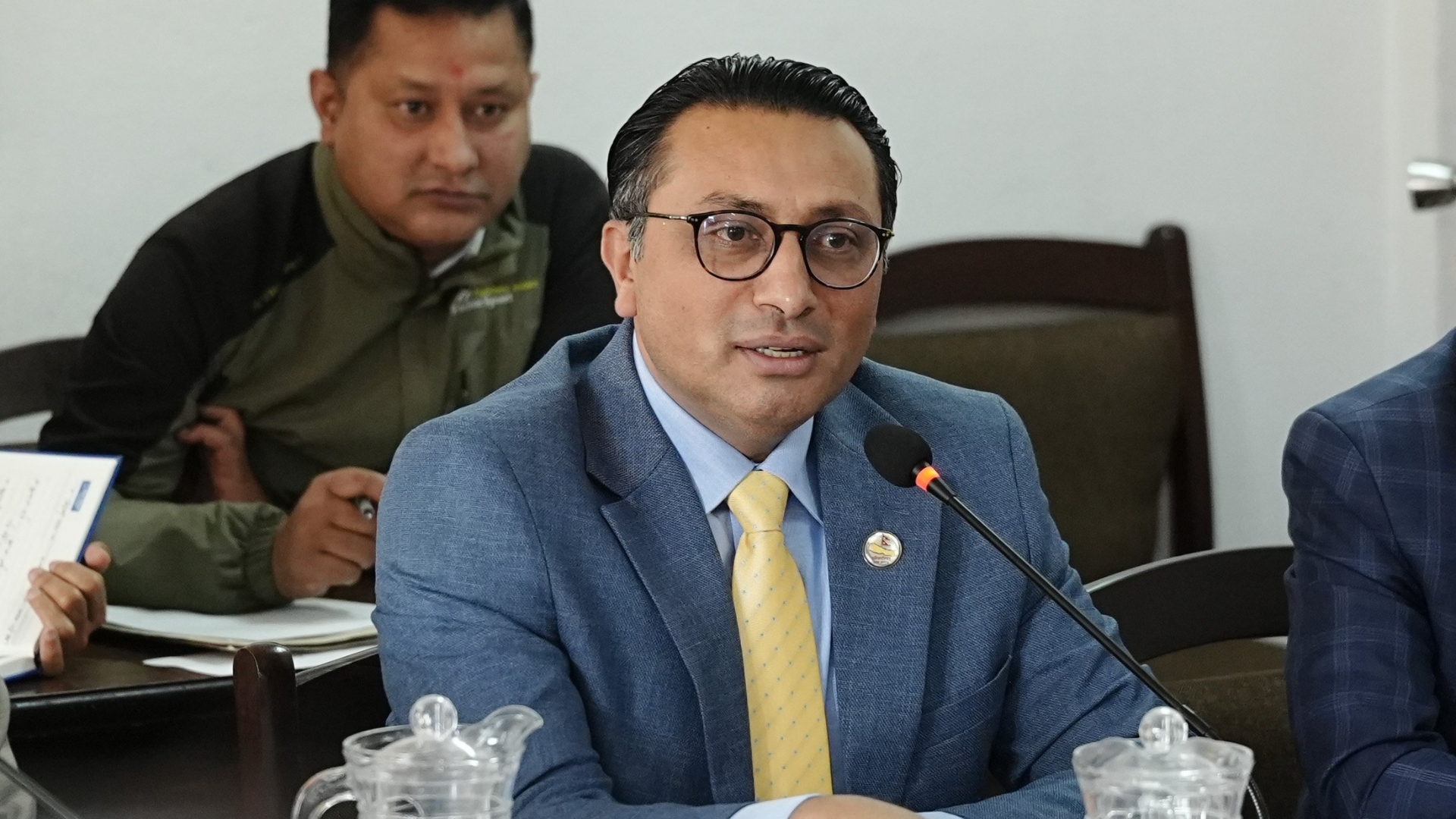
    When Finance Minister Dr. Swarnim Waglé took the oath of office on March 26, expectations across Nepal’s economic and policy circles rose almost immediately. His background as an economist, former vice-chair of the National Planning Commission, and public policy expert created the perception that Nepal’s economic management might finally move toward a more technocratic and reform-oriented direction.

    However, nearly six weeks into his tenure, the picture emerging from the Ministry of Finance appears mixed. There are visible signs of policy discipline and administrative activism, but the broader economy has yet to experience any major turnaround. In many ways, Waglé’s early period in office has become a test of whether intellectual credibility can translate into practical economic results within Nepal’s deeply constrained political and fiscal environment.

    Soon after assuming office, Waglé placed strong emphasis on administrative reform, budget discipline, and policy review inside the Finance Ministry. Government officials claimed efforts were being made to improve decision-making efficiency, strengthen merit-based administrative practices, and tighten control over unproductive public expenditure. During his initial weeks, the minister held a series of meetings focused on budget preparation, tax structure reform, public spending management, and fiscal discipline.

    Yet the biggest challenge before him remains the upcoming national budget for fiscal year 2083/84. The government is attempting to prepare the budget at a time when revenue collection remains weak, capital expenditure continues to lag behind targets, and private sector confidence has not fully recovered. Waglé himself has repeatedly acknowledged that the Finance Ministry is trying to balance “unlimited public expectations” with severely limited fiscal resources.

    One of the issues the finance minister has consistently highlighted is Nepal’s rapidly growing public debt burden. According to Waglé, public debt stood at around 25 percent of Gross Domestic Product (GDP) in 2016, but has now climbed to nearly 42–43 percent. His repeated warnings about debt sustainability indicate a growing concern inside the government that Nepal cannot continue financing inefficient expenditure through excessive borrowing.

    This concern appears to be shaping the philosophy behind the upcoming budget. Waglé has signaled that the government will avoid presenting an artificially inflated budget simply for political visibility. In previous years, large budgets were announced despite the state’s inability to spend a significant portion of allocated funds. In some cases, nearly one-third of the budget remained unspent. The finance minister has openly criticized that model, arguing that future budgets should be based on realistic implementation capacity rather than headline figures.

    That approach reflects an apparent shift toward fiscal discipline and expenditure realism. However, it has also triggered an important economic debate. Some economists argue that excessive fiscal restraint could further weaken economic activity at a time when Nepal’s economy is already experiencing slow private investment, weak consumption growth, and subdued industrial expansion. In a fragile economy, aggressive spending cuts or overly cautious budgeting could risk suppressing development activity even further.

    Waglé has also hinted at major changes in how large infrastructure projects may be financed in the future. Referring to projects such as Nijgadh International Airport and the Budhigandaki Hydropower Project, he has stressed the need to avoid debt traps. Lessons from Pokhara and Bhairahawa international airports — both built through foreign loans but still struggling operationally — appear to have influenced the government’s thinking. As a result, discussions are increasingly focusing on Public-Private Partnership (PPP) models and Foreign Direct Investment (FDI) rather than relying entirely on sovereign borrowing.

    Another area where the finance minister has taken a reform-oriented stance is Nepal’s health insurance system. Waglé has openly stated that the current model has failed to remain financially sustainable. His proposed restructuring approach includes differentiated contribution systems based on income level — with wealthier citizens paying premiums, middle-income groups participating through co-payment systems, and poor households receiving free coverage. He has also suggested channeling taxes collected from products such as tobacco and alcohol into health financing.

    Similarly, the government’s position regarding Nepal’s cooperative crisis reflects a cautious fiscal approach. Waglé has indicated that while the government may facilitate the return of savings for small depositors with deposits up to Rs 500,000, taxpayer money will not be directly used to rescue failed cooperatives. Instead, the government appears to favor solutions based on asset recovery, liquidation mechanisms, and revolving fund structures.

    Although these ideas sound financially prudent, implementation remains highly complex. Nepal’s health insurance program is already facing serious problems related to hospital payments, service quality, and financial sustainability. Likewise, the cooperative crisis affects thousands of depositors nationwide and involves politically sensitive networks. As a result, policy announcements alone may not be enough to restore public confidence without visible implementation outcomes.

    During his short tenure, Waglé has also prioritized communication with international development partners, including the World Bank and the International Monetary Fund. Meetings with such institutions suggest that the government is attempting to maintain Nepal’s financial credibility at a time of rising fiscal pressure. Official statements from the Finance Ministry have repeatedly emphasized financial reform, development cooperation, and fiscal stability.

    At the same time, the finance minister’s role has become closely linked with the government’s broader governance reform agenda. Discussions surrounding restructuring state institutions, reducing unproductive entities, expanding digital administration, and controlling unnecessary expenditure increasingly place the Finance Ministry at the center of policy reform efforts.

    Still, major economic challenges remain unresolved. Revenue collection continues to face pressure, capital expenditure remains structurally weak, and private sector confidence has yet to fully recover. Despite excess liquidity within the banking system, investment growth remains sluggish. In this environment, pressure on the government is gradually shifting from policy announcements to measurable delivery.

    Ultimately, Dr. Swarnim Waglé’s first six weeks in office may best be described as a period of “early reform signals.” He has introduced discussions around fiscal realism, debt sustainability, administrative efficiency, and structural reform. But the public is not merely waiting for policy language or intellectual framing. What citizens ultimately expect are visible economic outcomes — stronger job creation, increased investment, market confidence, and direct economic relief.

    For that reason, the real test of Waglé’s tenure is only beginning. The upcoming national budget, and more importantly its implementation, will likely determine whether his reformist image evolves into lasting economic impact or remains confined to policy expectations alone.

    Trending News

    • Trending15 Jun, 2026

      कलश स्टक मार्केटको निःशुल्क शेयर तालिम सम्पन्न: दैनिक एक हजारभन्दा बढीको सहभागिता

      Read news
    • Trending15 Jun, 2026

      सुशासनको दाबी, भित्र छ संकट: राष्ट्र बैंकको प्रतिवेदनले खोल्यो बैंकिङ क्षेत्रको वास्तविक अनुहार

      Read news
    • Trending15 Jun, 2026

      मौद्रिक नीतिमा पुँजीबजारको आवाज: राष्ट्र बैंकसमक्ष ११ सुझाव, लगानीकर्ताको नजर नीतिको पर्खाइमा

      Read news

    Related News

  • कलश स्टक मार्केटको निःशुल्क शेयर तालिम सम्पन्न: दैनिक एक हजारभन्दा बढीको सहभागिता
    Investor

    2 min read

    कलश स्टक मार्केटको निःशुल्क शेयर तालिम सम्पन्न: दैनिक एक हजारभन्दा बढीको सहभागिता

    NEPSE TRADING

    ·

    15 Jun, 2026

  • सुशासनको दाबी, भित्र छ संकट: राष्ट्र बैंकको प्रतिवेदनले खोल्यो बैंकिङ क्षेत्रको वास्तविक अनुहार
    Investor

    5 min read

    सुशासनको दाबी, भित्र छ संकट: राष्ट्र बैंकको प्रतिवेदनले खोल्यो बैंकिङ क्षेत्रको वास्तविक अनुहार

    NEPSE TRADING

    ·

    15 Jun, 2026

  • मौद्रिक नीतिमा पुँजीबजारको आवाज: राष्ट्र बैंकसमक्ष ११ सुझाव, लगानीकर्ताको नजर नीतिको पर्खाइमा
    Investor

    5 min read

    मौद्रिक नीतिमा पुँजीबजारको आवाज: राष्ट्र बैंकसमक्ष ११ सुझाव, लगानीकर्ताको नजर नीतिको पर्खाइमा

    NEPSE TRADING

    ·

    15 Jun, 2026

  • अमेरिका–इरान युद्धको अन्त्य: रगत र बारुदपछि आयो शान्तिको खबर
    Top

    4 min read

    अमेरिका–इरान युद्धको अन्त्य: रगत र बारुदपछि आयो शान्तिको खबर

    NEPSE TRADING

    ·

    15 Jun, 2026

  • असारमा वाणिज्य बैंकको मुद्दति ब्याजदर थप घट्यो, ७ बैंकले दर घटाए
    Investor

    1 min read

    असारमा वाणिज्य बैंकको मुद्दति ब्याजदर थप घट्यो, ७ बैंकले दर घटाए

    NEPSE TRADING

    ·

    14 Jun, 2026