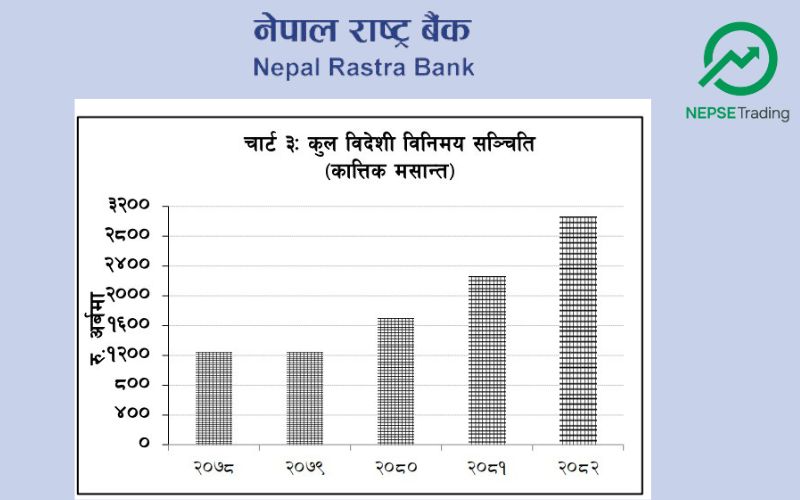
२०८२ असार मसान्तमा रु. २,६७७ अर्ब ६८ करोड बराबर रहेको कुल विदेशी विनिमय सञ्चिति १४.१ प्रतिशतले वृद्धि भई २०८२ कात्तिक मसान्तमा रु. ३,०५५ अर्ब ५२ करोड पुगेको छ। अमेरिकी डलरमा हेर्दा, असार मसान्तमा १९ अर्ब ५० करोड डलर रहेको सञ्चिति कात्तिक मसान्तमा १०.३ प्रतिशतले बढेर २१ अर्ब ५२ करोड डलर पुगेको छ।
अर्थविद्हरूका अनुसार विदेशी विनिमय सञ्चितिमा आएको यो तीव्र वृद्धिले देशको बाह्य क्षेत्रको जोखिम घटाएको छ। उच्च आयात, सेवा खाताको घाटा र विश्व अर्थतन्त्रमा अनिश्चितता कायमै रहे पनि पर्याप्त सञ्चितिले नेपाललाई बाह्य झट्काबाट जोगाउने सुरक्षा कवचको काम गरेको विश्लेषण गरिएको छ।
कुल विदेशी विनिमय सञ्चितिमध्ये नेपाल राष्ट्र बैंकमा रहेको सञ्चिति प्रमुख हिस्सा ओगटेको छ। २०८२ असार मसान्तमा रु. २,४१४ अर्ब ६४ करोड रहेको राष्ट्र बैंकको सञ्चिति कात्तिक मसान्तमा १२.८ प्रतिशतले वृद्धि भई रु. २,७२४ अर्ब ६६ करोड पुगेको छ। यसले केन्द्रीय बैंकको विदेशी मुद्रा व्यवस्थापन क्षमता अझ बलियो बनेको संकेत गर्छ।
त्यस्तै, बैंक तथा वित्तीय संस्थाहरू (नेपाल राष्ट्र बैंकबाहेक) सँग रहेको विदेशी विनिमय सञ्चिति पनि उल्लेखनीय रूपमा बढेको छ। असार मसान्तमा रु. २६३ अर्ब ४ करोड रहेको यस्तो सञ्चिति कात्तिक मसान्तमा २५.८ प्रतिशतले वृद्धि भई रु. ३३० अर्ब ८५ करोड पुगेको छ। यसले निजी बैंकिङ प्रणालीमा समेत विदेशी मुद्राको उपलब्धता बढेको देखाउँछ।
२०८२ कात्तिक मसान्तको कुल विदेशी विनिमय सञ्चितिमा भारतीय मुद्राको हिस्सा २१.९ प्रतिशत रहेको छ। भारतसँगको व्यापक व्यापारिक सम्बन्ध र सीमा पार कारोबारको सन्दर्भमा भारतीय मुद्राको ठूलो हिस्सा स्वाभाविक मानिएको छ।
समग्रमा, पछिल्लो चार महिनाको तथ्याङ्कले नेपालको विदेशी विनिमय सञ्चिति सुदृढ अवस्थामा पुगेको स्पष्ट देखाउँछ। यद्यपि, विज्ञहरू विदेशी विनिमय सञ्चिति बढ्नु सकारात्मक भए पनि दीर्घकालीन रूपमा यसको दिगोपनाका लागि निर्यात विस्तार, सेवा आय वृद्धि र प्रत्यक्ष वैदेशिक लगानी आकर्षण अपरिहार्य रहेको बताउँछन्। विप्रेषणमा आधारित सञ्चिति मात्रले दीर्घकालीन आर्थिक स्थायित्व सुनिश्चित गर्न नसक्ने भएकाले संरचनात्मक सुधारमा जोड दिनुपर्ने उनीहरूको धारणा छ।