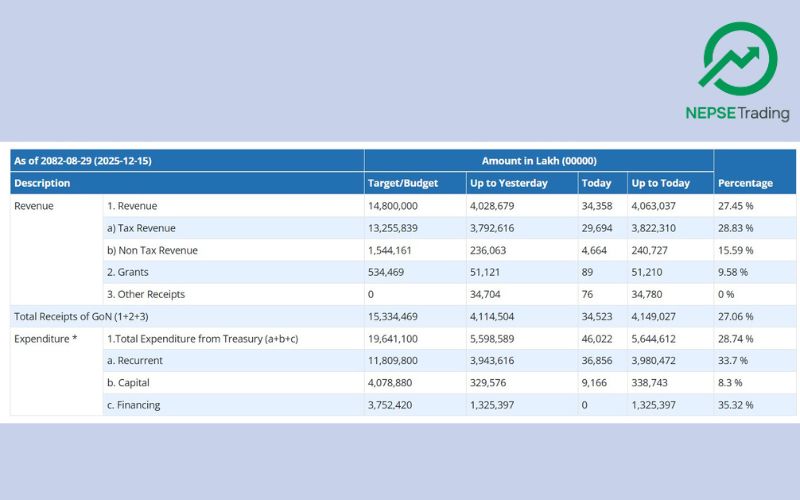
काठमाडौं । चालु आर्थिक वर्ष २०८२/८३ को पहिलो पाँच महिना पूरा हुन लाग्दा सरकारको आम्दानी र खर्च दुवै पक्ष कमजोर देखिएको छ । मंसिर मसान्तसम्म सरकारले राजस्व संकलन लक्ष्यको ३० प्रतिशत समेत पुर्याउन सकेको छैन भने कुल खर्च २८ प्रतिशतमा सीमित रहेको छ ।
अर्थ मन्त्रालयअन्तर्गत महालेखा नियन्त्रक कार्यालयको तथ्यांकअनुसार साउनदेखि मंसिर मसान्तसम्म सरकारको विकास (पुँजीगत) खर्च अत्यन्तै न्यून रहेको छ । मंसिर २९ गतेसम्मको तथ्यांकअनुसार पुँजीगत खर्च जम्मा ८ प्रतिशतमा सीमित भएको छ, जसले विकास निर्माणका काम सुस्त गतिमा अघि बढिरहेको संकेत गर्छ ।
तथ्यांकअनुसार पछिल्लो पाँच महिनामा सरकारले कुल लक्ष्यको करिब २७ प्रतिशत मात्र आम्दानी गरेको छ । यस अवधिमा सरकारको कुल आम्दानी ४ खर्ब १४ अर्ब रुपैयाँ पुगेको छ । चालु आर्थिक वर्षमा सरकारले कर तथा गैरकर शीर्षकबाट १५ खर्ब ३३ अर्ब रुपैयाँ आम्दानी गर्ने लक्ष्य राखेको छ ।
आम्दानीको तुलनामा सरकारको खर्च भने उल्लेख्य रूपमा बढी देखिएको छ । पाँच महिनामा ४ खर्ब १४ अर्ब रुपैयाँ आम्दानी हुँदा खर्च ५ खर्ब ६४ अर्ब रुपैयाँ पुगेको छ । यसले बजेट घाटा थप बढ्ने संकेत देखाएको छ ।
खर्च संरचनातर्फ हेर्दा, सरकारले प्रशासनिक तथा अन्य चालु खर्चमा ३ खर्ब ९८ अर्ब रुपैयाँ खर्च गरेको छ । तर विकास निर्माणका लागि छुट्याइएको पुँजीगत खर्च भने ३३ अर्ब ८७ करोड रुपैयाँमै सीमित छ । चालु आर्थिक वर्षमा सरकारले ४ खर्ब ७ अर्ब रुपैयाँ पुँजीगत खर्च गर्ने लक्ष्य लिएको भए पनि मंसिर मसान्तसम्म भएको खर्च कुल विनियोजित बजेटको १० प्रतिशत पनि नपुग्नु अर्थतन्त्रका लागि निराशाजनक मानिएको छ ।
यस अवधिमा सरकारले वित्तीय व्यवस्थापनतर्फबाट १ खर्ब ३२ अर्ब रुपैयाँ संकलन गरेको छ । यो रकम कुल ३ खर्ब ७५ अर्ब रुपैयाँको लक्ष्यको तुलनामा करिब ३५ प्रतिशत हो ।
अर्थविद्हरूका अनुसार भदौ २३ र २४ गतेको जेन–जी आन्दोलनपछि बनेको सरकारको प्राथमिकता आगामी फागुन २१ गते हुने निर्वाचनमा केन्द्रित हुँदा विकास खर्च थप प्रभावित भएको देखिन्छ । निर्वाचन खर्च आन्तरिक स्रोतबाटै व्यवस्थापन गर्नुपर्ने बाध्यताका कारण साना तथा टुक्रे आयोजनाहरू कटौती गरिनु र बजेट संकुचन हुनुको असर विकास खर्चमा स्पष्ट रूपमा देखिएको उनीहरूको भनाइ छ ।
राजस्व संकलन कमजोर रहँदा र पुँजीगत खर्च सुस्त हुँदा आर्थिक गतिविधि चलायमान हुन नसक्ने खतरा बढ्दै गएको भन्दै अर्थविद्हरूले खर्च कार्यान्वयनमा गति दिन र राजस्व आधार विस्तार गर्न सरकारलाई सुझाव दिएका छन् ।