लगानीमैत्री वातावरण अझै कमजोर : नियमन घटाउन र नीति स्थायित्व दिन ढकालको आग्रहInvestment climate still challenging; Dhakal calls for policy stability and reduced regulatory burden
काठमाडौं — नेपाल उद्योग वाणिज्य महासंघ का अध्यक्ष चन्द्रप्रसाद ढकाल ले नेपालमा लगानी वातावरण अझै अपेक्षित रूपमा सहज हुन नसकेको बताएका छन्। अत्यधिक नियमन, अस्थिर नीतिगत अवस्था र कार्यान्वयनको कमजोरीले निजी क्षेत्रको आत्मविश्वास कमजोर बनाएको उनको भनाइ छ।
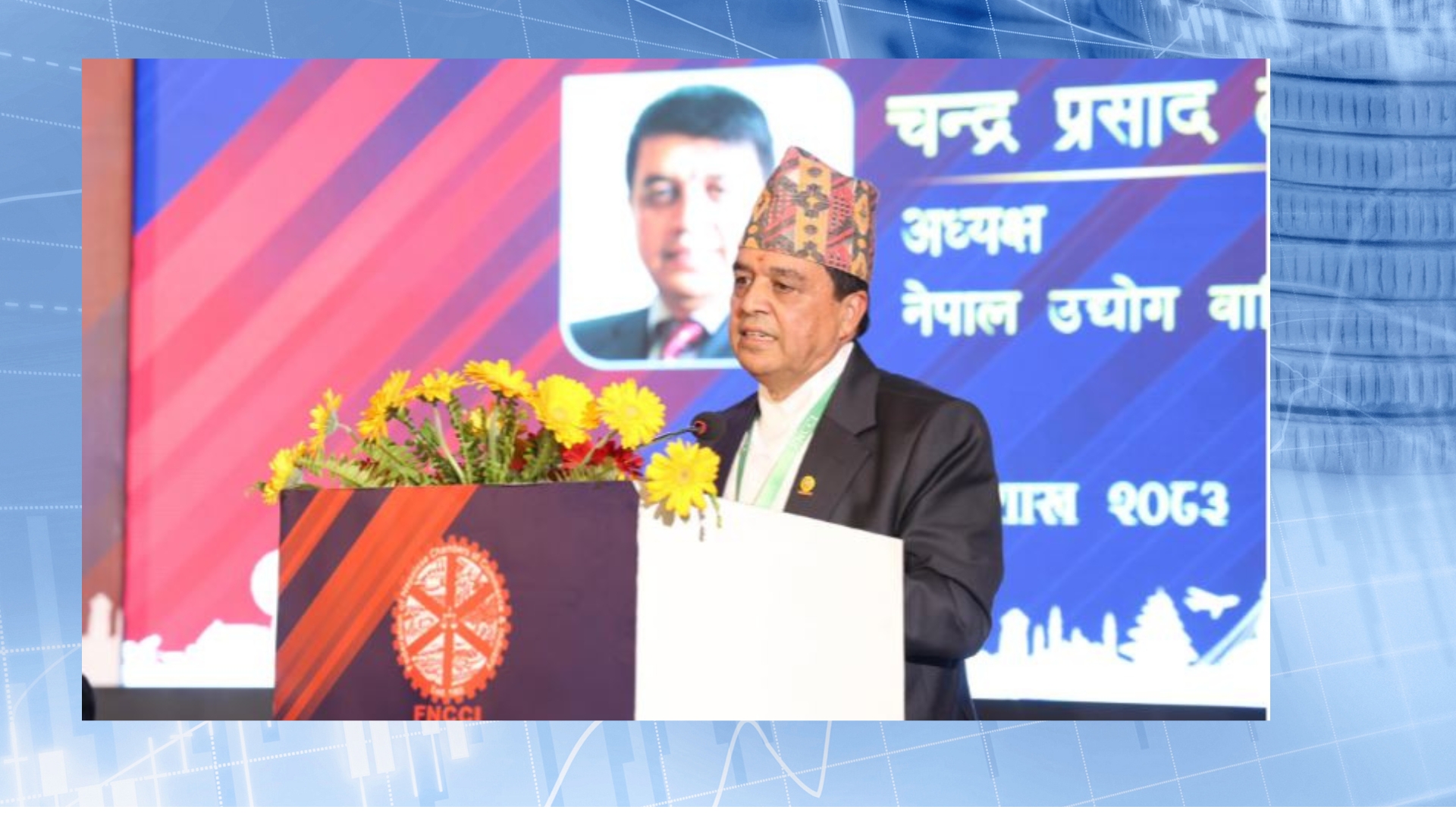
महासंघको ६०औँ वार्षिक साधारण सभाको उद्घाटन सत्रमा बोल्दै उनले आर्थिक रूपान्तरणका लागि सरकार र निजी क्षेत्रबीचको सहकार्य अनिवार्य रहेको औंल्याए। लगानी प्रवर्द्धन गर्न नीतिगत स्पष्टता, स्थायित्व र व्यवहारिक सुधार आवश्यक रहेको उनले जोड दिए।
ढकालले स्थिर नीति, सहज नियमन र सुरक्षित लगानी वातावरणबिना दीर्घकालीन आर्थिक वृद्धि सम्भव नहुने उल्लेख गरे। पछिल्लो समय निजी क्षेत्र प्रवर्द्धन तथा संरक्षणसम्बन्धी रणनीति पारित हुनु सकारात्मक भए पनि त्यसको प्रभावकारी कार्यान्वयन नै सबैभन्दा ठूलो चुनौती रहेको उनले बताए।
उनका अनुसार नेपालसँग युवा जनशक्ति, भौगोलिक विविधता र छिमेकी मुलुकहरूको विशाल बजार पहुँचजस्ता महत्वपूर्ण अवसर छन्। तर, सही नीतिगत वातावरण अभावका कारण ती सम्भावनालाई पूर्ण रूपमा उपयोग गर्न नसकिएको उनको भनाइ थियो। “नीति स्थिर र लगानीमैत्री वातावरण बनेमा नेपालले तीव्र आर्थिक रूपान्तरण हासिल गर्न सक्छ,” उनले भने।
ढकालले रोजगारी सिर्जनामा निजी क्षेत्रको योगदान उल्लेख गर्दै अहिले पनि करिब ८६ प्रतिशत रोजगारी निजी क्षेत्रबाटै सृजना भइरहेको बताए। तर, प्रत्येक वर्ष श्रम बजारमा प्रवेश गर्ने लाखौँ युवालाई स्वदेशमै अवसर दिन अझ धेरै लगानी आवश्यक रहेको उनको धारणा छ।
उनले विगतका नीतिगत निर्णय र अस्थिरताले आर्थिक गतिविधि प्रभावित भएको उल्लेख गर्दै अबको चरणमा कानुनी सुधार, सुशासन र प्रविधिको प्रयोगमार्फत अर्थतन्त्रलाई गतिशील बनाउनुपर्ने बताए। “नागरिकलाई सहज रूपमा व्यवसाय सञ्चालन गर्न सकिने वातावरण बनाउनुपर्छ,” उनले भने।

Kathmandu — Federation of Nepalese Chambers of Commerce and Industry President Chandra Prasad Dhakal has said that Nepal’s investment environment remains challenging, urging the government to ease regulatory pressures and ensure policy stability to boost private sector confidence.
Speaking at the inaugural session of the federation’s 60th Annual General Meeting, he stressed that stronger collaboration between the government and the private sector is essential for accelerating economic transformation. He emphasized that without clear, consistent policies and practical reforms, investment promotion efforts will remain limited.
Dhakal noted that long-term economic growth cannot be achieved in the absence of stable policies, simplified regulations, and a secure investment climate. While welcoming the recent approval of strategies aimed at promoting and protecting the private sector, he underlined that effective implementation would be key to delivering results.
According to him, Nepal possesses significant opportunities, including a young workforce, favorable geography, and access to large neighboring markets. However, these advantages have not been fully utilized due to policy inconsistencies and an uncertain business environment. “With the right policies and investment climate, rapid economic transformation is achievable,” he said.
Highlighting the role of the private sector in job creation, Dhakal stated that it currently contributes around 86 percent of total employment. Still, he pointed out that more investment is needed to absorb the large number of youths entering the labor market each year.
He also observed that past policy decisions and instability have slowed economic activity, calling for the next phase of reforms to focus on legal clarity, good governance, and greater use of technology. “We must create an environment where doing business becomes easier and more efficient,” he said.
Dhakal emphasized that good governance remains a prerequisite for attracting both domestic and foreign investment. Referring to business summits held in various countries, he noted growing international interest in Nepal, but said stronger government commitment is required to convert that interest into actual investment.
Calling for a shift in approach, he said the private sector should take a leading role in driving economic reforms and reduce reliance on government resources. He also suggested greater collaboration with provincial and local governments to expand investment and production.
Reflecting on FNCCI’s 60-year journey, Dhakal described it as a significant chapter in Nepal’s economic history, highlighting the private sector’s resilience in turning challenges into opportunities. He expressed confidence that with continued reforms, cooperation, and a positive outlook, Nepal’s economy can achieve stronger and more sustainable growth in the years ahead.