NEPSEtrading

Make smarter moves backed by machine learning. Join thousands of traders leveraging AI to maximize profits.

nepsetrading.com is an online news portal that provides insights into trading and investment by analyzing the stock market and the global economy. We create charts based on the analysis of various indicators. Please do not rely solely on this information for investment decisions. Self-study is crucial. Use this information only as an educational and informational resource.

Marketminds Investment Group Private Limited

DOIB Registration certificate no.: 4680-2081/2082

Director & Editor-in-chief: Dipesh Ghimire · 9802363868, 9851119988

Koteshwor 32, Kathmandu
01-5253221 · +977 9709066745

Contact support

Subscribe to our newsletter

Weekly insights from the NEPSE market in your inbox.

Market

  • Stocks
  • Sectors

Company

  • About Us
  • Our Team
  • Terms of Use
  • Our Policy
  • Training
  • Contact Us

Help

  • Support
  • Report
  • FAQ

© 2026 nepsetrading.com. All rights reserved.
Owned and operated by Marketminds Investment Group Private Limited.

Charts powered by TradingView

  • Home
  • Latest
  • Trending
  • Stock
  • Education
  • International
    1. News
    2. Investor
    3. Investors React Strongly to SEBON’s Call for Suggestions: Detailed Reform Demands Surface ...
    सेबोनको सुझाव आह्वानपछि लगानीकर्ताको कडा आवाज:  उठे बजार सुधारका गहिरा माग
    Investor
    3 min read
    Updated on April 30, 2026
    Dipesh Ghimire

    सेबोनको सुझाव आह्वानपछि लगानीकर्ताको कडा आवाज: उठे बजार सुधारका गहिरा मागInvestors React Strongly to SEBON’s Call for Suggestions: Detailed Reform Demands Surface from Market Participants

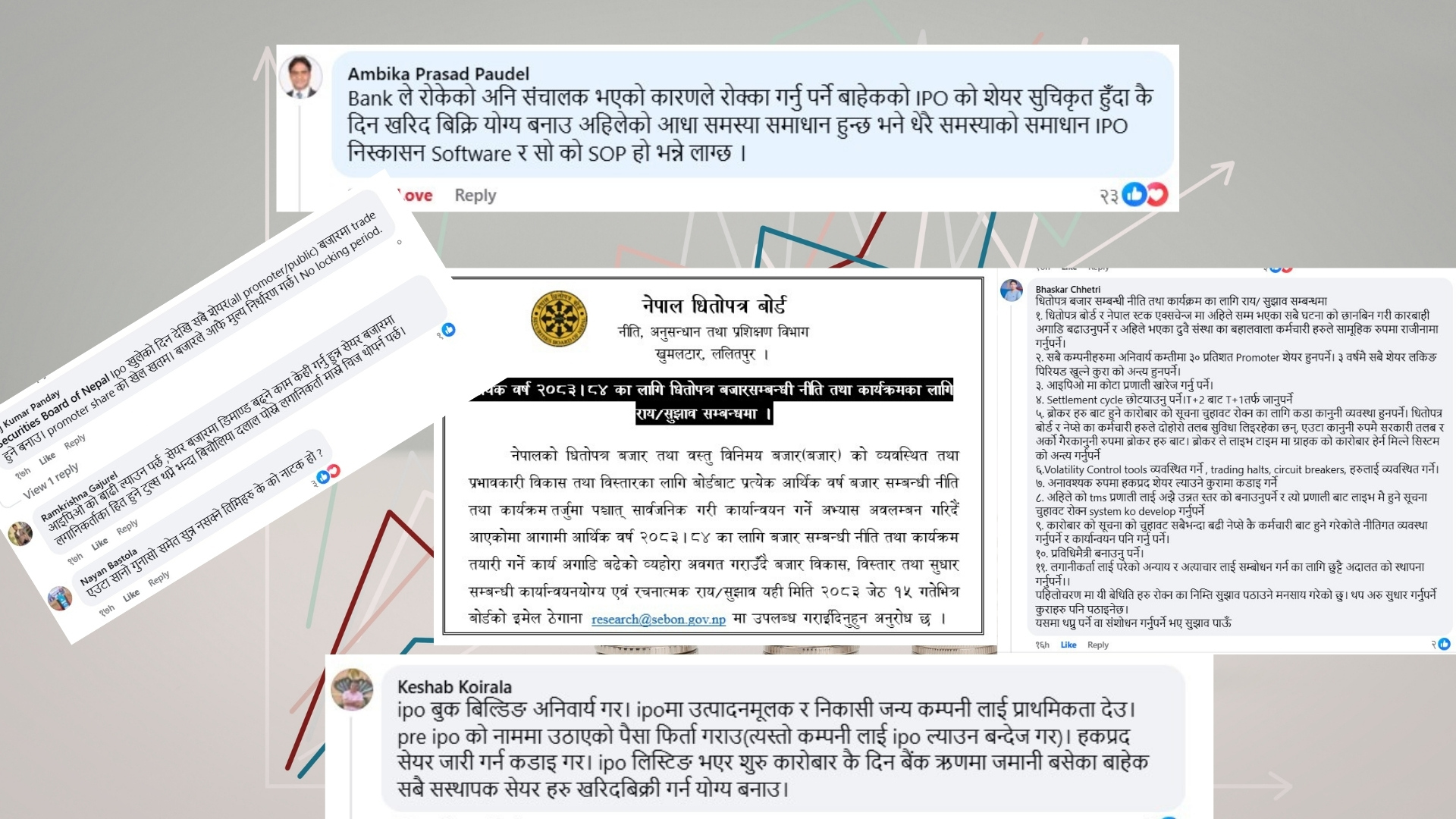
    नेपाल धितोपत्र बोर्ड (सेबोन) ले आर्थिक वर्ष २०८३/८४ का लागि धितोपत्र बजारसम्बन्धी नीति तथा कार्यक्रम तयार पार्न सरोकारवालाबाट सुझाव माग गरेपछि सामाजिक सञ्जालमा लगानीकर्ताहरूले सक्रिय रूपमा आफ्ना धारणा राखेका छन्। बोर्डको आधिकारिक फेसबुक पोस्टमा आएका प्रतिक्रियाहरूले बजारप्रतिको असन्तुष्टि मात्र होइन, सुधारका लागि स्पष्ट रोडम्यापसमेत प्रस्तुत गरेका छन्।

    लगानीकर्ता अम्बिका प्रसाद पौडेल (Ambika Prasad Paudel) ले आईपीओ प्रणालीमै ठूलो सुधार गर्नुपर्ने धारणा राखेका छन्। उनका अनुसार बैंक वा सञ्चालकको कारणले रोक्का गर्नुपर्नेबाहेक अन्य सबै आईपीओ शेयर सूचीकृत भएकै दिनदेखि किनबेच गर्न मिल्ने बनाउनु पर्दछ। यसले अहिले देखिएको आधाभन्दा बढी समस्या समाधान गर्न सक्ने उनको तर्क छ। साथै, आईपीओ निष्कासन गर्ने सफ्टवेयर र त्यसको कार्यप्रणाली (SOP) नै व्यवस्थित हुन नसक्दा धेरै समस्या सिर्जना भएको उनको विश्लेषण छ।

    त्यस्तै, अर्जुन दाहाल (Arjun Dahal) ले लगानीकर्ताको दैनिक अनुभवसँग जोडिएका व्यावहारिक समस्याहरू विस्तृत रूपमा उठाएका छन्। उनले सेयर बिक्री गरेपछि ब्रोकरबाट समयमा पैसा नपाउने समस्या समाधान गर्नुपर्ने, गैरकानुनी उधारो कारोबार तुरुन्त बन्द गर्नुपर्ने र ब्रोकर खातामा रहेको लगानीकर्ताको रकमको बीमा गर्नुपर्ने माग गरेका छन्। दाहालले नयाँ लगानीकर्तालाई खाता खोल्दा नै कारोबार प्रक्रिया, कमिसन, सेटलमेन्ट र जोखिमबारे विस्तृत जानकारीसहितको बुकलेट दिनुपर्ने बताएका छन्। साथै, आज किनेको सेयर आजै बेच्न पाउने व्यवस्था (इन्ट्रा-डे ट्रेडिङ), EDIS प्रणाली स्वतः हुने, लाभांश ब्रोकर खातामै आउने, औसत लागत गणना स्वचालित हुने, हकप्रदको सूचना SMS/इमेलमार्फत दिने र मेरोसेयरमार्फत सञ्चालकको चुनावमा मतदान गर्न पाउने व्यवस्था हुनुपर्ने जस्ता सुझाव पनि दिएका छन्।

    आईपीओ र शेयर संरचनामा आमूल परिवर्तनको प्रस्ताव गर्दै राज कुमार पाण्डे (Raj Kumar Panday) ले आईपीओ खुलेको दिनदेखि नै सबै शेयर—प्रमोटर र पब्लिक—दुबै बजारमा स्वतन्त्र रूपमा कारोबार गर्न मिल्ने बनाउनुपर्ने बताएका छन्। प्रमोटर शेयरमा रहेको लकिङ पिरियड हटाएर बजारलाई स्वतन्त्र रूपमा मूल्य निर्धारण गर्न दिनुपर्ने उनको धारणा छ। “लकिङ पिरियड नै नहुनु पर्ने” भन्ने उनको भनाइले बजारलाई पूर्ण प्रतिस्पर्धात्मक बनाउने लक्ष्य देखिन्छ।

    नीतिगत तथा संस्थागत सुधारका विषयमा सबैभन्दा कडा र विस्तृत सुझाव भास्कर क्षेत्री (Bhaskar Chhetri) ले दिएका छन्। उनले सेबोन र नेप्सेमा हालसम्म भएका सबै घटनाको छानबिन गरी दोषीमाथि कारबाही गर्नुपर्ने र बहालवाला कर्मचारीहरूले नैतिक जिम्मेवारी लिएर सामूहिक राजीनामा दिनुपर्ने माग गरेका छन्। क्षेत्रीले सबै कम्पनीमा कम्तीमा ३० प्रतिशत प्रमोटर शेयर अनिवार्य गर्नुपर्ने, आईपीओको कोटा प्रणाली खारेज गर्नुपर्ने र सेटलमेन्ट चक्र T+2 बाट T+1 मा ल्याउनुपर्ने बताएका छन्।

    उनले ब्रोकरमार्फत हुने सूचना चुहावट रोक्न कडा कानुनी व्यवस्था आवश्यक रहेको औंल्याएका छन्। साथै, नेप्से र सेबोनकै कर्मचारीबाट सूचना चुहावट हुने गरेको आरोप लगाउँदै त्यसलाई रोक्न नीतिगत सुधार र कडा कार्यान्वयन आवश्यक रहेको बताएका छन्। TMS प्रणालीलाई आधुनिक र सुरक्षित बनाउनु पर्ने, volatility control tools (जस्तै circuit breaker र trading halt) व्यवस्थित गर्नुपर्ने, अनावश्यक हकप्रद निष्कासनमा कडाइ गर्नुपर्ने र लगानीकर्ताको न्यायका लागि छुट्टै अदालत स्थापना गर्नुपर्ने माग पनि उनले गरेका छन्।

    त्यसैगरी, केशव कोइराला (Keshab Koirala) ले आईपीओको गुणस्तर र प्राथमिकतामा ध्यान दिनुपर्ने बताएका छन्। उनले बुक बिल्डिङ प्रणाली अनिवार्य गर्नुपर्ने, उत्पादनमूलक तथा निर्यातमुखी कम्पनीलाई प्राथमिकता दिनुपर्ने र pre-IPO का नाममा उठाइएको रकम दुरुपयोग गर्ने कम्पनीलाई आईपीओ ल्याउनै नदिनुपर्ने बताएका छन्। साथै, हकप्रद शेयर निष्कासनमा कडाइ गर्नुपर्ने र सूचीकरणको सुरुवाती दिनमै अधिकांश प्रमोटर शेयर कारोबार योग्य बनाउनुपर्ने सुझाव दिएका छन्।

    बजारको व्यवहारिक पक्षलाई उठाउँदै रामकृष्ण गजुरेल (Ramkrishna Gajurel) ले आईपीओ निष्कासनपछि वास्तविक लगानीकर्ताभन्दा दलाल र सीमित समूहले बढी फाइदा लिने अवस्था रहेको टिप्पणी गरेका छन्। उनका अनुसार, बजारमा निष्पक्षता कमजोर हुँदा साना लगानीकर्ता पछाडि परेको अवस्था छ।

    त्यस्तै, नयन बस्तोला (Nayan Bastola) ले नियामक संरचनामै “ठूला खेलाडी जोगाउने” प्रवृत्ति रहेको संकेत गर्दै साना लगानीकर्ताले न्याय नपाउने अवस्था रहेको बताएका छन्। यसले बजारप्रतिको विश्वासमा नकारात्मक असर परेको उनको बुझाइ छ।

    अर्कोतर्फ, हरि प्रसाद पण्डित (Hari Prasad Pandit) ले प्रिमियममा शेयर निष्कासन गर्दा हुने मूल्य चलखेल रोक्नुपर्ने, EDIS प्रणाली पूर्ण स्वचालित बनाउनुपर्ने, गैरकानुनी उधारो कारोबार तुरुन्त बन्द गर्नुपर्ने र औसत लागत गणना प्रणाली सुधार गर्नुपर्ने बताएका छन्। उनले इनसाइडर ट्रेडिङलाई पूर्ण रूपमा निरुत्साहित गर्दै कडा कारबाही गर्नुपर्नेमा जोड दिएका छन्।

    समग्रमा हेर्दा, सेबोनको सुझाव आह्वानले लगानीकर्ताको वास्तविक भावना सतहमा ल्याएको छ। विभिन्न व्यक्तिका फरक–फरक दृष्टिकोण भए पनि सबैको साझा उद्देश्य बजारलाई पारदर्शी, प्रविधिमैत्री र लगानीकर्ता–मैत्री बनाउनु रहेको देखिन्छ। यदि यी सुझावहरूलाई गम्भीर रूपमा अध्ययन गरी नीतिमा समेट्न सकियो भने नेपाली पूँजीबजारलाई दीर्घकालीन रूपमा सुदृढ र विश्वासयोग्य बनाउने दिशामा महत्वपूर्ण उपलब्धि हासिल हुन सक्छ।

    Following the Nepal Securities Board (SEBON)’s call for policy and program suggestions for the fiscal year 2083/84, investors have actively responded on social media, presenting a wide range of concerns and reform proposals. The comments posted under SEBON’s official Facebook notice reveal deep-rooted structural issues in Nepal’s capital market, along with clear expectations for transparency, efficiency, and modernization.

    Investor Ambika Prasad Paudel emphasized the need to reform the IPO system itself. According to him, except for shares that must be legally restricted (such as those pledged to banks or held by directors), all IPO shares should be freely tradable from the very first day of listing. He argued that such a move alone could resolve a significant portion of existing market problems. Paudel also pointed out that inefficiencies in IPO issuance software and the lack of clear standard operating procedures (SOPs) are at the core of many systemic issues.

    Similarly, Arjun Dahal raised several practical concerns related to everyday trading experiences. He highlighted that investors often do not receive their money on time after selling shares and called for strict action against illegal margin or credit-based trading. Dahal also demanded insurance coverage for funds held in broker accounts. He further suggested that new investors should be provided with detailed guidelines covering trading procedures, commissions, settlement systems, and risks at the time of account opening. His recommendations also included enabling intraday trading (buying and selling on the same day), automating the EDIS system, ensuring dividends are credited directly to broker accounts with proper records, implementing automatic average cost calculations, and notifying shareholders about rights issues via SMS or email. He also proposed allowing investors to vote in company director elections through the MeroShare or online systems.

    On a more structural level, Raj Kumar Panday proposed a radical shift in share trading rules. He argued that all shares—both promoter and public—should be freely tradable from the day of IPO issuance. According to him, the concept of promoter share lock-in periods should be eliminated entirely, allowing the market to determine prices freely. His “no locking period” stance reflects a push toward a fully liberalized and competitive market environment.

    One of the most detailed and critical responses came from Bhaskar Chhetri, who called for sweeping institutional reforms. He demanded a thorough investigation into all past irregularities within SEBON and the Nepal Stock Exchange (NEPSE), along with accountability measures. Chhetri also suggested that current employees of these institutions should take moral responsibility and resign collectively. He further proposed making it mandatory for companies to maintain at least 30% promoter shareholding, abolishing the IPO quota system, and shortening the settlement cycle from T+2 to T+1.

    Chhetri strongly raised concerns about insider networks and information leakage within the system. He alleged that sensitive trading information is often leaked through brokers and even from within NEPSE itself. To address this, he called for stronger legal frameworks, enhanced technological safeguards, and strict enforcement mechanisms. He also emphasized the need to upgrade the Trading Management System (TMS), properly structure volatility control tools such as circuit breakers and trading halts, regulate unnecessary rights share issuance, and establish a separate judicial body dedicated to investor protection.

    Meanwhile, Keshab Koirala focused on improving the quality and prioritization of IPOs. He advocated for mandatory implementation of the book-building system and prioritizing productive and export-oriented companies in IPO approvals. He also criticized the misuse of funds raised under pre-IPO schemes and suggested banning such companies from entering the IPO market. Additionally, he called for stricter regulation of rights share issuance and making most promoter shares tradable from the early stage of listing.

    Addressing market behavior, Ramkrishna Gajurel pointed out that IPOs often fail to benefit genuine investors, as intermediaries and brokers tend to capture most of the gains. According to him, this imbalance reduces fairness and discourages retail investor participation.

    Similarly, Nayan Bastola hinted at structural bias within the system, suggesting that regulatory frameworks tend to protect influential players while smaller investors are left vulnerable. This perception, he indicated, is weakening overall trust in the market.

    On the regulatory side, Hari Prasad Pandit stressed the need to control price manipulation in premium IPOs, fully automate the EDIS system, eliminate illegal credit trading, and improve the average cost calculation mechanism. He also strongly advocated for strict enforcement against insider trading, calling for severe penalties for those involved.

    Overall, SEBON’s initiative to gather suggestions has brought forward a comprehensive picture of investor sentiment. While individual opinions vary, there is a clear consensus on the need for deeper structural reforms rather than superficial changes. If these recommendations are carefully studied and incorporated into policy, they could significantly enhance the transparency, efficiency, and long-term credibility of Nepal’s capital market.

    Trending News

    • Trending14 Jun, 2026

      असारमा वाणिज्य बैंकको मुद्दति ब्याजदर थप घट्यो, ७ बैंकले दर घटाए

      Read news
    • Trending14 Jun, 2026

      नेपालकै सबैभन्दा ठूलो सम्पत्ति शुद्धीकरण मुद्दा अदालत पुग्यो, एक खर्ब ६ अर्बभन्दा बढी बिगो दाबी

      Read news
    • Trending14 Jun, 2026

      अमेरिका–इरान शान्ति सम्झौता निर्णायक मोडमा, पाकिस्तानले भन्यो — '२४ घण्टामा हस्ताक्षर सम्भव'

      Read news

    Related News

  • असारमा वाणिज्य बैंकको मुद्दति ब्याजदर थप घट्यो, ७ बैंकले दर घटाए
    Investor

    1 min read

    असारमा वाणिज्य बैंकको मुद्दति ब्याजदर थप घट्यो, ७ बैंकले दर घटाए

    NEPSE TRADING

    ·

    14 Jun, 2026

  • नेपालकै सबैभन्दा ठूलो सम्पत्ति शुद्धीकरण मुद्दा अदालत पुग्यो, एक खर्ब ६ अर्बभन्दा बढी बिगो दाबी
    Investor

    4 min read

    नेपालकै सबैभन्दा ठूलो सम्पत्ति शुद्धीकरण मुद्दा अदालत पुग्यो, एक खर्ब ६ अर्बभन्दा बढी बिगो दाबी

    NEPSE TRADING

    ·

    14 Jun, 2026

  • अमेरिका–इरान शान्ति सम्झौता निर्णायक मोडमा, पाकिस्तानले भन्यो — '२४ घण्टामा हस्ताक्षर सम्भव'
    Top

    1 min read

    अमेरिका–इरान शान्ति सम्झौता निर्णायक मोडमा, पाकिस्तानले भन्यो — '२४ घण्टामा हस्ताक्षर सम्भव'

    NEPSE TRADING

    ·

    14 Jun, 2026

  • शेयर बजारमा जलविद्युत कम्पनी : अनुत्तरित प्रश्नहरूको भारले थिचिएको लगानीकर्ता
    Investor

    5 min read

    शेयर बजारमा जलविद्युत कम्पनी : अनुत्तरित प्रश्नहरूको भारले थिचिएको लगानीकर्ता

    NEPSE TRADING

    ·

    12 Jun, 2026

  • नेपालको पुँजी बजार : तीन दशकको यात्रा, अझै अधुरो सुधार
    Investor

    3 min read

    नेपालको पुँजी बजार : तीन दशकको यात्रा, अझै अधुरो सुधार

    Dipesh Ghimire

    ·

    12 Jun, 2026