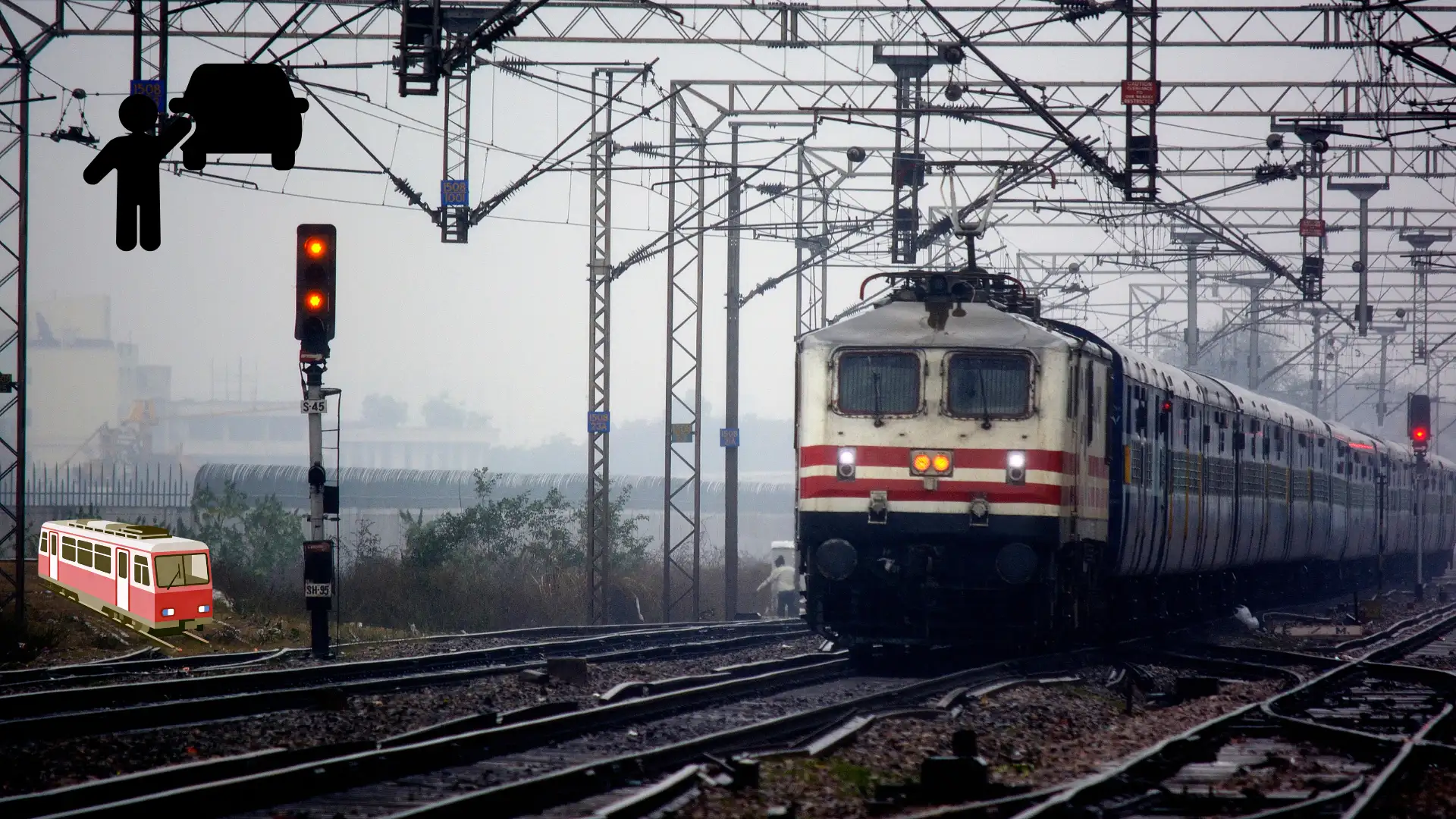
For decades, getting raw materials from the world's ports into Nepal's eastern industrial heartland meant a frustrating two-stage journey — ship to Kolkata, rail to Bithana in India, then trucks grinding over roads into Nepal. This week, that changed.
A cargo train carrying industrial raw materials imported from third countries arrived at the Biratnagar Customs Yard on Monday afternoon, having departed directly from Kolkata Port just four days earlier on Friday. It was the first regular cargo rail service to operate under the Nepal-India Transit Treaty, and for the industrialists of the Morang-Sunsari corridor, it felt like a long-overdue arrival.
The first consignment was destined for Swastik Oil Industries, a manufacturing unit operating within the Morang-Sunsari Industrial Corridor — one of eastern Nepal's most economically active zones. The symbolism was deliberate. By choosing an established industrial name for the inaugural run, the message was clear: this service is built for business, not ceremony.
The formal launch had taken place in Kolkata, where Nepal's Consul General Jhakka Prasad Acharya joined senior Indian customs officials, representatives of Kolkata Port, and executives from the Container Corporation of India — known as CONCOR — to wave the green flag together. The joint send-off carried diplomatic weight, signaling that both governments had invested political capital in making this service work.
The story behind Monday's arrival, however, is less about a train and more about years of bureaucratic patience finally paying off. A trial run of this very route was attempted back in Jestha 2080 — more than two years ago. At the time, the tracks were ready, the route was mapped, and the logic was obvious. But the service stalled almost immediately, caught in the familiar trap of policy ambiguity and cross-border coordination failures between Nepali and Indian agencies.
What changed was not the infrastructure — it was the paperwork. Over the past several months, the relevant authorities on both sides of the border worked through the procedural and policy disagreements that had blocked regularization. Once that alignment was achieved, the path to a scheduled service opened up.
For eastern Nepal's industrialists, the practical implications are significant. Previously, third-country imports had to travel by rail only as far as Bithana in India, then transfer onto trucks for the final stretch into Nepal. Every transfer point adds cost, time, and the risk of damage or delay. Direct rail to the Biratnagar customs yard eliminates one of those transfer points entirely — a seemingly small change that, multiplied across hundreds of shipments per year, adds up to meaningful savings in both money and time.
The longer-term ambition is bigger still. Officials have set their sights on eventually extending the cargo rail service all the way to Biratnagar's Integrated Check Post — a facility designed precisely to streamline cross-border trade processing. If that goal is achieved, the efficiency gains would be even greater, essentially creating a seamless rail-to-customs pipeline for industrial imports into eastern Nepal.
What this development ultimately represents is a small but genuine piece of the larger connectivity puzzle that Nepal has been trying to assemble for years. The country sits between two enormous economies — India and China — and has long aspired to leverage that geographic position as a transit and trade hub rather than merely an import-dependent landlocked state. Every time a bureaucratic barrier falls and a new trade route opens, that aspiration becomes marginally more real.
Monday's cargo train was not a revolution. But it was a signal — that when the political will exists and the administrative coordination follows, Nepal's trade infrastructure can actually move forward. For the factory owners of Morang and Sunsari who have spent years absorbing the costs of an inefficient supply chain, that signal is worth paying attention to.