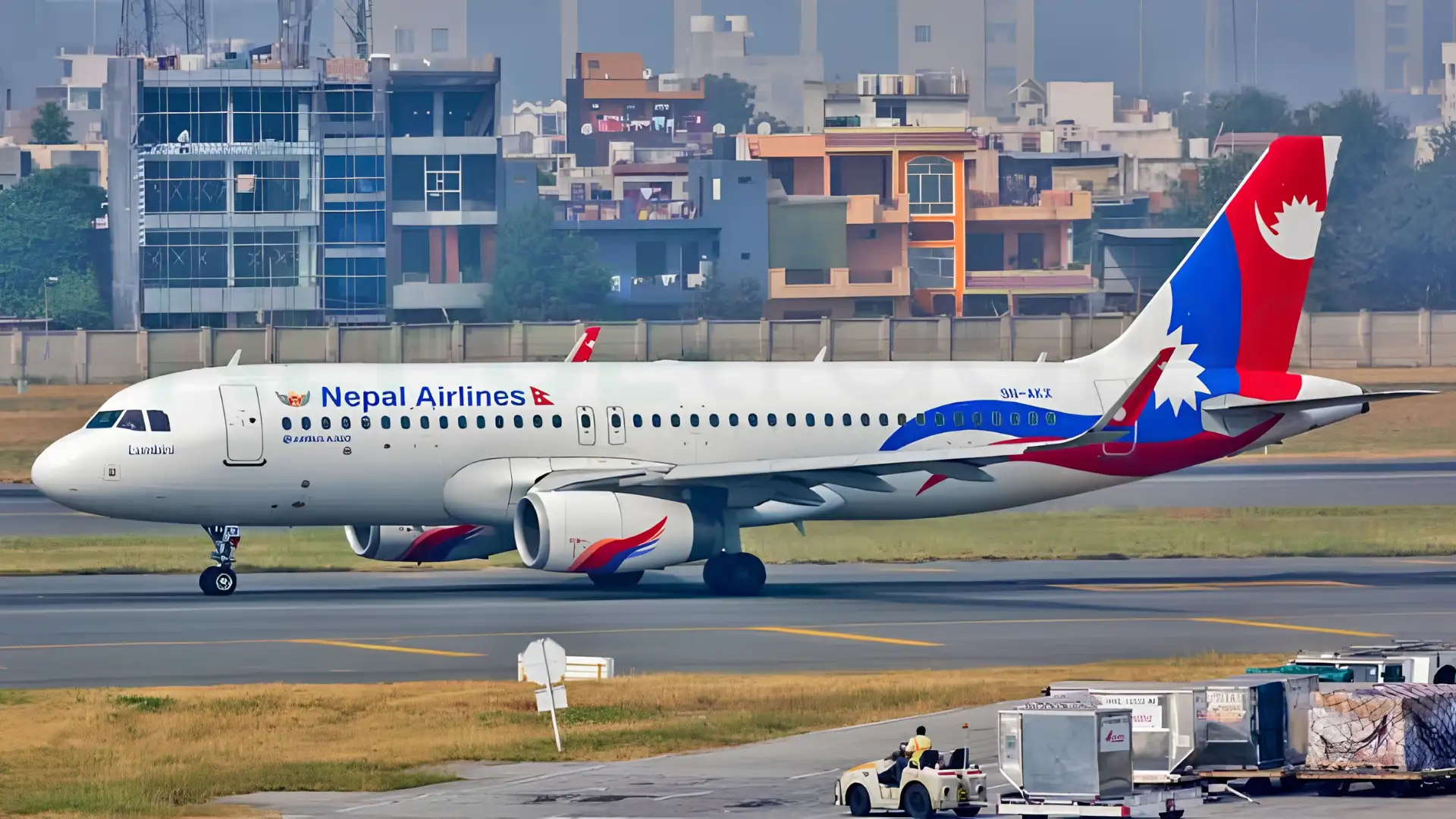
Nepal Airlines Corporation, which has spent years mired in financial losses, management dysfunction, and operational drift, is showing tentative signs of improvement under its newly installed leadership. The corporation has claimed a 32 percent rise in revenue for Ashad of the current fiscal year compared to the same month last year — a figure that, if sustained, would mark a meaningful shift in the trajectory of a national carrier that has long been more a source of national embarrassment than national pride.
Seat occupancy — the most direct indicator of how efficiently an airline is using its aircraft — has also improved noticeably. Last year's Ashad figure stood at approximately 75 percent. This year it reached 85.4 percent. That 10-percentage-point improvement means the airline is filling significantly more seats per flight, which directly improves revenue per departure without requiring additional aircraft or routes. For an airline working with a constrained fleet, this kind of efficiency gain is often the fastest path to financial improvement.
The organizational changes that preceded these numbers are worth understanding. On Jestha 5, a seven-member board of directors was constituted — comprising five independent directors selected through open competition and two representatives from the Ministry of Culture, Tourism and Civil Aviation. The open competition element is notable in a country where state enterprise board appointments have historically been determined more by political proximity than professional qualification.
Following the board's formation, the cabinet on Ashad 30 appointed aviation sector expert Maheshwar Bhakta Shrestha as both Executive Chairman and General Manager of the corporation. Shrestha moved quickly — within his first fifteen days in office he convened three board meetings and held discussions across multiple levels of the organization, producing a set of reform priorities, action plans, and strategic directions. He has publicly committed to making the corporation financially self-sufficient within three years.
That three-year target deserves both acknowledgment and scrutiny. Nepal Airlines has accumulated losses over decades through a combination of poor route planning, politically driven hiring, inadequate fleet maintenance, uncompetitive pricing, and leadership that changed too frequently to implement anything consistently. Reversing that history in thirty-six months is an ambitious claim. The 32 percent revenue increase and the improved seat occupancy are encouraging early data points — but a single month of good numbers does not constitute a turnaround, and Nepal's state enterprise reform history is littered with promising beginnings that faded when political pressure returned or leadership changed.
The corporation says it is now prioritizing unnecessary cost reduction, revenue growth, and service expansion simultaneously. Financial discipline and maximum utilization of available resources are described as the core strategic pillars going forward. Plans for network expansion and institutional capacity development are also cited as near-term priorities. Shrestha has stated his intention to draw on his experience and international relationships to position the corporation as a competitive, transparent, and credible national flag carrier.
What the corporation has not yet disclosed publicly is the full financial picture — the absolute revenue figures, the current loss position, the debt load, and the specific routes or operational changes that drove the Ashad improvement. A 32 percent revenue increase is a meaningful headline, but without the baseline number it is impossible to assess how much ground has actually been covered. If Ashad revenue last year was very low due to a specific disruption, a 32 percent recovery may not represent the underlying structural improvement that the announcement implies.
The honest assessment at this stage is that Nepal Airlines has had a better month than it had a year ago, and it now has leadership with a credible mandate and a stated plan. Whether the plan survives contact with the institution's deep-rooted structural problems — overstaffing, aging aircraft, route economics that do not work, and a political environment that has historically treated the airline as a patronage vehicle rather than a business — will take considerably longer than one Ashad to determine. The signs are encouraging. The work is just beginning.