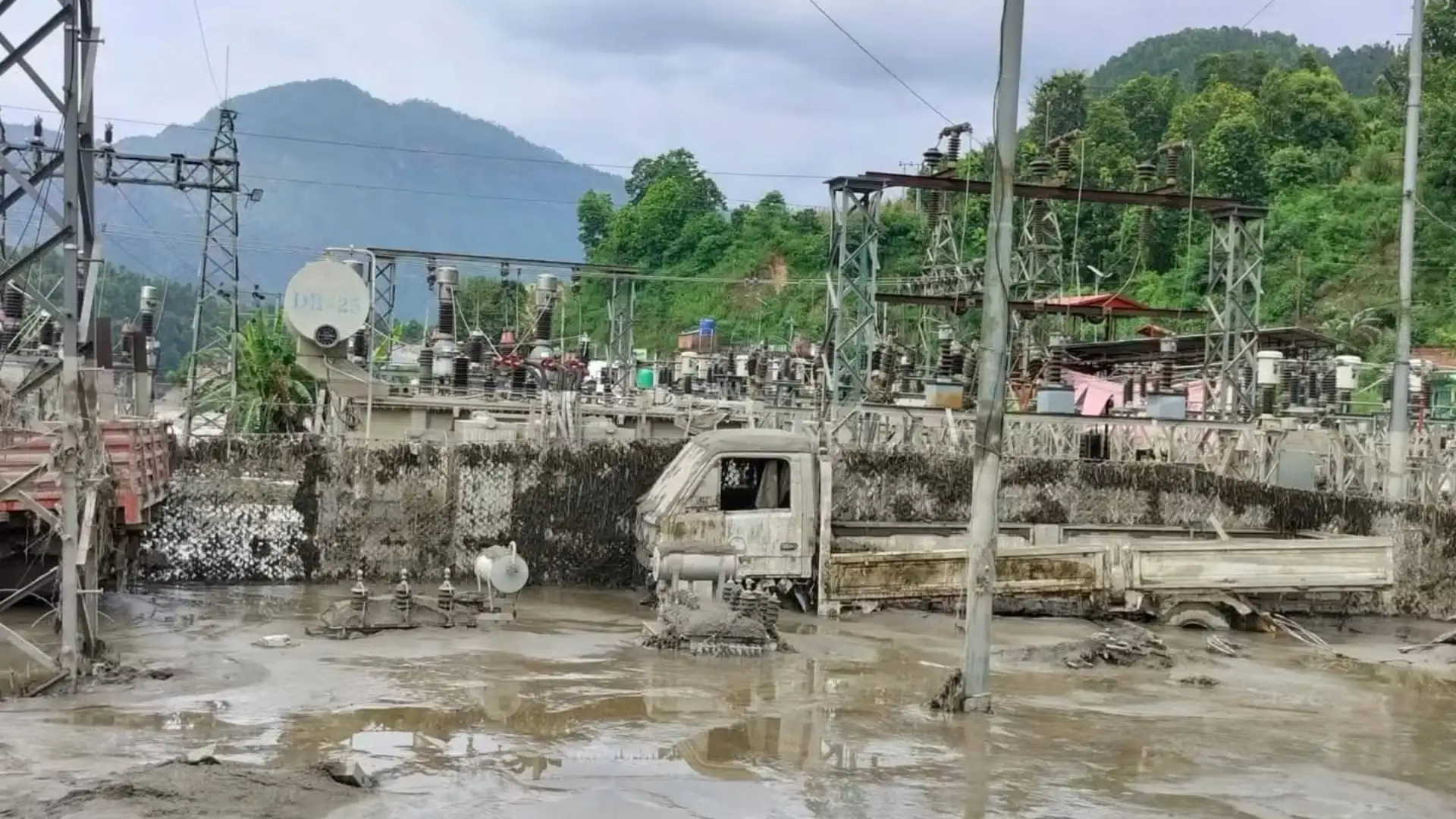
Nepal's stock market has quietly accumulated a structural risk that regulators, policymakers, and most investors have yet to fully reckon with. Hydropower companies now account for more than 35 percent of all listed companies on the Nepal Stock Exchange — 103 companies as of Baisakh 2082, up from just one in fiscal year 2060/61. Behind this impressive growth lies a set of unanswered legal, theoretical, and regulatory questions that could one day destabilize not just a sector, but the entire capital market. And when that day comes, it is ordinary retail investors who will bear the heaviest consequences.
The fundamental problem begins with what hydropower companies actually are. Unlike conventional listed companies that own their assets outright and operate indefinitely, hydropower companies in Nepal function under the Build-Operate-Transfer, or BOT, model. Under this arrangement, a company receives a license to construct and operate a hydropower project for a fixed period — currently 35 years, comprising 5 years for construction and 30 years for operation — after which the entire project, including all infrastructure and assets, must be handed over to the Government of Nepal free of charge. Once that transfer happens, the company's primary source of revenue simply ceases to exist. What happens to the company after that, and what happens to the shares held by thousands of retail investors, remains entirely unclear under existing law.
The numbers involved make this silence deeply alarming. According to Securities Board of Nepal data, hydropower companies have received approval to issue ordinary shares worth a cumulative Rs. 50 billion 85 crore 75 lakh from fiscal year 2060/61 through Baisakh 2083. As of Baisakh 2082/83, the market capitalization of listed hydropower companies stands at Rs. 8 trillion 13 billion 99 crore — equivalent to 17.48 percent of total market capitalization. The sector accounts for 45.20 percent of total secondary market trading volume. These are not peripheral figures. Hydropower has become the backbone of Nepal's secondary market, which means any systemic shock to the sector would reverberate across the entire capital market.
At the heart of the problem lies a theoretical contradiction that has been overlooked for years. Ordinary equity shares, by their very nature, carry the characteristic of perpetuity — they represent permanent ownership in a company with no fixed end date. But hydropower company shares in Nepal are, in practice, time-limited instruments. They are only meaningful for as long as the project license remains valid. When the license expires and the project transfers to the government, the company loses its sole business. In developed and developing markets worldwide, BOT model companies do not issue ordinary equity shares — they raise capital through special purpose vehicles, project bonds, or infrastructure bonds specifically designed for time-limited assets. Nepal has applied the framework for a permanent equity instrument to what is effectively a temporary asset, and no one in authority has formally addressed this contradiction.
The High-Level Economic Reform Recommendation Commission 2081, formed under former Finance Minister Rameswhar Prasad Khanal, did not shy away from naming this problem. Its report explicitly identifies the fate of shares after the license period expires as a major unresolved challenge. It notes that some hydropower companies continue to trade at high share prices in the secondary market even when their net worth is negative — a situation that suggests widespread investor ignorance about the BOT model's direct implications for share value. The commission warned that if this situation is not addressed urgently, the resulting investor losses could prove more severe than the crisis that swept through savings and credit cooperatives. It recommended that special legal provisions be created specifically for BOT model companies listed on the stock exchange.
The problems extend well beyond the theoretical. Among companies that applied for rights share issuance as of 2082/12/18, more than 52 percent belonged to the hydropower sector. A consistent pattern has emerged in which companies raise money from the public through an initial public offering to repay bank loans, and then return to the market seeking rights share issuance approval for the same purpose all over again. This circular use of public capital raises serious questions about whether the primary market is being used as a debt refinancing mechanism rather than genuine capital formation. Multiple companies promoted by the same individual or group have been listed simultaneously, creating concentration risk and potential systemic vulnerabilities that no regulatory framework currently addresses. The growing practice of promoters resigning from boards to circumvent lock-in periods and sell shares freely adds yet another layer of governance concern.
The regulatory framework itself is fragmented and riddled with gaps. The Electricity Act 2049 sets a maximum license period of fifty years but says nothing about what happens to a listed company's equity structure after that period ends. The Hydropower Development Policy 2058 mandates project transfer to the government upon license expiry and guarantees against nationalization during the license period — but is silent on the post-transfer fate of public shareholders. The Electricity Regulatory Commission Act 2074, which established the sector regulator, does not specify what types of financial instruments hydropower companies may issue or what the Commission's role should be in overseeing capital market activities. The Securities Registration and Issuance Regulation 2073 requires companies to demonstrate going concern status before listing — but currently listed hydropower companies have made no disclosure about the risks to their going concern status after project transfer.
Experts and policymakers are now in broad agreement on what needs to happen. The Government of Nepal, the Ministry of Energy, the Ministry of Finance, the Electricity Regulatory Commission, and the Securities Board of Nepal must come together to resolve a cluster of theoretical and legal questions that have been deferred for too long. These include determining what financial instrument is appropriate for BOT model companies — whether ordinary equity shares, project bonds, or infrastructure bonds — and making that determination explicit in law. A clear legal framework for what happens to listed hydropower companies after project transfer must be established, including how the company continues to operate, what its equity structure looks like, and what future cash flows investors can expect. Repeated public issuances for the same purpose must be regulated. Promoter share trading must be governed by stricter rules. And companies promoted by the same group must be subjected to consolidation requirements such as merger or acquisition to reduce systemic risk.
Nepal's capital market has grown significantly on the back of hydropower sector participation. But growth built on unresolved contradictions is not a foundation — it is a liability waiting to mature. Every year that these questions go unanswered is another year in which tens of thousands of retail investors pour their savings into instruments whose long-term legal status remains undefined. The High-Level Commission has already sounded the alarm. The regulatory bodies now have both the evidence and the mandate to act. What remains to be seen is whether they will move before the problem moves for them.