NEPSEtrading

Make smarter moves backed by machine learning. Join thousands of traders leveraging AI to maximize profits.

nepsetrading.com is an online news portal that provides insights into trading and investment by analyzing the stock market and the global economy. We create charts based on the analysis of various indicators. Please do not rely solely on this information for investment decisions. Self-study is crucial. Use this information only as an educational and informational resource.

Marketminds Investment Group Private Limited

DOIB Registration certificate no.: 4680-2081/2082

Director & Editor-in-chief: Dipesh Ghimire · 9802363868, 9851119988

Koteshwor 32, Kathmandu
01-5253221 · +977 9709066745

Contact support

Subscribe to our newsletter

Weekly insights from the NEPSE market in your inbox.

Market

  • Stocks
  • Sectors

Company

  • About Us
  • Our Team
  • Terms of Use
  • Our Policy
  • Training
  • Contact Us

Help

  • Support
  • Report
  • FAQ

© 2026 nepsetrading.com. All rights reserved.
Owned and operated by Marketminds Investment Group Private Limited.

Charts powered by TradingView

  • Home
  • Latest
  • Trending
  • Stock
  • Education
  • International
    1. News
    2. Investor
    3. Nepal’s Imports on the Rise: Petroleum Products Dominate, Trade Deficit Widens
    नेपालको आयात वृद्धिः पेट्रोलियम पदार्थ पहिलो स्थानमा, व्यापार घाटा झनै बढ्दो
    Investor
    2 min read
    Published on February 3, 2025
    Dipesh Ghimire

    नेपालको आयात वृद्धिः पेट्रोलियम पदार्थ पहिलो स्थानमा, व्यापार घाटा झनै बढ्दोNepal’s Imports on the Rise: Petroleum Products Dominate, Trade Deficit Widens

    चालु आर्थिक वर्ष २०८१/८२ को पहिलो छ महिनामा नेपालले १३ खर्ब रुपैयाँभन्दा बढीको वस्तुहरू आयात गरेको छ, जसमा पेट्रोलियम पदार्थ सबैभन्दा ठूलो हिस्सा ओगट्ने वस्तु बनेको छ। नेपाल राष्ट्र बैंकको पछिल्लो तथ्यांक अनुसार, कुल आयातमा सवारी साधन, मेसिनरी, औद्योगिक कच्चा पदार्थ, खाद्य तेल, औषधि, र संचार उपकरणको आयात उल्लेखनीय रूपमा बढेको छ।

    नेपालले व्यापार घाटा न्यून गर्नका लागि उत्पादन वृद्धि र निर्यात प्रवर्द्धनमा ध्यान दिनुपर्ने देखिन्छ। हालको अवस्थामा, अधिकांश महत्वपूर्ण वस्तुहरूको लागि नेपाल परनिर्भर छ, जसले विदेशी मुद्रा सञ्चितिमा दबाब सिर्जना गरेको छ।

    १. पेट्रोलियम पदार्थको सर्वाधिक आयात, नेपाल ऊर्जा सुरक्षामा अझै निर्भर

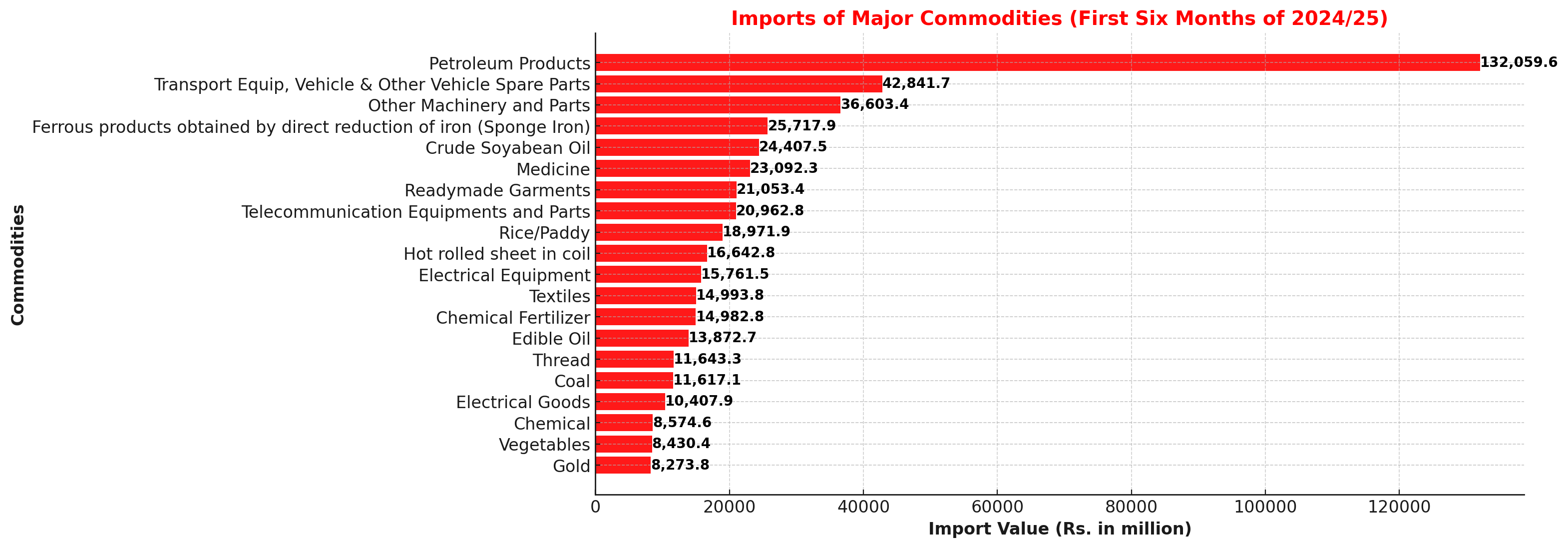
    नेपालको कुल आयातको ठूलो हिस्सा पेट्रोलियम पदार्थमा केन्द्रित छ। चालु आर्थिक वर्षको पहिलो छ महिनामा मात्र १,३२०५९.६ मिलियन रुपैयाँ बराबरको पेट्रोलियम पदार्थ आयात गरिएको छ।

    नेपालमा पेट्रोलियम पदार्थको अत्यधिक निर्भरता छ, जसको मुख्य कारण वैकल्पिक ऊर्जा स्रोतहरूको कमी हो। नेपालमा विद्यमान जलविद्युत् परियोजनाहरूले पर्याप्त उत्पादन गर्न नसक्दा तथा विद्युतीय सवारीसाधनको प्रयोग सीमित हुँदा पेट्रोलियम पदार्थमा निर्भरता घटाउने कुनै तत्काल समाधान देखिएको छैन।

    २. गाडी र मेसिनरीको आयात उच्च दरमा

    नेपालले सवारी साधन, गाडीका स्पेयर पार्ट्स तथा अन्य मेसिनरीको ठूलो मात्रामा आयात गरेको छ। तथ्यांकअनुसार:

    • सवारी साधन तथा स्पेयर पार्ट्स – ४२,८४१.७ मिलियन रुपैयाँ

    • अन्य मेसिनरी र उपकरणहरू – ३६,६०३.४ मिलियन रुपैयाँ

    नेपालमा सार्वजनिक यातायातको विकास कमजोर भएकोले निजी सवारी साधनहरूको माग उच्च रहेको छ। साथै, निर्माण, उत्पादन तथा उद्योग क्षेत्रका लागि आवश्यक मेसिनरीहरू पनि नेपालमा उत्पादन नहुने भएकाले उच्च मात्रामा आयात गर्नुपरेको देखिन्छ।


    ३. उद्योग तथा निर्माण क्षेत्रका लागि कच्चा पदार्थको परनिर्भरता

    नेपालले औद्योगिक तथा निर्माण क्षेत्रका लागि आवश्यक कच्चा पदार्थ उच्च परिमाणमा आयात गरेको छ।

    • फेरस उत्पादन (स्पन्ज आयरन) – २५,७१७.९ मिलियन रुपैयाँ

    • गर्म रोल गरिएको पातलो फलामे पाता (Hot Rolled Sheet) – १६,६४२.८ मिलियन रुपैयाँ

    • कोइला – ११,६१७.१ मिलियन रुपैयाँ

    यी वस्तुहरू नेपालका इस्पात, निर्माण तथा औद्योगिक कारखानाहरूका लागि आवश्यक सामग्रीहरू हुन्। तर, नेपालमै कच्चा पदार्थ उत्पादन गर्न सकिने सम्भावनाहरू खोज्नुपर्ने आवश्यकता देखिन्छ।

    ४. खाद्य तथा कृषि क्षेत्रमा निर्भरता, चामल तथा तेलको उच्च आयात

    नेपालमा कृषिमा आधारित अर्थतन्त्र भए पनि कृषि उत्पादनमा आत्मनिर्भरता कमजोर छ।

    • चामल/धान – १८,९७१.९ मिलियन रुपैयाँ

    • क्रुड सोयाबिन तेल – २४,४०७.५ मिलियन रुपैयाँ

    • खाद्य तेल (Edible Oil) – १३,८७२.७ मिलियन रुपैयाँ

    • तरकारीहरू – ८,४३०.४ मिलियन रुपैयाँ

    धान, खाद्य तेल तथा तरकारीहरूको ठूलो मात्रामा आयात हुनु नेपालमा कृषि उत्पादन प्रणाली अझै प्रभावकारी बन्न नसकेको संकेत हो। नेपालले कृषि क्षेत्रमा प्रविधि हस्तान्तरण, उत्पादकत्व वृद्धिका उपाय तथा कृषिजन्य निर्यात वृद्धि गर्नुपर्ने देखिन्छ।

    ५. स्वास्थ्य सामग्री र प्रविधिमा ठूलो खर्च

    नेपालले औषधिजन्य सामग्री तथा टेलिकम उपकरणहरूमा पनि ठूलो रकम खर्च गरेको छ।

    • औषधि (Medicine) – २३,०९२.३ मिलियन रुपैयाँ

    • टेलिकम तथा संचार उपकरण (Telecommunication Equipment and Parts) – २०,९६२.८ मिलियन रुपैयाँ

    नेपालमा औषधि उत्पादन सीमित रहेको कारण अधिकांश औषधि भारत तथा अन्य मुलुकबाट आयात गर्नुपर्ने बाध्यता छ। यस्तै, प्रविधि तथा टेलिकम क्षेत्रमा नेपालले आयातमा निर्भर रहनुपरेको देखिन्छ।

    ६. सुनको आयात सीमित, तर रसायन तथा विद्युतीय सामग्रीमा उच्च खर्च

    नेपालमा सुनको आयात ८,२७३.८ मिलियन रुपैयाँमा सीमित रहँदा अन्य विद्युतीय उपकरण तथा रसायनिक सामग्रीको आयात उल्लेखनीय देखिन्छ।

    • रसायन (Chemical) – ८,५७४.६ मिलियन रुपैयाँ

    • विद्युतीय उपकरणहरू (Electrical Equipment & Goods) – १५,७६१.५ मिलियन रुपैयाँ + १०,४०७.९ मिलियन रुपैयाँ

    नेपालले औद्योगिक रसायन तथा विद्युतीय उपकरणहरूको ठूलो मात्रामा आयात गरिरहेको छ, जसले देखाउँछ कि नेपालमा उद्योग तथा निर्माण कार्यका लागि आवश्यक उपकरणहरू उत्पादन गर्न अझै प्रयास गर्नुपर्नेछ।

    ७. व्यापार घाटा गहिरिंदै, निर्यात प्रवर्द्धन जरुरी

    नेपालको आयातलाई हेर्दा व्यापार घाटा अझै गहिरिंदै गएको छ। मुलुकले आवश्यक सामग्रीहरूको अत्यधिक परिमाणमा आयात गर्नुपर्ने बाध्यता रहँदा निर्यातको परिमाण तुलनात्मक रूपमा अत्यन्तै न्यून छ।

    निर्यात प्रवर्द्धनका उपाय:

    • कृषि उत्पादन तथा प्रसोधन उद्योग विस्तार

    • जलविद्युत् तथा विद्युतीय ऊर्जा उत्पादन वृद्धि

    • औद्योगिक तथा निर्माण सामग्री उत्पादनमा आत्मनिर्भरता

    • प्रविधि, सेवा तथा अन्य क्षेत्रबाट निर्यात वृद्धि

    नेपालले आयात प्रतिस्थापन नीति प्रभावकारी रूपमा लागू गर्न सकेमा व्यापार घाटामा सुधार आउने देखिन्छ। साथै, कृषि उत्पादन, उद्योग तथा ऊर्जा क्षेत्रलाई प्राथमिकता दिएर आत्मनिर्भरता बढाउनेतर्फ नेपालले ध्यान दिनुपर्ने देखिन्छ।


    In the first six months of the fiscal year 2024/25, Nepal’s total imports exceeded NPR 1.32 trillion, with petroleum products taking the largest share. According to recent data from Nepal Rastra Bank, significant imports include vehicles, machinery, industrial raw materials, edible oils, medicines, and telecommunication equipment.

    Despite efforts to reduce dependency on imports, Nepal's reliance on foreign goods remains strong, leading to an increasing trade deficit and pressure on foreign exchange reserves.

    1. Petroleum Products Lead Imports, Nepal’s Energy Dependency Still High

    Petroleum products remain Nepal's top import category, with an import value of NPR 132.06 billion in the first six months of the fiscal year.

    Due to the lack of alternative energy sources, Nepal continues to depend on petroleum imports. While hydropower development is ongoing, electricity production is insufficient to replace fuel consumption, and the adoption of electric vehicles is still in its early stages.

    2. High Demand for Vehicles and Machinery

    Nepal has spent a significant amount on importing vehicles, spare parts, and machinery:

    • Vehicles & Spare Parts – NPR 42.84 billion

    • Machinery & Equipment – NPR 36.60 billion

    With public transportation infrastructure still underdeveloped, demand for private vehicles remains high. Additionally, Nepal relies on imported machinery for industrial, construction, and manufacturing purposes.

    3. Dependency on Industrial Raw Materials for Manufacturing and Construction

    The construction and manufacturing industries heavily depend on imported raw materials. Key imports include:

    • Ferrous products (Sponge Iron) – NPR 25.72 billion

    • Hot Rolled Sheet in Coil – NPR 16.64 billion

    • Coal – NPR 11.62 billion

    These materials are essential for steel production, construction, and industrial activities, indicating a need to explore domestic alternatives for production.

    4. Rising Imports of Food and Agricultural Products

    Despite being an agricultural economy, Nepal continues to import large volumes of essential food items:

    • Rice/Paddy – NPR 18.97 billion

    • Crude Soybean Oil – NPR 24.41 billion

    • Edible Oil – NPR 13.87 billion

    • Vegetables – NPR 8.43 billion

    The high import of agricultural commodities highlights Nepal’s struggle to achieve self-sufficiency in food production. The country must enhance domestic agricultural productivity through improved technology, irrigation, and commercialization.

    5. High Spending on Medicines and Telecommunications

    Nepal has also spent significantly on medical supplies and telecommunication equipment:

    • Medicines – NPR 23.09 billion

    • Telecommunication Equipment & Parts – NPR 20.96 billion

    With Nepal’s pharmaceutical industry still in its early stages, most medicines are imported from India and other countries. Similarly, the rapid expansion of telecommunication infrastructure and digital services has led to increased imports of telecom equipment.

    6. Lower Gold Imports, But High Spending on Chemicals and Electrical Goods

    While gold imports stood at NPR 8.27 billion, other industrial and electrical materials accounted for larger expenses:

    • Chemicals – NPR 8.57 billion

    • Electrical Equipment & Goods – NPR 15.76 billion + NPR 10.41 billion

    The import of chemicals and electrical goods indicates Nepal's growing industrial needs and infrastructure development. However, the country needs to focus on producing these materials locally to reduce dependency.

    7. Trade Deficit Worsens, Export Promotion Needed

    Nepal’s heavy reliance on imports continues to widen the trade deficit, as the country’s exports remain minimal. To address this, Nepal must:

    • Promote domestic agricultural and industrial production

    • Increase hydropower production and shift towards electric energy

    • Enhance self-sufficiency in essential sectors such as medicine and food processing

    • Boost exports through technology, services, and value-added industries

    A well-implemented import substitution strategy could help balance Nepal’s trade. Additionally, focusing on domestic industries, agriculture, and energy production will be crucial to achieving economic stability.

    Trending News

    • Trending14 Jun, 2026

      असारमा वाणिज्य बैंकको मुद्दति ब्याजदर थप घट्यो, ७ बैंकले दर घटाए

      Read news
    • Trending14 Jun, 2026

      नेपालकै सबैभन्दा ठूलो सम्पत्ति शुद्धीकरण मुद्दा अदालत पुग्यो, एक खर्ब ६ अर्बभन्दा बढी बिगो दाबी

      Read news
    • Trending14 Jun, 2026

      अमेरिका–इरान शान्ति सम्झौता निर्णायक मोडमा, पाकिस्तानले भन्यो — '२४ घण्टामा हस्ताक्षर सम्भव'

      Read news

    Related News

  • असारमा वाणिज्य बैंकको मुद्दति ब्याजदर थप घट्यो, ७ बैंकले दर घटाए
    Investor

    1 min read

    असारमा वाणिज्य बैंकको मुद्दति ब्याजदर थप घट्यो, ७ बैंकले दर घटाए

    NEPSE TRADING

    ·

    14 Jun, 2026

  • नेपालकै सबैभन्दा ठूलो सम्पत्ति शुद्धीकरण मुद्दा अदालत पुग्यो, एक खर्ब ६ अर्बभन्दा बढी बिगो दाबी
    Investor

    4 min read

    नेपालकै सबैभन्दा ठूलो सम्पत्ति शुद्धीकरण मुद्दा अदालत पुग्यो, एक खर्ब ६ अर्बभन्दा बढी बिगो दाबी

    NEPSE TRADING

    ·

    14 Jun, 2026

  • अमेरिका–इरान शान्ति सम्झौता निर्णायक मोडमा, पाकिस्तानले भन्यो — '२४ घण्टामा हस्ताक्षर सम्भव'
    Top

    1 min read

    अमेरिका–इरान शान्ति सम्झौता निर्णायक मोडमा, पाकिस्तानले भन्यो — '२४ घण्टामा हस्ताक्षर सम्भव'

    NEPSE TRADING

    ·

    14 Jun, 2026

  • शेयर बजारमा जलविद्युत कम्पनी : अनुत्तरित प्रश्नहरूको भारले थिचिएको लगानीकर्ता
    Investor

    5 min read

    शेयर बजारमा जलविद्युत कम्पनी : अनुत्तरित प्रश्नहरूको भारले थिचिएको लगानीकर्ता

    NEPSE TRADING

    ·

    12 Jun, 2026

  • नेपालको पुँजी बजार : तीन दशकको यात्रा, अझै अधुरो सुधार
    Investor

    3 min read

    नेपालको पुँजी बजार : तीन दशकको यात्रा, अझै अधुरो सुधार

    Dipesh Ghimire

    ·

    12 Jun, 2026