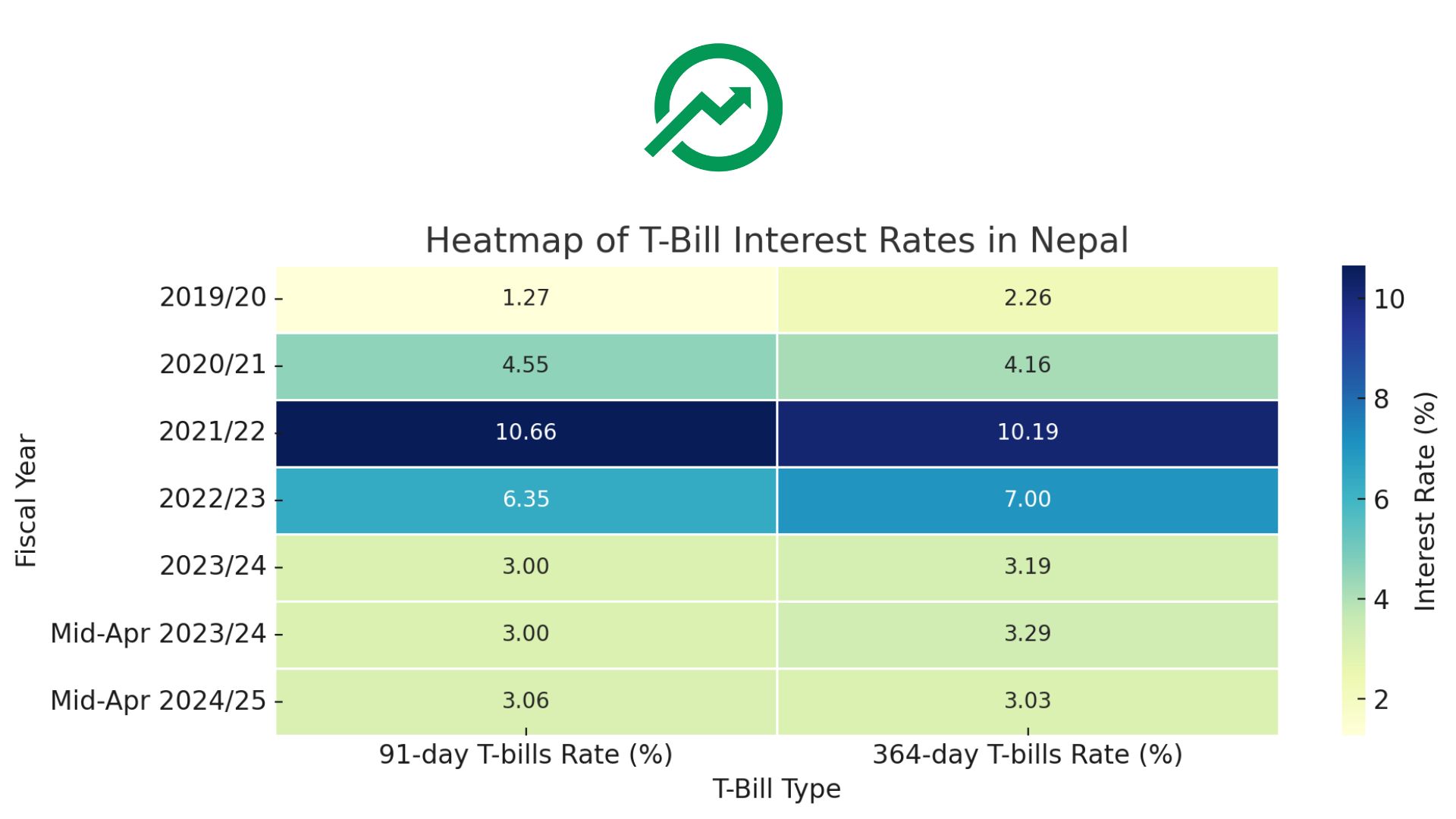
नेपालको ट्रेजरी बिल (T-Bill) को ब्याजदरमा पछिल्ला छ आर्थिक वर्षमा उल्लेखनीय उतारचढाव देखिएको छ । मौद्रिक नीतिमा आएको कडाइ, तरलताको अवस्था, र मौद्रिक प्राधिकरण नेपाल राष्ट्र बैंक (NRB) का नीतिगत निर्णयले यो उतारचढावलाई प्रस्ट पार्छ ।
२०७६/७७ (2019/20) मा ९१-दिने टी-बिलको ब्याजदर १.२७ प्रतिशत मात्र थियो भने ३६४-दिने टी-बिलको दर २.२६ प्रतिशत थियो । यसले बजारमा प्रशस्त तरलता र सस्तो कर्जाको संकेत गर्थ्यो, जुन बेला राष्ट्र बैंकको मौद्रिक नीति लचकदार देखिन्थ्यो ।
तर २०७८/७९ (2021/22) मा दुवै दरमा तीव्र वृद्धि भयो । ९१-दिने टी-बिलको दर १०.६६ प्रतिशतसम्म पुगेको थियो भने ३६४-दिने दर १०.१९ प्रतिशतमा पुग्यो । यो अवस्था बैंकिङ प्रणालीमा तरलता अभाव, उच्च आयात, तथा मुद्रास्फीतिको दबाबका कारण NRB ले मौद्रिक कडाइ गरेको संकेत हो ।
२०७९/८० (2022/23) मा भने ब्याजदरमा केही गिरावट आएको देखिन्छ । ९१-दिने दर ६.३५ प्रतिशत र ३६४-दिने दर ७.०० प्रतिशतमा झर्यो, जसले कोरोना महामारीपछिको आर्थिक पुनरुत्थानलाई सहयोग पुर्याउन अपनाइएको लचकदार नीति झल्काउँछ ।
त्यसपछिका अवधिमा ब्याजदर झन् तल झरेका छन् । २०८०/८१ (2023/24) मा ९१-दिने दर ३.०० प्रतिशत र ३६४-दिने दर ३.१९ प्रतिशतमा सीमित रह्यो । यही आर्थिक वर्षको मध्य-चैत (Mid-April) सम्म दर क्रमशः ३.०० र ३.२९ प्रतिशतमा रहे, जुन तुलनात्मक रुपमा स्थिरता देखिन्छ ।
२०८१/८२ (2024/25) को मध्य-चैतसम्म आएर ९१-दिने दर अलिकति बढेर ३.०६ प्रतिशत पुगेको छ भने ३६४-दिने दर ३.०३ प्रतिशतमा झरेको देखिन्छ । छोटो अवधिमा तरलताको माग उच्च हुनु वा राष्ट्र बैंकको सर्तक नीति यसमा कारण हुन सक्छ ।
समग्रमा हेर्दा, ट्रेजरी बिलको ब्याजदरले नेपालले कसरी मौद्रिक कडाइको चरणबाट स्थायित्वतर्फको यात्रा तय गरिरहेको छ भन्ने संकेत गर्छ । बजारमा सुधार, मुद्रास्फीति नियन्त्रण, र वैदेशिक मुद्रा सञ्चितिमा वृद्धि भएको अवस्थाले पनि दरमा स्थिरता ल्याउन मद्दत पुर्याएको देखिन्छ ।
यदि चाहनुहुन्छ भने यो समाचारको लागि बार चार्ट वा अंग्रेजी संस्करण पनि उपलब्ध गराउन सक्छु, बनाइदिउँ?
Nepal's treasury bill (T-bill) interest rates have undergone significant fluctuations over the past six fiscal years, reflecting broader monetary policy shifts and liquidity trends in the financial sector. The data shows a sharp increase in short-term interest rates from FY 2019/20 to FY 2021/22, followed by a steady decline and relative stabilization in recent periods.
In FY 2019/20, the 91-day T-bill rate was merely 1.27%, while the 364-day T-bill stood at 2.26%. These low rates indicated a surplus liquidity situation and a relatively dovish monetary stance by Nepal Rastra Bank (NRB). However, by FY 2021/22, both rates had surged dramatically—91-day T-bills peaked at 10.66%, and 364-day T-bills at 10.19%. This sharp rise points toward tightening measures adopted by NRB to contain inflation and control excess money supply, possibly due to rising import bills and a growing trade deficit at that time.
In the subsequent fiscal year 2022/23, the central bank appeared to adopt a slightly relaxed approach. The 91-day and 364-day rates dropped to 6.35% and 7.00%, respectively. This moderate decrease was likely an effort to support economic recovery post-COVID and ease the credit environment for businesses and consumers.
The easing trend continued into FY 2023/24, where annual figures fell to 3.00% for 91-day T-bills and 3.19% for 364-day T-bills. Mid-April updates for the same year showed little to no change, with the 91-day rate holding at 3.00% and the 364-day rate slightly up at 3.29%. These figures suggest that NRB was maintaining a neutral stance, ensuring credit availability while preventing excessive liquidity.
By mid-April of FY 2024/25, the 91-day T-bill rate edged slightly higher to 3.06%, while the 364-day rate decreased to 3.03%. This subtle divergence could indicate growing short-term liquidity demands or NRB’s caution against inflationary risks despite an overall stable macroeconomic outlook.
Overall, the trajectory of T-bill rates underscores Nepal’s journey through a tightening cycle and toward a phase of interest rate normalization. The gradual decline and stabilization in T-bill rates may also reflect improved balance of payments, foreign reserve buildup, and NRB’s careful calibration of monetary tools to strike a balance between growth and inflation.