Top
Bad Loans Surge in Nepal’s Commercial Banks; Recovery Struggles Intensify as NPLs Touch 4.86 Percent
Bad Loans Surge in Nepal’s Commercial Banks; Recovery Struggles Intensify as NPLs Touch 4.86 Percent The financial health of Nepal’s commercial banks has come under renewed strain as bad loans continue to mount. In the first quarter of the ongoing fiscal year 2082/83 (mid-July to mid-October 2025), the average non-performing loan (NPL) ratio of 15 commercial banks climbed to 4.86 percent, a notable rise from 4.04 percent recorded during the same period of the previous fiscal year. Bankers and analysts attribute the rise to a combination of loan recovery challenges, economic slowdown, and the disruptive effect of the Gen Z protest movement, which has reportedly impeded field-level debt collection and business operations across several districts. The result is a sharp increase in overdue loans, placing additional stress on already cautious financial institutions.
Dipesh Ghimire
4 min read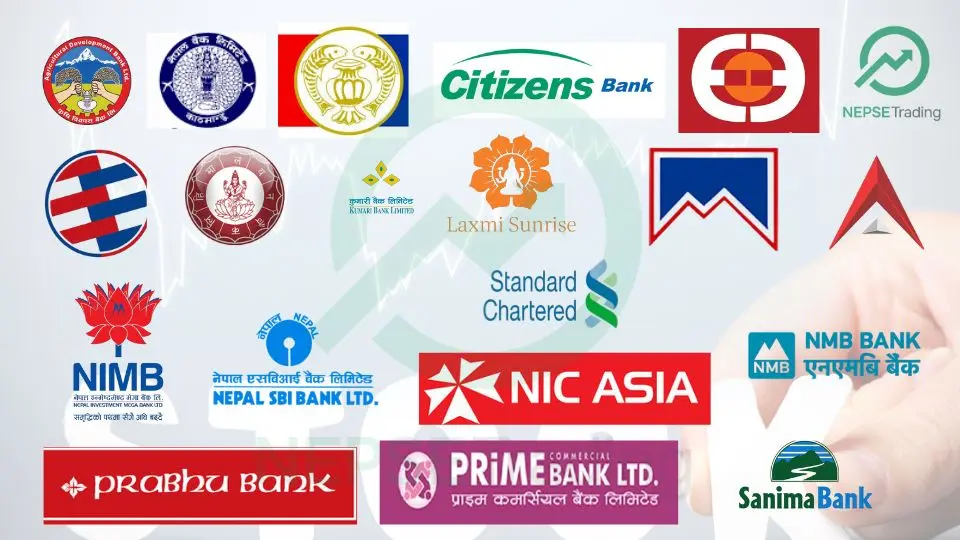
The financial health of Nepal’s commercial banks has come under renewed strain as bad loans continue to mount. In the first quarter of the ongoing fiscal year 2082/83 (mid-July to mid-October 2025), the average non-performing loan (NPL) ratio of 15 commercial banks climbed to 4.86 percent, a notable rise from 4.04 percent recorded during the same period of the previous fiscal year.
Bankers and analysts attribute the rise to a combination of loan recovery challenges, economic slowdown, and the disruptive effect of the Gen Z protest movement, which has reportedly impeded field-level debt collection and business operations across several districts. The result is a sharp increase in overdue loans, placing additional stress on already cautious financial institutions.
Of the 15 banks reviewed, nine institutions now have NPLs exceeding 5 percent, a threshold generally viewed by regulators as a warning zone. The most striking rise has been recorded at Himalayan Bank Limited (HBL), where bad loans surged from 4.98 percent last year to 7.39 percent this year. This represents a jump of more than two percentage points in just one quarter, signaling deepening stress within the bank’s loan book.
NIC Asia Bank follows closely, with NPLs rising from 4.24 to 6.99 percent, while Kumari Bank (6.98%) and Citizens Bank (6.84%) also reported sharp deterioration. Similarly, Nepal Investment Mega Bank (6.63%), Prime Commercial Bank (5.86%), Prabhu Bank (5.78%), Nepal Bank Limited (5.49%), and Laxmi Sunrise Bank (5.42%) have all crossed the 5-percent mark.
Bankers say that such levels of bad loans, unseen since the credit crisis of 2020, are a direct outcome of sluggish repayment from borrowers, particularly in the small and medium enterprise (SME) sector, trading, and real-estate lending.
Insiders describe the loan recovery environment as “highly constrained.” The ongoing Gen Z movement, a social and economic agitation led by youth groups, has disrupted daily business and delayed payment cycles for traders and manufacturers. At the same time, demand in the domestic market remains muted, and the post-pandemic economic rebound has not been strong enough to sustain steady loan servicing.
A senior banker told Kantipur Daily that “borrowers are still struggling to recover from the cash-flow shocks of previous years. For many, repaying on time has become extremely difficult, and even restructuring efforts have failed to prevent default.”
These developments, coupled with inflationary pressures and high interest burdens, have added layers of vulnerability to bank balance sheets.
While a majority of banks are witnessing a rise in bad loans, a handful have managed to keep their asset quality under control. Global IME Bank and Agricultural Development Bank have NPL ratios of 4.98 and 4.78 percent, respectively — still high, but below the critical level.
Other banks such as NMB (4.58%), Nabil (4.31%), Machhapuchhre (4.13%), and Sanima (3.91%) are performing relatively better, while Rastriya Banijya Bank (3.83%) and Siddhartha Bank (3.8%) have also maintained discipline in their loan portfolios.
The lowest NPL ratios were recorded at Nepal SBI Bank (3.01%), Standard Chartered Bank (1.71%), and Everest Bank (0.74%) — the latter two continuing to set benchmarks for prudent credit management. Their limited exposure to high-risk sectors and strong corporate clientele have shielded them from broader market stress.
The surge in bad loans has a direct financial consequence: lower profits. According to Nepal Rastra Bank (NRB) guidelines, commercial banks are required to set aside higher loan-loss provisions in line with rising NPLs. This provisioning reduces their net profit and weakens their capacity to distribute dividends to shareholders.
Several banks have already reported a decline in quarterly profits compared to last year. “The more the NPL grows, the larger the provisioning expense becomes, and that eats into profitability,” explained a financial analyst. “This will ultimately impact the dividend distribution potential and investor sentiment in the banking sector.”
In the coming quarters, banks are expected to adopt a more conservative approach — prioritizing recovery and asset restructuring over aggressive lending. Some may also seek to offload toxic assets or initiate legal proceedings to reclaim overdue loans.
Underlying Causes of the NPL Surge
Experts point to multiple root causes behind the worsening loan books:
Slow domestic demand and weak cash flow: Many borrowers, particularly in the trading, hospitality, and construction sectors, are yet to recover fully from liquidity disruptions.
Social and political disturbances: The Gen Z protests have disrupted businesses in urban areas, delaying repayments and obstructing bank field operations.
Earlier credit boom: Aggressive lending during the post-pandemic recovery period has now started to show signs of default.
Delayed legal and regulatory action: Weak enforcement mechanisms make recovery and collateral liquidation difficult, leading to prolonged defaults.
Financial analysts also highlight that the credit expansion of 2021–2023 was not matched by productivity growth, leading to asset–liability mismatches and overexposure in risky sectors.
The central bank is reportedly monitoring the situation closely. NRB has already instructed banks to strengthen internal risk assessment, improve credit monitoring, and accelerate loan restructuring. Additional stress tests are being carried out to assess banks’ ability to absorb losses if the trend continues.
Regulators fear that if NPLs remain elevated beyond the second quarter, some mid-sized banks could face capital adequacy pressure, especially those already close to the regulatory minimum.
Industry insiders are calling for policy support in the form of targeted refinancing for productive sectors and legal reforms to speed up debt recovery. Without such intervention, the NPL problem could deepen into a systemic challenge.
Advertisement
Written by
Dipesh Ghimire