CB Lama
Behind the Rs 8 Billion Cooperative Scam: How CB Lama Turned Depositors' Savings Into Land, Colleges and Hospitals
For the thousands still waiting on their money, however, the arrest is only a partial reckoning. Recovering Rs 8 billion tied up in land and businesses registered under individuals is a slow, contested legal process — one that typically outlasts the headlines. Lama's return to custody answers the question of accountability, but the harder question, whether ordinary depositors will ever be made whole, remains firmly unanswered.
Dipesh Ghimire
3 min read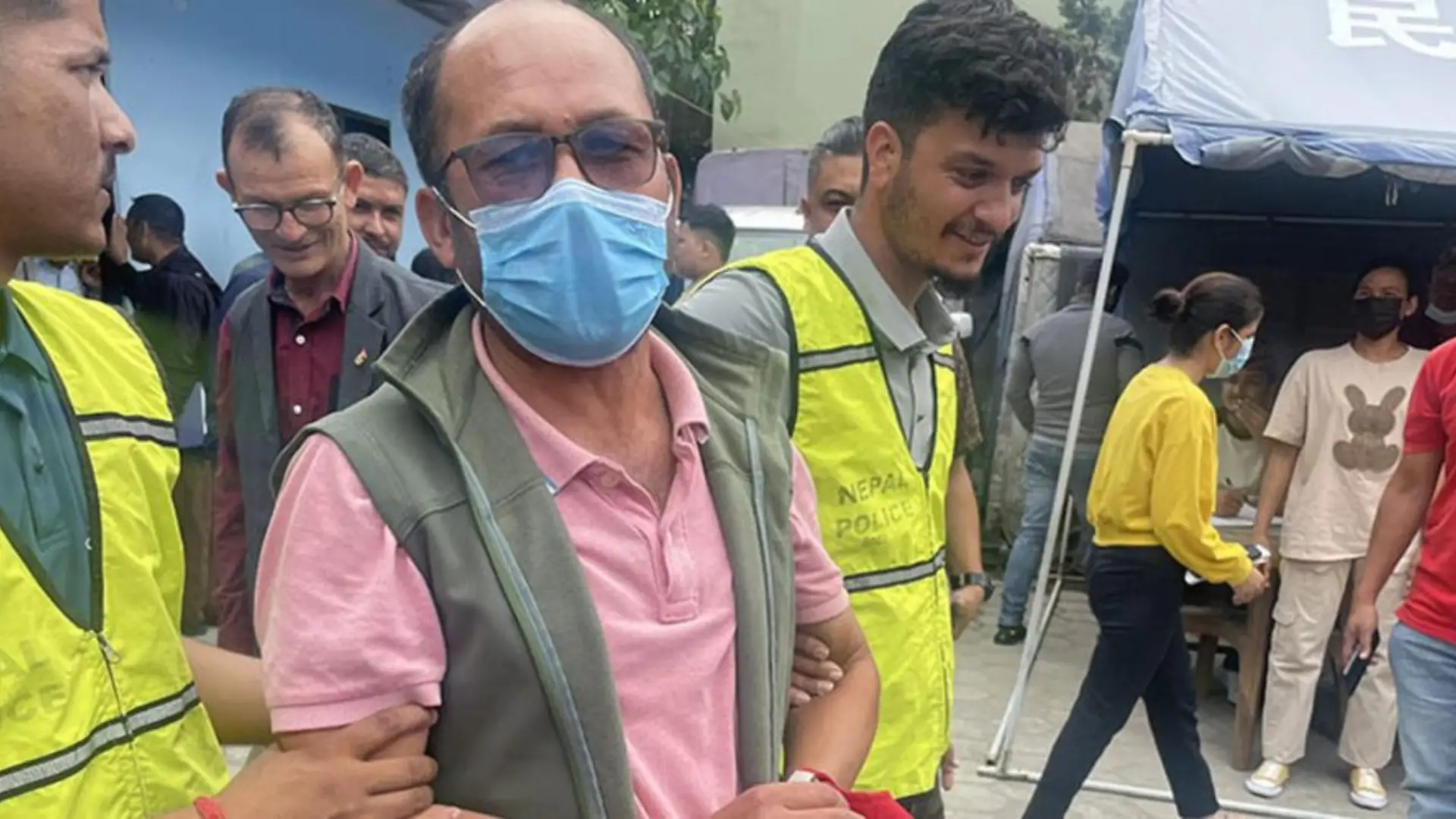
Kathmandu — The arrest of CB (Chandra Bahadur) Lama in Bharatpur on Friday closes one chapter of a story that has come to symbolise the deepening crisis in Nepal's cooperative sector. But the numbers emerging from the investigation tell a far larger story than a single arrest — one of how nearly Rs 8 billion in ordinary people's savings was quietly converted into land, resorts, hospitals and colleges held in private hands.
At the centre of the case sits a striking imbalance. Lama, former chairperson of Kantipur Saving and Credit Cooperative, is accused of misappropriating around Rs 6 billion from that institution alone, with a further Rs 2 billion from Pashupati Saving and Credit Cooperative. Set against Kantipur's share capital of roughly Rs 40 crore, the scale of the alleged embezzlement is staggering: the missing savings are around fifteen times the cooperative's own capital base. In practical terms, the institution was running on depositors' money far more than on its own foundation — a structural fragility common to many of Nepal's troubled cooperatives.
The depositor figures sharpen the human dimension. Kantipur once operated close to 14,000 savings accounts; even today, around 7,000 depositors are owed Rs 6.13 billion. That the number of accounts has halved while the outstanding liability remains enormous suggests that a significant share of savers have already been unable to recover their money. Behind each account is a household — retirees, small traders, salaried workers — whose savings were, in effect, lent out and locked away in illiquid assets they will struggle to ever see returned in cash.
Where that money went is the most revealing part of the investigation. According to filings with the Department of Cooperatives, the Lama group acquired more than 400 ropanis of land spread across Kavre, Bhaktapur, Kathmandu, Makwanpur, Morang and Khotang. The Kathmandu holdings alone — in Pharping, Budhanilkantha, Teku, Lazimpat, New Baneshwar and Bouddha — sit in some of the valley's most valuable real estate corridors. The pattern is textbook: liquid deposits, which savers expected to withdraw on demand, were transformed into fixed, high-value property that cannot be easily sold to repay them. This is precisely why depositors in such schemes rarely recover their funds quickly, even after arrests are made.
The alleged diversion did not stop at land. The cooperative's money is said to have flowed into crusher industries, resorts, private companies, hospitals and colleges — assets that generate income and influence for their private owners while the original depositors bear the risk. This is the mechanism at the heart of many cooperative collapses: a savings institution is treated as a personal financing arm, its deposits underwriting a business empire built in the operators' own names rather than the members'.
Equally telling is that the accusations are not confined to Lama alone. The investigation names current chairperson Himalaya Bikram Malla Thakuri and managing director Premdhwaj Tamang, among other board members, as having steered funds into the same categories of assets. This points to what regulators have long warned about — that the failure was not the act of one rogue individual but a governance breakdown, where the very board meant to protect depositors allegedly functioned as the vehicle for draining them.
Lama's conduct after the warrant adds another layer. Wanted since the Kathmandu District Court issued an arrest warrant on Falgun 20, 2080, he lived in rented flats in Bharatpur, reportedly changing residence every month and carrying four phones and six SIM cards to avoid detection. His earlier escape from Dillibazar prison during the JNG movement last Bhadau, and the fact that he remains absconding in three of four separate banking offence cases, paint a picture of a defendant with both the resources and the intent to stay ahead of the law for as long as possible.
For the thousands still waiting on their money, however, the arrest is only a partial reckoning. Recovering Rs 8 billion tied up in land and businesses registered under individuals is a slow, contested legal process — one that typically outlasts the headlines. Lama's return to custody answers the question of accountability, but the harder question, whether ordinary depositors will ever be made whole, remains firmly unanswered.
Advertisement
Written by
Dipesh Ghimire