Top
Business Leaders Call for Strong Public–Private Partnership Ahead of Nepal’s Economic Census 2082
Business Leaders Call for Strong Public–Private Partnership Ahead of Nepal’s Economic Census 2082 Kathmandu — With Nepal preparing to conduct the National Economic Census 2082, business leaders and government statisticians are pushing for closer coordination between public agencies and the private sector to ensure the exercise delivers credible, usable results. Stakeholders say the census is more than a routine survey: it is expected to provide the most comprehensive snapshot of how businesses operate across the country—data that can shape economic policy, investment planning, and employment strategy for years. The interaction program held on Monday, jointly organized by the Federation of Nepalese Chambers of Commerce and Industry (FNCCI) and the National Statistics Office (NSO), focused on building confidence among businesses to participate fully. Participants stressed that without private-sector cooperation, even the best-designed census can produce gaps and inconsistencies, weakening its value for national planning. They urged the government to prioritize transparency and communication throughout the process.
Dipesh Ghimire
3 min read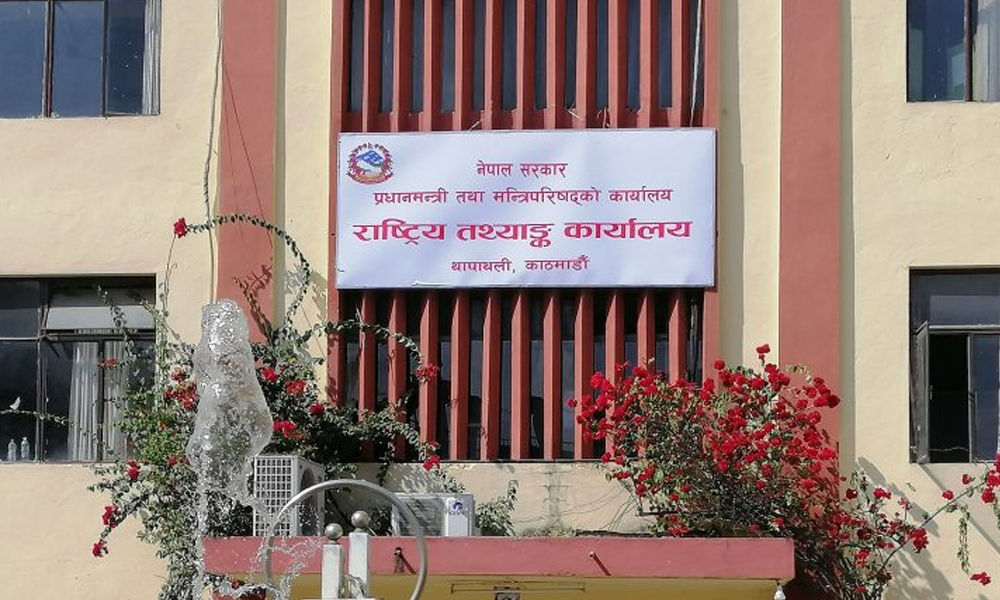
Kathmandu — With Nepal preparing to conduct the National Economic Census 2082, business leaders and government statisticians are pushing for closer coordination between public agencies and the private sector to ensure the exercise delivers credible, usable results. Stakeholders say the census is more than a routine survey: it is expected to provide the most comprehensive snapshot of how businesses operate across the country—data that can shape economic policy, investment planning, and employment strategy for years.
The interaction program held on Monday, jointly organized by the Federation of Nepalese Chambers of Commerce and Industry (FNCCI) and the National Statistics Office (NSO), focused on building confidence among businesses to participate fully. Participants stressed that without private-sector cooperation, even the best-designed census can produce gaps and inconsistencies, weakening its value for national planning. They urged the government to prioritize transparency and communication throughout the process.
The census is designed to collect baseline information on economic establishments involved in industrial, commercial, and service activities nationwide. Unlike sector-specific surveys, the economic census aims to map the broader economy—how many establishments exist, where they operate, what they do, and what scale they operate at. For Nepal, where the informal and small-enterprise economy is large, stakeholders say this kind of mapping is essential to separate assumptions from reality.
FNCCI Vice President Hemraj Dhakal said the census could become a key tool for understanding Nepal’s “real economy.” He noted that reliable statistics on the status of industries and businesses, investment behavior, and employment patterns are necessary for evidence-based policymaking. Dhakal also emphasized that the private sector cannot remain a passive observer; he said business communities must actively support enumerators and provide accurate information if the census is to reflect the ground reality.
From the government side, NSO Joint Secretary Dhundiraj Lamichhane said the Economic Census 2082 will generate detailed data on industrial, trade, and service sectors, helping Nepal move toward policies rooted in evidence rather than estimates. He underlined that stronger statistics improve the government’s ability to identify growth bottlenecks, design targeted programs, and evaluate what works. Officials argue that the census can also help improve how resources are allocated across regions and sectors.
The National Statistics Office has scheduled the census from Baisakh 2 to Asar 7, a window of a little over two months. The timing matters, stakeholders say, because fieldwork quality depends on how well enumerators can reach establishments and how willing firms are to engage during that period. Business representatives asked for clear guidance on what data will be collected and how confidentiality will be protected, particularly for smaller firms that often hesitate to share operational information.
At the program, NSO Director Dr. Ved Prasad Dhakal presented the rationale and expected outcomes of the Economic Census 2082. Officials say the results will not only support government planning but also benefit the private sector by improving market understanding—helping investors, banks, researchers, and enterprises assess sector size, competition levels, and regional business distribution.
Analysts say the economic census could also become a turning point for employment planning. If properly executed, it can reveal where jobs are being created, which sectors are expanding, and which regions are lagging. That information can influence everything from vocational training priorities to infrastructure planning, and from tax policy to enterprise support programs.
Still, stakeholders cautioned that the census will be judged not by the number of forms collected but by the accuracy and usability of the final data. They urged the government to ensure coordination among federal agencies, local governments, and private-sector bodies so that enumeration is consistent and duplication is avoided. As the census date approaches, both sides agree on one point: only a cooperative approach can produce a national economic database strong enough to guide Nepal’s next phase of development.
Advertisement
Written by
Dipesh Ghimire