Capital Market
Capital Market Regulator, Merchant Bankers Hold First Interaction Under New SEBON Leadership
The meeting concluded with both sides reaffirming their commitment to closer coordination in the days ahead. Market stakeholders expect that such engagements may help shape upcoming policy directions, particularly in areas related to market deepening, regulatory modernization, and long-term capital formation.
Dipesh Ghimire
2 min read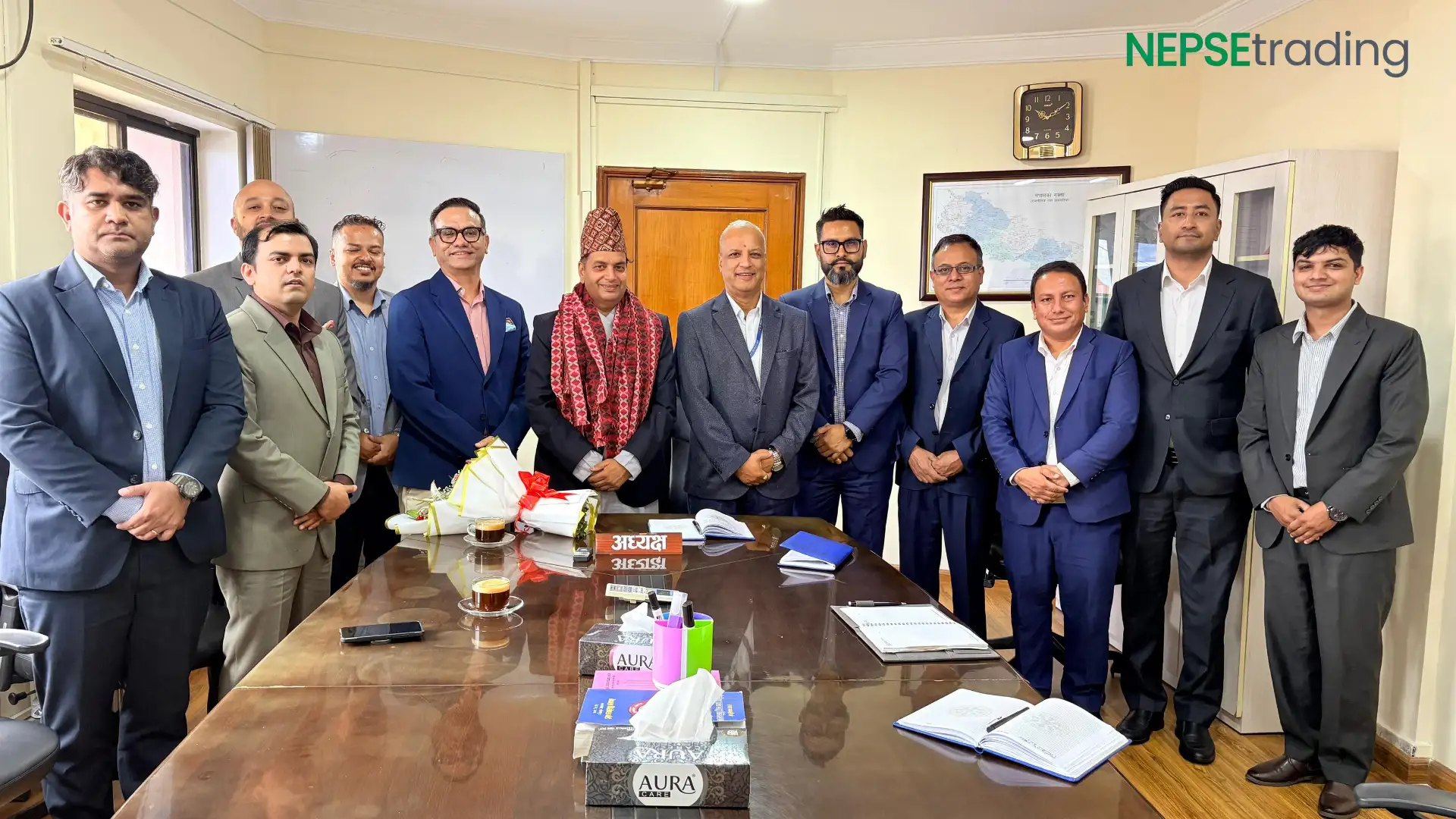
Kathmandu — The newly appointed leadership of Nepal’s capital market regulator has begun its formal engagement with key market stakeholders, signaling an early push toward policy dialogue and reform-oriented cooperation in the securities sector.
The Nepal Merchant Bankers Association held a courtesy meeting with the Chairperson of the Securities Board of Nepal (SEBON), Dr. Gopal Prasad Bhatt, on Wednesday at the regulator’s office in Kathmandu. The interaction marked one of the first structured engagements between the new leadership and capital market intermediaries since his appointment.
During the meeting, the association extended formal congratulations to the newly appointed chair and expressed expectations that his tenure would focus on strengthening market stability, investor confidence, and regulatory efficiency. The delegation emphasized that Nepal’s capital market is entering a more complex phase, requiring predictable policies and stronger institutional coordination.
The interaction was not limited to ceremonial greetings. According to participants, discussions moved toward substantive issues affecting the structure and direction of the capital market. These included the performance and regulation of mutual funds, the efficiency of the initial public offering (IPO) pipeline, and the growing importance of private equity and alternative investment instruments in Nepal’s financial ecosystem.
Officials from both sides also discussed broader concerns such as improving transparency in market operations, strengthening corporate governance standards, and expanding the range of investable financial products. The merchant bankers stressed that investor trust remains central to market growth, and that trust depends heavily on consistent regulation and fair enforcement practices.
Chairperson Bhatt reportedly highlighted the importance of sustained dialogue between the regulator and private sector stakeholders. He noted that effective capital market development cannot be achieved through regulation alone, but requires continuous coordination between market participants, intermediaries, and policymakers.
Analysts interpret this early engagement as a signal of a more consultative regulatory approach under the new leadership at SEBON. Nepal’s capital market has expanded significantly in recent years, particularly in retail investor participation, but continues to face structural challenges such as limited product diversification, periodic volatility, and concerns over regulatory responsiveness.
The meeting concluded with both sides reaffirming their commitment to closer coordination in the days ahead. Market stakeholders expect that such engagements may help shape upcoming policy directions, particularly in areas related to market deepening, regulatory modernization, and long-term capital formation.
Advertisement
Written by
Dipesh Ghimire