Commercial Banks
Commercial Banks See Dip in Deposits: Total Collection Contracts by Over Rs 21 Billion in Shrawan
Other notable movements during the month included Kumari Bank adding Rs 10.84 billion and Laxmi Sunrise Bank expanding by Rs 5.02 billion. Meanwhile, institutions like Agricultural Development Bank, Prabhu Bank, and Himalayan Bank experienced contractions ranging in the multi-billions. While a minor monthly outflow of over Rs 21 billion is unlikely to trigger an immediate liquidity crisis—given the system's current surplus—it underscores the uneven distribution of capital and fluid cash management strategies across the banking industry as the new fiscal year gets underway.
Dipesh Ghimire
1 min read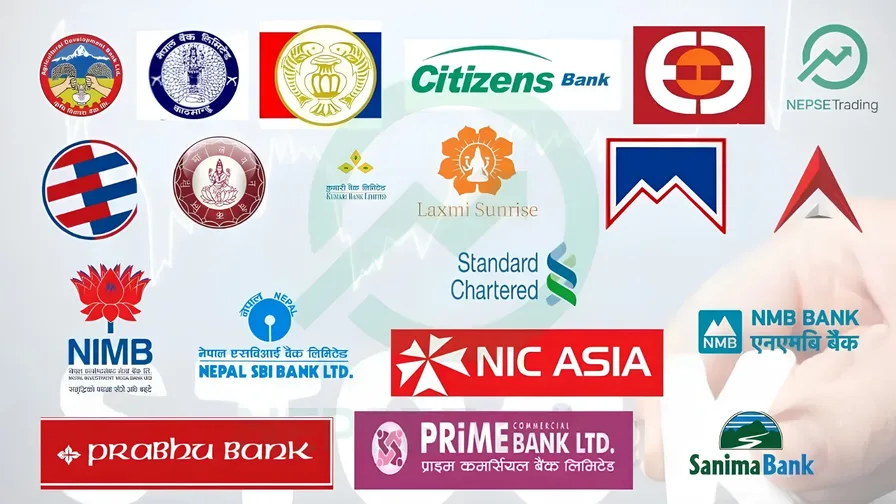
KATHMANDU: Deposit collections across commercial banks in Nepal experienced a slight contraction during the first month of the current fiscal year 2083/84. Driven by the typical slowdown in early-fiscal-year economic activities and delayed local government expenditure cycles, total deposits across all 20 commercial banks dropped by Rs 21.63 billion between the end of Ashar and the close of Shrawan. With this decline, cumulative bank deposits settled at Rs 7.476 trillion, down slightly from Rs 7.498 trillion at the end of the previous fiscal year, marking a marginal 0.29 percent decrease.
The banking sector’s deposit landscape for Shrawan presented a mixed picture, with exactly half of the 20 commercial banks witnessing contractions while the other half managed to expand their deposit bases. Global IME Bank, which leads the sector in deposit volume, recorded the largest single drop as its reserves shrank by Rs 13.69 billion to rest at Rs 6.867 trillion. NIC Asia Bank also suffered a heavy outflow, shedding Rs 16.29 billion. Conversely, Rastriya Banijya Bank and Nabil Bank strengthened their positions, growing their deposits by Rs 3.41 billion and Rs 4.72 billion, respectively.
Other notable movements during the month included Kumari Bank adding Rs 10.84 billion and Laxmi Sunrise Bank expanding by Rs 5.02 billion. Meanwhile, institutions like Agricultural Development Bank, Prabhu Bank, and Himalayan Bank experienced contractions ranging in the multi-billions. While a minor monthly outflow of over Rs 21 billion is unlikely to trigger an immediate liquidity crisis—given the system's current surplus—it underscores the uneven distribution of capital and fluid cash management strategies across the banking industry as the new fiscal year gets underway.
Advertisement
Written by
Dipesh Ghimire