Top
Economic Blow of Bhote Koshi Floods: Tourism and Power Exports Hit Hard, Foreign Reserves Face Pressure
The economic fallout of this disaster extends far beyond immediate reconstruction costs, posing a deeper threat to the nation's overall service exports and external economy. Experts emphasize that the government and the Nepal Tourism Board must urgently mobilize diplomatic missions to broadcast clear, accurate information to the global market regarding safe travel zones. Furthermore, stakeholders stress that moving forward, Nepal has no alternative but to adopt 'climate-resilient' infrastructure designs capable of withstanding the escalating risks of natural disasters.
Dipesh Ghimire
1 min read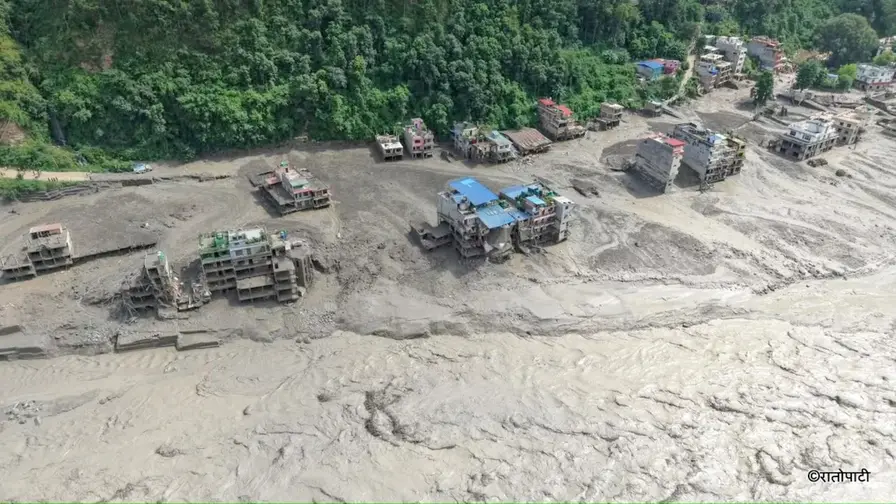
KATHMANDU — The devastating floods in the Bhote Koshi River have caused more than just massive physical destruction; they have dealt a severe blow to Nepal's two primary pillars of foreign exchange: tourism and electricity exports. As negative reports of damaged infrastructure circulate globally, bookings in completely safe tourist destinations are rapidly being canceled, while critical damage to hydropower projects has led to a steep decline in cross-border power exports.
The autumn season (September–November) is Nepal's peak tourist window, traditionally bringing in nearly 40 percent of annual arrivals. However, due to incomplete and alarming information reaching the international market, hotels in flood-safe hubs like Pokhara, Chitwan, and Lumbini are facing a wave of cancellations. Industry insiders warn of up to a 30 percent cancellation rate, with a single hotel in Lumbini already reporting over 100 canceled room-nights. "The floods have only impacted specific regions, but the global market is receiving the false impression that the entire country is unsafe, heavily penalizing our secure destinations," a tourism entrepreneur noted.
Hydropower, another major foreign currency earner, has suffered catastrophic losses. With transmission lines and project structures badly damaged, Nepal’s monsoon electricity export capacity has plummeted from an average of 1,000 MW to just about 650 MW daily. Crucial infrastructure, including the Chilime (22.1 MW) and Trishuli (24 MW) projects, has been affected, effectively pausing Nepal’s ambitious plans to export electricity to Bangladesh via India. Preliminary estimates suggest that commercial insurance claims from the damaged energy sector alone could reach a staggering Rs 20 billion.
The economic fallout of this disaster extends far beyond immediate reconstruction costs, posing a deeper threat to the nation's overall service exports and external economy. Experts emphasize that the government and the Nepal Tourism Board must urgently mobilize diplomatic missions to broadcast clear, accurate information to the global market regarding safe travel zones. Furthermore, stakeholders stress that moving forward, Nepal has no alternative but to adopt 'climate-resilient' infrastructure designs capable of withstanding the escalating risks of natural disasters.
Advertisement
Written by
Dipesh Ghimire