Blacklisted
Eight Firms, Including Pappu Construction, Blacklisted for Failing to Meet Contract Obligations
Experts say that blacklisting can act as a corrective measure, but stronger project evaluation, timely decision-making by government agencies, and improved contractor selection processes are equally necessary to ensure better outcomes in public infrastructure spending.
Dipesh Ghimire
2 min read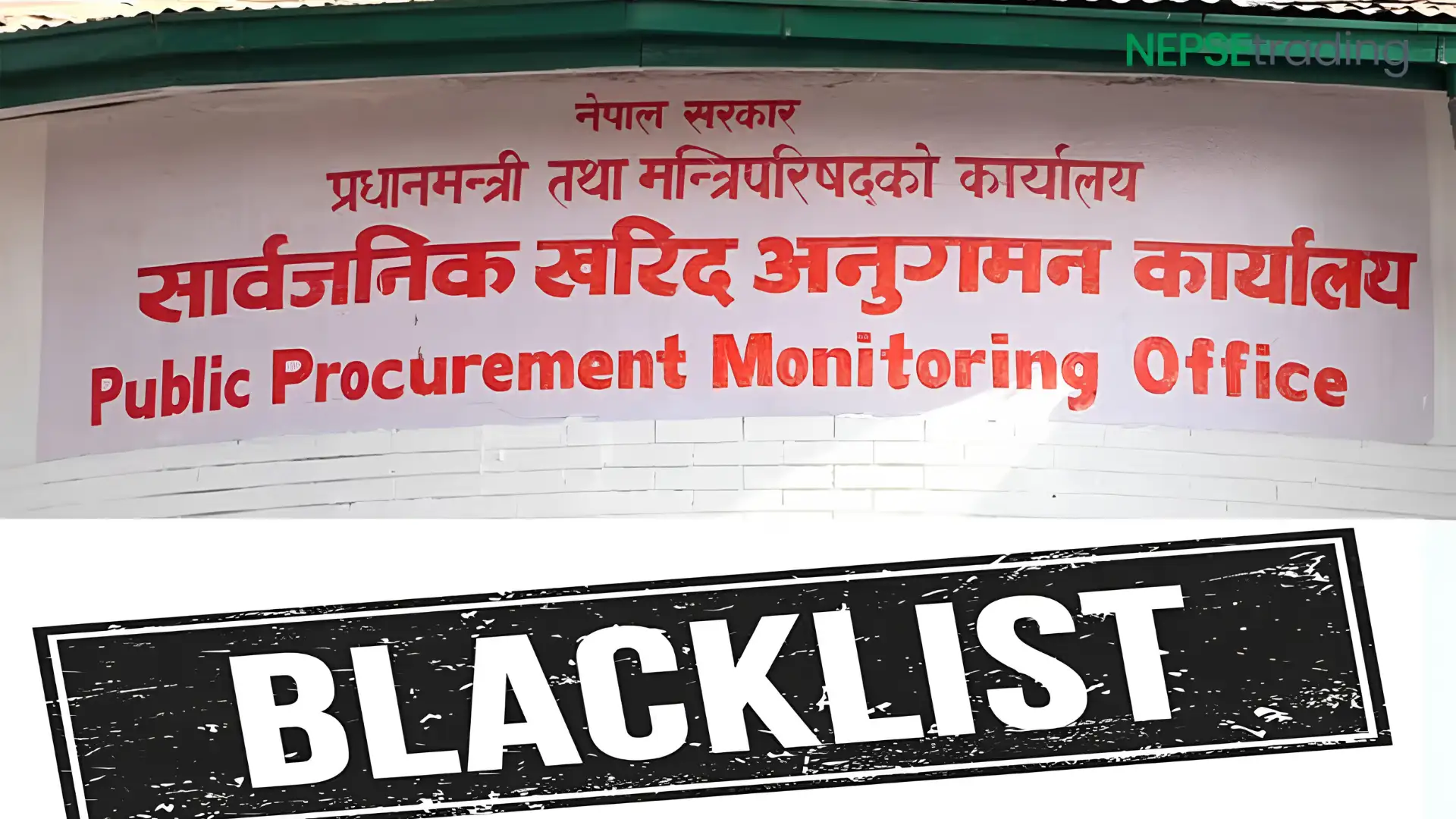
Kathmandu: The Public Procurement Monitoring Office (PPMO) has blacklisted eight construction companies and suppliers for failing to complete contractual responsibilities as agreed with government agencies. The decision prevents the companies from participating in any public procurement process during the specified period.
The monitoring office, under the Office of the Prime Minister and Council of Ministers, issued a notice stating that the companies were blacklisted in accordance with Section 63(1) of the Public Procurement Act, 2063. The companies have been restricted for periods ranging from one year to three years based on the nature of their contractual failures.
Among the blacklisted companies, Pappu/Mahadev JV, involving Pappu Construction and Mahadev Khimti Construction Service, has received the longest restriction period of three years. Shrestha Construction Company of Hetauda has also been barred for three years following recommendations from the Postal Highway Directorate.
The action against these companies reflects the government’s continued effort to address delays and failures in public infrastructure projects. Construction companies failing to deliver projects on time have often been criticized for affecting development progress and increasing project costs.
The Postal Highway Directorate had recommended action against Pappu/Mahadev JV after the company failed to fulfill contractual obligations. Pappu Construction, one of Nepal’s well-known contractors, has faced repeated criticism in the past over delays in infrastructure projects.
Similarly, Shubham Construction Service has been blacklisted for two years and Mayumi Construction for one year based on recommendations from the Road Division Harkapur, Okhaldhunga. Hira Nepali Construction Service has also been restricted for two years following a recommendation from the Infrastructure Development Directorate, Surkhet.
India/Siddhisai JV has been placed on the blacklist for one year and six months following a recommendation from the Pushpalal (Mid-Hill) Highway Project Office, Kushma.
In addition, Lumbini Motors and Pump Industries has been restricted for one year following a recommendation from Nepal Water Supply Corporation, Butwal. Globe Drugs Suppliers has also received a one-year ban based on a recommendation from Tribeni Municipality, Bajura.
During the blacklisting period, these companies will not be allowed to participate in government procurement activities. The restriction is intended to discourage contractors and suppliers from ignoring contractual commitments and to improve accountability in public projects.
The move comes amid long-standing concerns over delays in infrastructure development, where weak contract management, inadequate monitoring, and repeated project extensions have affected the timely completion of public works.
Experts say that blacklisting can act as a corrective measure, but stronger project evaluation, timely decision-making by government agencies, and improved contractor selection processes are equally necessary to ensure better outcomes in public infrastructure spending.
Advertisement
Written by
Dipesh Ghimire