Top
Export Sector Urges Government to Prioritize Investment Promotion in Upcoming Budget
Export Sector Urges Government to Prioritize Investment Promotion in Upcoming Budget A coalition of 35 industry and business associations engaged in Nepal’s export sector has called on the government to incorporate targeted investment promotion and collaboration programs in the upcoming fiscal budget. The demand comes at a time when the country continues to struggle with a widening trade deficit and limited export diversification, prompting stakeholders to push for more structured policy support. The joint appeal focuses on attracting foreign direct investment, strengthening domestic industries, and accelerating export growth. Representatives from various sectors presented detailed insights into the opportunities and constraints within their respective industries, along with recommendations for policy reforms. Their proposals collectively underline the need for a more coordinated and export-oriented economic strategy.
Dipesh Ghimire
2 min read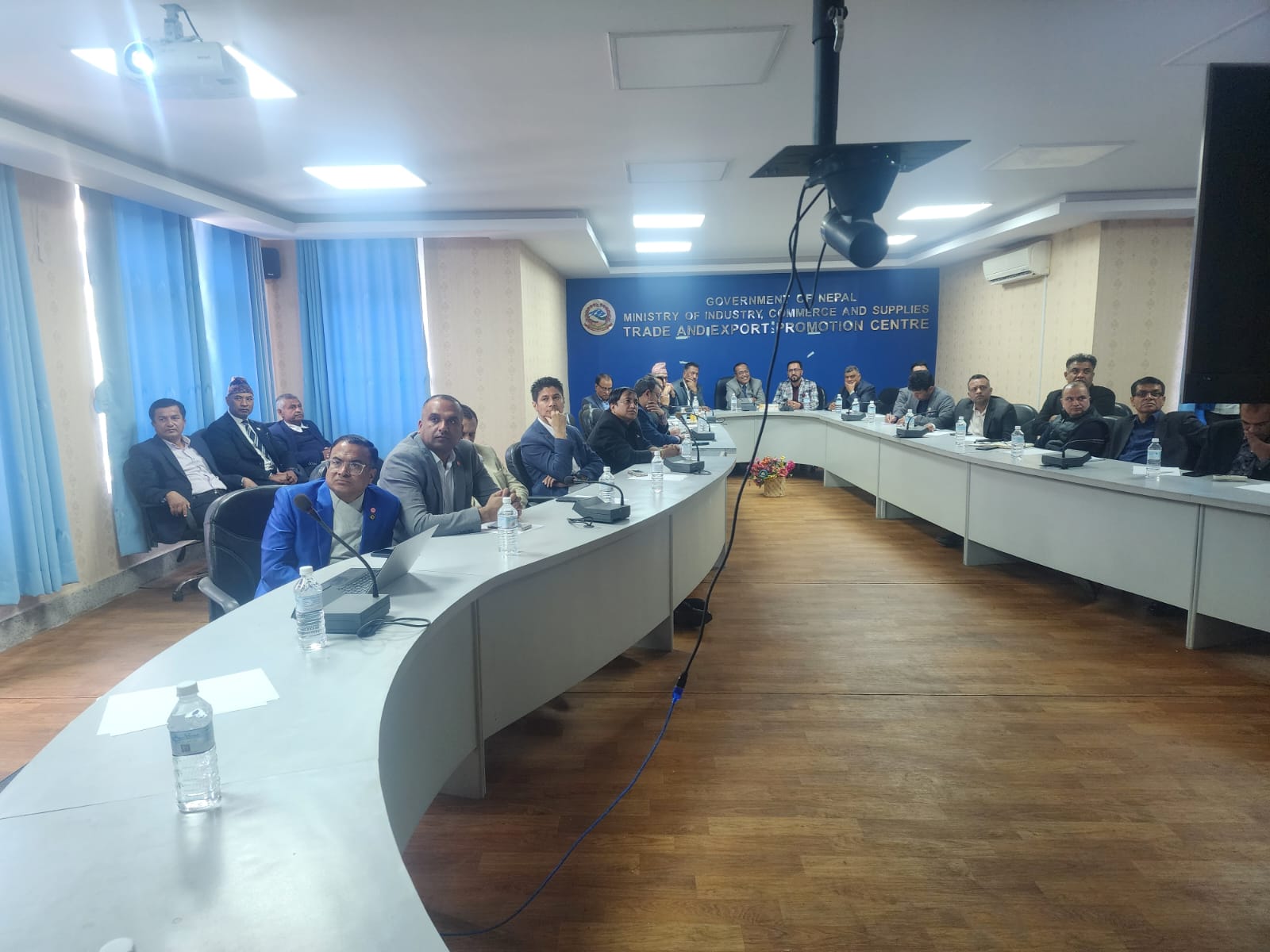
A coalition of 35 industry and business associations engaged in Nepal’s export sector has called on the government to incorporate targeted investment promotion and collaboration programs in the upcoming fiscal budget. The demand comes at a time when the country continues to struggle with a widening trade deficit and limited export diversification, prompting stakeholders to push for more structured policy support.
The joint appeal focuses on attracting foreign direct investment, strengthening domestic industries, and accelerating export growth. Representatives from various sectors presented detailed insights into the opportunities and constraints within their respective industries, along with recommendations for policy reforms. Their proposals collectively underline the need for a more coordinated and export-oriented economic strategy.
The program saw active participation from major business bodies, including the Federation of Nepalese Chambers of Commerce and Industry, Nepal Chamber of Commerce, Confederation of Nepalese Industries, Federation of Women Entrepreneurs’ Associations, and several sector-specific groups such as the Pashmina Industries Association, Herbal Producers Association, Gold and Silver Dealers Federation, Handmade Paper Association, and Metal Industries Association. Their presence reflects a broad consensus across industries on the urgency of reforming Nepal’s export ecosystem.
Participants emphasized that Nepal’s export potential remains underutilized due to structural bottlenecks such as policy inconsistency, limited access to finance, and inadequate market linkages. They stressed the need for a more investment-friendly environment, where regulatory clarity, incentives, and institutional coordination can encourage both domestic and foreign investors to expand production capacity aimed at international markets.
Chairing the program, Sarad Bikram Rana, Executive Director of the Trade and Export Promotion Centre, stated that the initiative was organized as a preparatory step ahead of budget formulation. He highlighted that incorporating exporters’ concerns into fiscal policy could provide a new direction and momentum to Nepal’s export sector. According to him, strengthening export-oriented programs is essential not only for boosting foreign earnings but also for reducing the country’s persistent trade imbalance.
Adding to this, Nirajan Bahadur Chalune, a member of the Trade and Export Promotion Development Committee, stressed the need to expand both the size and scope of export promotion budgets. He pointed out that exporters continue to face practical challenges on the ground, ranging from procedural hurdles to cost inefficiencies, and urged the government to address these issues as a priority in the upcoming budget.
The discussions also reflected a broader realization that Nepal’s export performance cannot improve without aligning fiscal policy with industrial strategy. While previous budgets have included export promotion measures, stakeholders argue that their impact has been limited due to fragmented implementation and insufficient scale. This has led to calls for more comprehensive and outcome-oriented programs.
In essence, the collective demand from export-oriented industries signals a shift towards a more proactive engagement with the government in shaping economic policy. As the budget preparation process gains momentum, the extent to which these recommendations are incorporated will be crucial in determining whether Nepal can transition from a largely import-driven economy to a more balanced and export-led growth model.
Advertisement
Written by
Dipesh Ghimire