Financial Sector
Flood Aftermath Hits Financial Sector: Hydropower and Insurance Companies Under 'Rating Watch'
Ultimately, a single natural disaster in Rasuwa has sent shockwaves through Nepal's interconnected economic cycle, seamlessly moving from the energy sector to insurance and banking. The true extent of the financial toll will now depend heavily on the pace of infrastructure reconstruction, the efficiency of insurance claim settlements, and the overall trajectory of loan recovery in the coming months.
Dipesh Ghimire
2 min read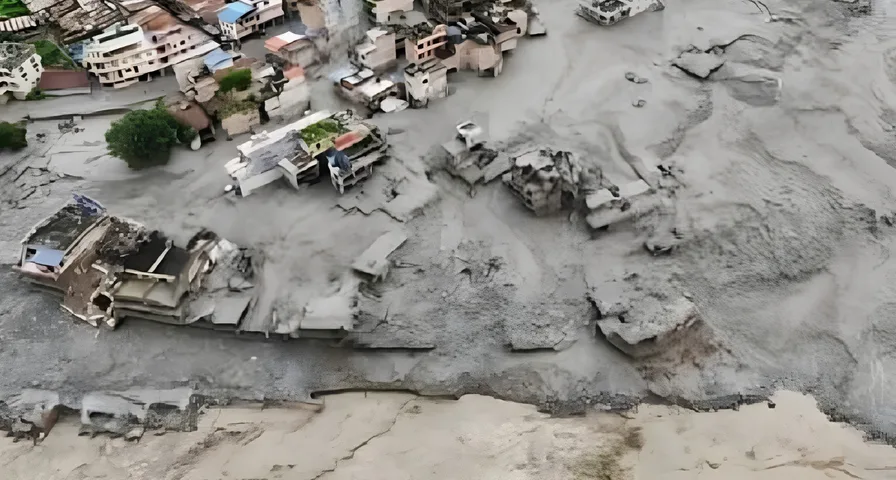
The devastating floods and landslides that struck Rasuwa on August 25 have extended their destructive reach beyond physical infrastructure, now threatening the balance sheets of the corporate sector. Credit rating agencies like ICRA Nepal and CARE Ratings Nepal have initiated rigorous financial reviews, placing several hydropower and insurance companies under a 'negative credit watch' as their revenue, loan repayment capacity, and overall profitability face mounting pressure.
The hydropower sector has borne the brunt of the disaster. Severe damage to project structures and critical transmission networks, particularly the Trishuli 3B Hub substation, has brought electricity generation and distribution to a grinding halt for many. Facing a steep drop in revenue and weakened debt-servicing capabilities, developers including Upper Trishuli 3B, Mailung Khola, Upper Mailung Khola, and Energy Development Company have been flagged by the rating agencies with a negative outlook.
The ripple effects are equally visible in the non-life insurance sector, which is now bracing for a massive surge in claims for damaged infrastructure, equipment, and vehicles. Citing strained risk-bearing capacities, ICRA Nepal has already downgraded Nepal Reinsurance Company's rating from 'A' to 'A-'. Furthermore, major non-life insurers—including Shikhar, Sagarmatha Lumbini, Siddhartha Premier, NLG, Himalayan Everest, and United Ajod—have been placed under close scrutiny. Conversely, the life insurance sector remains largely insulated from immediate financial shocks.
While commercial and development banks have avoided immediate rating downgrades, they are not completely out of the woods. The destruction of local businesses and stalled hydro projects raises the specter of delayed loan repayments and defaults. Although expected regulatory relief and loan restructuring guidelines from the Nepal Rastra Bank (NRB) may offer a temporary cushion, a prolonged slump in business recovery could inflate Non-Performing Loans (NPLs) and squeeze bank profits. In contrast, the Nepal Electricity Authority (NEA) has retained its robust 'AA+' rating, buffered by its massive capital base and comprehensive insurance coverage.
Ultimately, a single natural disaster in Rasuwa has sent shockwaves through Nepal's interconnected economic cycle, seamlessly moving from the energy sector to insurance and banking. The true extent of the financial toll will now depend heavily on the pace of infrastructure reconstruction, the efficiency of insurance claim settlements, and the overall trajectory of loan recovery in the coming months.
Advertisement
Written by
Dipesh Ghimire