Top
Government Moves to End Illegal Transit Charges, Aiming to Protect Farmers and Market Stability
Government Moves to End Illegal Transit Charges, Aiming to Protect Farmers and Market Stability The Ministry of Finance has stepped in to curb the practice of levying taxes and fees on goods transported solely for transit, signaling growing concern over the economic burden placed on farmers and traders by some local governments. Through formal circulars issued to provincial and local authorities, the ministry has directed that no charges be imposed on goods merely passing through a jurisdiction, reinforcing constitutional and legal boundaries on taxation powers.
Dipesh Ghimire
2 min read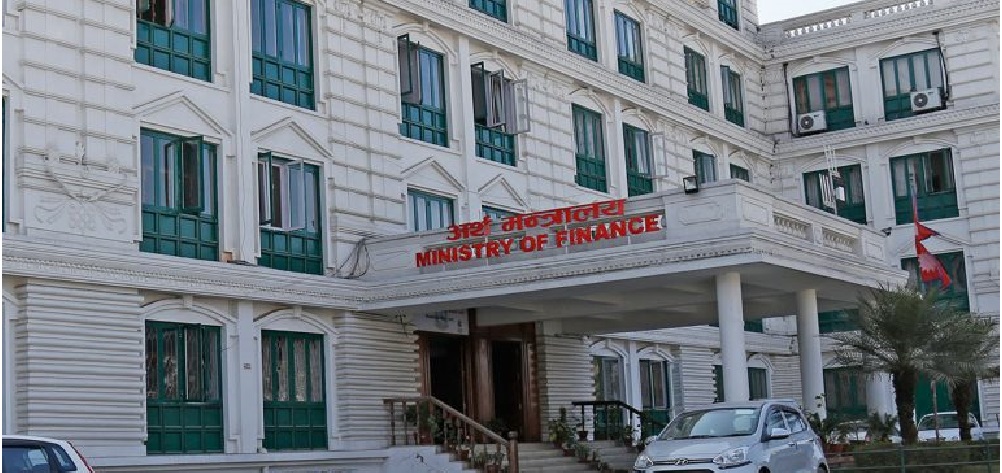
The Ministry of Finance has stepped in to curb the practice of levying taxes and fees on goods transported solely for transit, signaling growing concern over the economic burden placed on farmers and traders by some local governments. Through formal circulars issued to provincial and local authorities, the ministry has directed that no charges be imposed on goods merely passing through a jurisdiction, reinforcing constitutional and legal boundaries on taxation powers.
This intervention follows reports that certain local governments had been collecting taxes and service fees on agricultural produce and other goods transported from neighboring districts. Such practices, while often justified at the local level as revenue measures, have increasingly been viewed as harmful to market efficiency and inconsistent with national laws. The finance ministry’s directive seeks to draw a clear line between legitimate local taxation and unlawful barriers to trade.
At the heart of the issue is the cost of transportation. Economists note that when transit-related charges are imposed at multiple local points, the cumulative effect significantly raises the cost of goods by the time they reach markets. This disproportionately affects farmers and small traders, who operate on thin margins and lack the capacity to absorb additional costs. Ultimately, these expenses are passed on to consumers, contributing to higher prices and market distortions.
The ministry has emphasized that the Constitution and prevailing laws do not authorize local governments to tax goods simply because they pass through a local route. Taxation powers, it reminded, must be exercised within clearly defined legal frameworks. By reiterating this principle, the federal government appears intent on preventing fragmented taxation practices that undermine the concept of a unified national market.
The decision, taken at the ministerial level in mid-December, also highlights ongoing tensions within Nepal’s federal structure. While decentralization has empowered local governments to mobilize resources, it has also created ambiguity over jurisdictional authority. Analysts argue that the current directive reflects an effort to recalibrate this balance, ensuring that local revenue generation does not come at the expense of broader economic stability.
From a policy perspective, the move is expected to support smoother supply chains, particularly for agricultural goods that rely on timely and cost-effective transportation. Reduced transit costs could help stabilize prices, limit post-harvest losses, and improve market access for rural producers. The ministry believes that eliminating illegal charges will also strengthen investor and trader confidence by ensuring predictable and transparent movement of goods.
However, experts caution that issuing circulars alone may not be sufficient. Effective implementation will depend on monitoring, coordination between federal and local authorities, and clear communication to enforcement agencies at the ground level. Without consistent oversight, there is a risk that informal charges could continue under different pretexts.
Overall, the finance ministry’s directive marks a significant policy signal in favor of free movement of goods within the country. By prioritizing legal clarity and economic efficiency, the government aims to protect farmers, reduce unnecessary costs, and reinforce the principles of a common national market—an essential foundation for sustainable economic growth.
Advertisement
Written by
Dipesh Ghimire